When is Narak Chaturdashi?
| Year | Date | Day |
|---|---|---|
| 2026 | 8 November | Sunday |
| 2027 | 28 October | Thursday |
| 2028 | 17 October | Tuesday |
Observed on Krishna Chaturdashi, Kartik month (day before Diwali). Dates follow the Panchang for New Delhi and can differ by a day in other places — check the Panchang for your city.
What Narak Chaturdashi means
Narak Chaturdashi, the fourteenth day of the dark half of Kartik (Ashvin in the amanta calendar), is the second of the five days of Diwali — popularly Choti Diwali, "little Diwali". It celebrates Krishna's destruction of the demon Narakasura, and with it the end of fear, captivity and darkness.
Its heart is the abhyanga snan: before sunrise, the body is massaged with sesame oil and cleansed with ubtan, as if washing away the impurity of the year. In South India — Tamil Nadu, Karnataka and parts of Andhra — this pre-dawn "Ganga snanam" is Deepavali itself, the main festival day, greeted with "Ganga snanam aacha?" (have you had your Ganga bath?).
In the evening lamps are lit for Yama, the lord of death, praying that no untimely death come to the family. In Rajasthan and Gujarat it is Roop Chaudas, a day for beauty and cleansing; in Gujarat Kali Chaudas; and in Bengal Bhoot Chaturdashi, when fourteen lamps are lit for fourteen generations of ancestors.
The story of Narak Chaturdashi
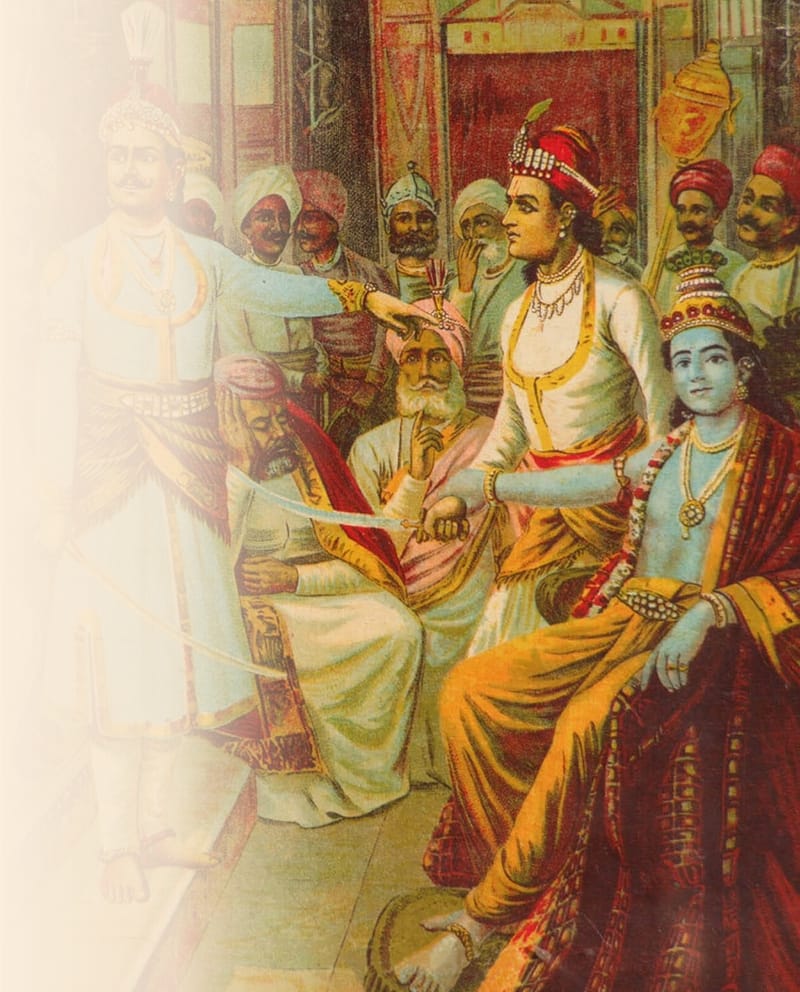
Narakasura, the son of Bhudevi (the Earth), ruled Pragjyotishapura (in present-day Assam). Proud of a boon, he conquered the heavens, took the earrings of Aditi, mother of the gods, and imprisoned sixteen thousand princesses. The Bhagavata Purana (10.59) tells how Krishna flew to his city on Garuda with Satyabhama, broke through its defences and killed him with the Sudarshan chakra.
Bhudevi herself asked that the day of her son's death be remembered not with mourning but with lamps and celebration. Krishna then restored the earrings to Aditi and gave the freed women honour and a home. In some tellings Satyabhama — an incarnation of Bhudevi — strikes the final blow.
Narak Chaturdashi puja vidhi, step by step
How Narak Chaturdashi is usually kept at home. Customs vary by region — follow your family's tradition.
What you need
- Sesame oil for the abhyanga, ubtan (gram flour, turmeric, sandal) or a herbal paste
- An apamarga (chirchita) twig, if your family uses it
- A four-wick clay lamp or 14 small diyas for the evening
- Rangoli colours and diyas for the house
- Sweets and savouries for Diwali
When to do the puja
In 2026 Narak Chaturdashi falls on Sunday, 8 November — the same day as Diwali Lakshmi Puja, because Chaturdashi holds at dawn and Amavasya by evening; in 2027 it falls on Thursday, 28 October, the day before Diwali. The abhyanga snan is done before sunrise; lamps for Yama are lit at dusk. Check the Panchang for your city. See the Panchang for your city.
Steps
- Before sunrise. Rise early and massage the body with warm sesame oil, then apply ubtan and bathe.
- Apamarga. In many homes the apamarga twig is turned around the head three times during the bath while reciting its verse.
- Worship. Wear new or clean clothes, worship Krishna and the family deity, and offer sweets.
- Clean and decorate. Finish cleaning the house, draw rangoli and hang torans for Diwali.
- Yama deepa. At dusk, light a four-wick lamp facing south outside the door, or fourteen small diyas as in Bengal, praying for the family's protection.
Offerings & food: Sweets and savouries made for Diwali, karanji, chakli, ladoo; in Tamil Nadu, Deepavali lehiyam and sweets after the Ganga snanam
Mantras for Narak Chaturdashi
Apamarga verse (bath on Narak Chaturdashi)
सितालोष्ठसमायुक्तं सकण्टकदलान्वितम् ।
हर पापमपामार्ग भ्राम्यमाणः पुनः पुनः ॥
sitāloṣṭhasamāyuktaṃ sakaṇṭakadalānvitam |
hara pāpam apāmārga bhrāmyamāṇaḥ punaḥ punaḥ ||
O apamarga plant, with clods of earth and thorny leaves, take away my sins as you are turned around me again and again. (Recited, as the Dharma-shastra digests describe, while turning the twig during the bath.)
Krishnaya Vasudevaya (Bhagavata Purana 10.73.16)
कृष्णाय वासुदेवाय हरये परमात्मने ।
प्रणतक्लेशनाशाय गोविन्दाय नमो नमः ॥
kṛṣṇāya vāsudevāya haraye paramātmane |
praṇatakleśanāśāya govindāya namo namaḥ ||
Salutations to Krishna, son of Vasudeva, to Hari, the Supreme Self, to Govinda, who destroys the sorrows of those who bow to him.
Narak Chaturdashi across India
Deepavali proper in Tamil Nadu and Karnataka (Naraka Chaturdashi morning), Roop Chaudas in Rajasthan and Gujarat, Kali Chaudas in Gujarat, Bhoot Chaturdashi with 14 lamps in Bengal
- Tamil Nadu and Karnataka
- This is Deepavali itself: oil bath before dawn, new clothes, sweets and crackers in the morning, and visits to temples.
- Maharashtra and Goa
- Abhyanga snan with utane, and in Goa effigies of Narakasura are burned before dawn.
- Rajasthan and Gujarat
- Roop Chaudas — a day of beauty rituals and cleansing; in Gujarat, Kali Chaudas with worship of Hanuman and Kali for protection.
- Bengal
- Bhoot Chaturdashi: fourteen lamps lit for fourteen generations of ancestors, and fourteen leafy greens (choddo shaak) eaten; Kali Puja follows on Amavasya.
- North India
- Choti Diwali — a smaller round of lamps and sweets; some families worship Hanuman, whose birth is celebrated on this day in parts of the North.
Prayers to recite
Do’s and don’ts
Do
- Bathe before sunrise with oil and ubtan
- Light a lamp for Yama in the evening
- Clean and decorate the home for Diwali
Avoid
- Avoid sleeping late on this morning
- Be careful with fireworks around children and animals
Temples to visit for Narak Chaturdashi


Frequently asked questions
When is Narak Chaturdashi in 2026?
Narak Chaturdashi 2026 falls on Sunday, 8 November 2026 (Krishna Chaturdashi, Kartik month (day before Diwali)). Dates are for New Delhi and may differ by a day in other places.
Narak Chaturdashi 2026 kab hai?
Narak Chaturdashi 2026 Sunday, 8 November 2026 ko hai. Apne shahar ki sahi tithi ke liye Panchang dekhein.
नरक चतुर्दशी 2026 कब है?
नरक चतुर्दशी 2026 रविवार, 8 नवंबर 2026 को है। अपने शहर की सही तिथि और मुहूर्त के लिए पंचांग देखें।
When is Narak Chaturdashi in 2027?
Narak Chaturdashi 2027 falls on Thursday, 28 October 2027 (Krishna Chaturdashi, Kartik month (day before Diwali)). Dates are for New Delhi and may differ by a day in other places.
When is Narak Chaturdashi in 2028?
Narak Chaturdashi 2028 falls on Tuesday, 17 October 2028 (Krishna Chaturdashi, Kartik month (day before Diwali)). Dates are for New Delhi and may differ by a day in other places.
Why is Narak Chaturdashi celebrated?
The second day of Diwali, celebrating Krishna's victory over the demon Narakasura with a pre-dawn oil bath, lamps for Yama, and — in the South — Deepavali itself.
How is Narak Chaturdashi celebrated?
Abhyanga snan — an oil massage and ubtan bath before sunrise. Turning an apamarga (chirchita) twig around the head during the bath. Lighting lamps for Yama in the evening. Small diyas and the first fireworks of Diwali. Kali Puja in Bengal (often on this night or the next).
What is offered or eaten on Narak Chaturdashi?
Sweets and savouries made for Diwali, karanji, chakli, ladoo; in Tamil Nadu, Deepavali lehiyam and sweets after the Ganga snanam
When is Narak Chaturdashi in 2026?
Sunday, 8 November 2026, the same day as Diwali Lakshmi Puja (in 2027, Thursday, 28 October). The oil bath is taken before sunrise.
Why is it called Choti Diwali?
Because it is the day before the main Diwali night, with a smaller round of lamps and celebrations.
Who was Narakasura?
A demon king of Pragjyotisha, son of the Earth goddess, who imprisoned sixteen thousand women and was killed by Krishna with Satyabhama.
Why is an oil bath taken before sunrise?
The abhyanga snan symbolises washing away impurity and darkness before the festival of lights; in South India it is the central rite of Deepavali.
Why is a lamp lit for Yama?
To pray that no untimely death comes to the family, as on Dhanteras two days earlier.
 10 Nov2026
 11 Nov2026
 15 Nov2026
 20 Nov2026