When is Pitru Paksha?
| Year | Date | Day |
|---|---|---|
| 2026 | 26 September | Saturday |
| 2027 | 15 September | Wednesday |
| 2028 | 3 September | Sunday |
Observed on Bhadrapada Purnima to Ashvin Amavasya (Mahalaya). Dates follow the Panchang for New Delhi and can differ by a day in other places — check the Panchang for your city.
What Pitru Paksha means
Pitru Paksha — "the fortnight of the ancestors", also called Shraddh or Mahalaya Paksha — is the dark half of Ashvin (Bhadrapada in the North Indian calendar), beginning with the Purnima before it and ending on Mahalaya or Sarva Pitru Amavasya. During these sixteen days Hindus remember the three generations before them — father, grandfather and great-grandfather on both sides — and offer them food, water and prayers.
The word shraddha comes from shraddha, faith: what is offered with faith reaches the ancestors. Tradition teaches that every person is born with three debts — to the gods, to the sages and to the ancestors — and the pitru rina is repaid by honouring those who gave us life, and by living in a way that brings them honour.
The rites are simple at heart: water with black sesame and kusha grass (tarpan), balls of rice (pinda), and food given to Brahmins, the poor, cows, dogs and crows. The ancestor's shraddha is done on the tithi of their death; those whose tithi is not known are remembered together on Mahalaya Amavasya.
The story of Pitru Paksha
A popular story tells that when the great-hearted Karna died in the Mahabharata war, he reached heaven and was given gold and jewels to eat. Asked why, Indra explained that Karna had given gold all his life but had never offered food to his ancestors. Karna was allowed to return to earth for fifteen days to offer food and water to his forefathers; that fortnight became Pitru Paksha.
The Puranas, especially the Garuda Purana and the Vayu Purana, describe the world of the pitrs and the merit of shraddha. Gaya in Bihar is held to be the holiest place for pinda daan: tradition says Vishnu's footprint at the Vishnupad temple and the Phalgu river make offerings there especially fruitful.
Pitru Paksha puja vidhi, step by step
A simple outline of shraddha and tarpan at home. Shraddha rites vary greatly by family, community and Veda; for a full shraddha, follow your family priest.
What you need
- Kusha (darbha) grass, black sesame (til), barley and rice
- A copper vessel of water, a plate or leaf for the pinda
- White flowers, sandal paste, a ghee or sesame-oil lamp
- Food cooked without onion or garlic — kheer, puri, seasonal vegetables
- A portion of the food for a cow, a dog, crows and ants (panchabali)
When to do the puja
In 2027 Pitru Paksha runs from Wednesday, 15 September (Purnima shraddha) to Mahalaya Amavasya on Wednesday, 29 September. Shraddha is traditionally done at midday (kutapa kaal, around 11:30–12:30, varying by place); check the Panchang for your city and each tithi. See the Panchang for your city.
Steps
- Know the tithi. Find the tithi of your ancestor's death in the lunar calendar; do their shraddha on that day of Pitru Paksha. If it is not known, use Mahalaya Amavasya.
- Bathe and prepare. Bathe, wear clean (preferably white) clothes and wear the sacred thread over the right shoulder (apasavya) if your family follows that rite.
- Tarpan. Facing south, take water with black sesame and kusha in the palms and pour it out over the base of the thumb, calling each ancestor by name and gotra.
- Pinda. Offer rice balls mixed with sesame, honey and ghee on kusha grass, with prayer.
- Feed. Offer the cooked food first to the ancestors, then set aside portions for a cow, a dog, crows and ants, and feed Brahmins or people in need.
- Remember. Read a chapter of the Gita, light a lamp facing south in the evening, and remember your ancestors with gratitude.
Offerings & food: Kheer, puri, seasonal vegetables (no onion or garlic), black sesame, rice pinda, water with til
Mantras for Pitru Paksha
Offering to the ancestors
ॐ पितृभ्यः स्वधा नमः ॥
oṁ pitṛbhyaḥ svadhā namaḥ ||
Om, to the ancestors — svadha (the offering made to the pitrs) — salutations. "Svadha" is to the ancestors what "svaha" is to the gods.
Bhagavad Gita 9.26
पत्रं पुष्पं फलं तोयं यो मे भक्त्या प्रयच्छति ।
तदहं भक्त्युपहृतमश्नामि प्रयतात्मनः ॥
patraṃ puṣpaṃ phalaṃ toyaṃ yo me bhaktyā prayacchati |
tad ahaṃ bhaktyupahṛtam aśnāmi prayatātmanaḥ ||
Whoever offers me with devotion a leaf, a flower, a fruit or water — that offering of love, from a pure heart, I accept. (A reminder that a simple offering made with faith is enough.)
Full text with meaning →Bhagavad Gita 2.22
वासांसि जीर्णानि यथा विहाय नवानि गृह्णाति नरोऽपराणि ।
तथा शरीराणि विहाय जीर्णान्यन्यानि संयाति नवानि देही ॥
vāsāṃsi jīrṇāni yathā vihāya navāni gṛhṇāti naro'parāṇi |
tathā śarīrāṇi vihāya jīrṇāny anyāni saṃyāti navāni dehī ||
As a person discards worn-out clothes and puts on new ones, so the embodied self casts off worn-out bodies and takes on new ones.
Full text with meaning →Pitru Paksha across India
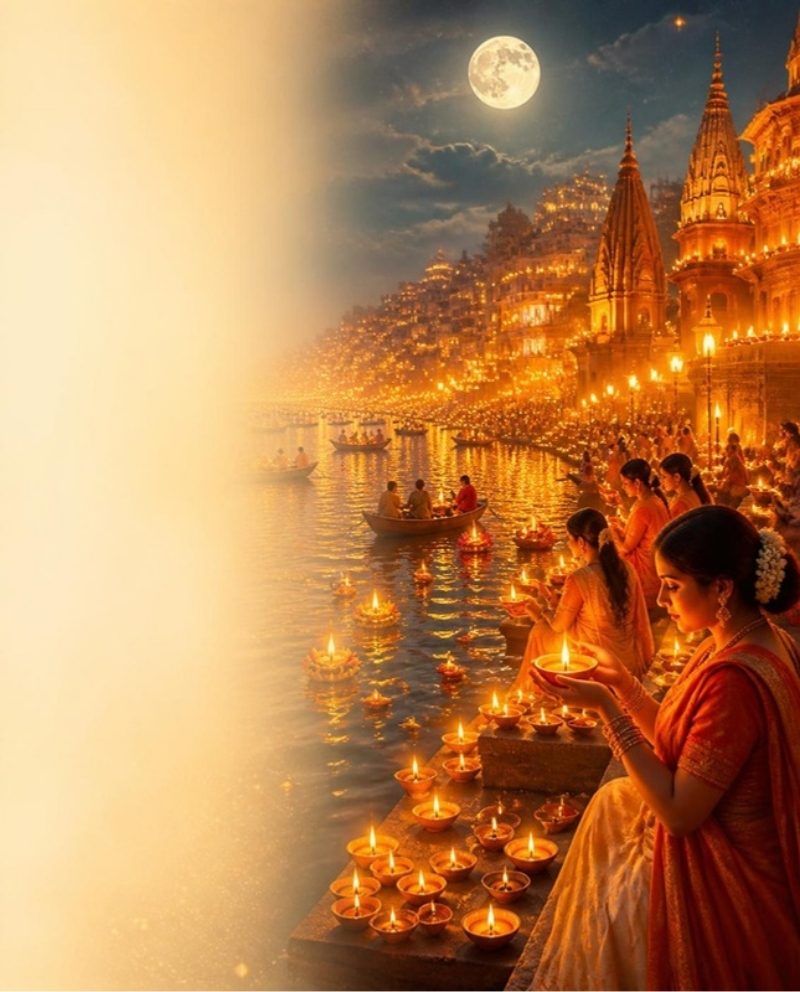
Pinda daan at Vishnupad, Gaya; tarpan at the ghats of Varanasi, Prayagraj and Haridwar; in Bengal Mahalaya marks the start of Devi Paksha and Durga Puja
- Gaya (Bihar)
- The Pitru Paksha Mela draws lakhs of pilgrims for pinda daan at the Vishnupad temple, the Phalgu river and the Akshayvat.
- Varanasi, Prayagraj and Haridwar
- Tarpan and shraddha at the ghats, especially on Mahalaya Amavasya; Pishach Mochan Kund in Varanasi is a special shraddha site.
- Bengal
- Mahalaya morning begins with tarpan at the Ganga and the radio recitation of "Mahishasura Mardini" (Birendra Krishna Bhadra, broadcast since the 1930s), marking the start of Devi Paksha and the countdown to Durga Puja.
- Maharashtra and the South
- Mahalaya shraddha and offerings to crows (kaakbali) are common; Tamil households observe Mahalaya Amavasai with tarpanam at temple tanks and the sea.
- Across India
- Families avoid buying new things and holding weddings during the fortnight, out of respect for the ancestors.
Prayers to recite
Do’s and don’ts
Do
- Remember and thank your ancestors by name
- Feed the hungry and animals
- Keep the shraddha simple and sincere
Avoid
- Avoid onion, garlic and non-vegetarian food on shraddha days
- Traditionally, new purchases and auspicious ceremonies are postponed
Temples to visit for Pitru Paksha

Frequently asked questions
When is Pitru Paksha in 2026?
Pitru Paksha 2026 falls on Saturday, 26 September 2026 (Bhadrapada Purnima to Ashvin Amavasya (Mahalaya)). Dates are for New Delhi and may differ by a day in other places.
Pitru Paksha 2027 kab hai?
Pitru Paksha 2027 Wednesday, 15 September 2027 ko hai. Apne shahar ki sahi tithi ke liye Panchang dekhein.
पितृ पक्ष 2027 कब है?
पितृ पक्ष 2027 बुधवार, 15 सितंबर 2027 को है। अपने शहर की सही तिथि और मुहूर्त के लिए पंचांग देखें।
When is Pitru Paksha in 2027?
Pitru Paksha 2027 falls on Wednesday, 15 September 2027 (Bhadrapada Purnima to Ashvin Amavasya (Mahalaya)). Dates are for New Delhi and may differ by a day in other places.
When is Pitru Paksha in 2028?
Pitru Paksha 2028 falls on Sunday, 3 September 2028 (Bhadrapada Purnima to Ashvin Amavasya (Mahalaya)). Dates are for New Delhi and may differ by a day in other places.
Why is Pitru Paksha celebrated?
The fortnight of the ancestors, when Hindus offer shraddha, tarpan and food in gratitude to three generations of their forefathers, ending on Mahalaya (Sarva Pitru) Amavasya.
How is Pitru Paksha celebrated?
Shraddha on the tithi of each ancestor's death. Tarpan — offering water with black sesame and kusha grass. Pinda daan (rice balls) at home or at Gaya, Prayagraj, Haridwar or Varanasi. Feeding Brahmins, the poor, cows, dogs and crows. Reading the Bhagavad Gita or Garuda Purana. Sarva Pitru Amavasya shraddha for all ancestors on Mahalaya.
What is offered or eaten on Pitru Paksha?
Kheer, puri, seasonal vegetables (no onion or garlic), black sesame, rice pinda, water with til
When is Pitru Paksha in 2027?
From Wednesday, 15 September (Purnima shraddha) to Mahalaya Amavasya on Wednesday, 29 September 2027. Check the Panchang for each tithi in your city.
On which day should I do shraddha?
On the tithi (lunar day) of the ancestor's death. If the tithi is not known, do it on Sarva Pitru (Mahalaya) Amavasya, the day for all ancestors.
Why are crows fed during Pitru Paksha?
Tradition sees the crow as a messenger to the ancestors; food taken by crows is believed to reach the pitrs. Cows, dogs and ants are fed too.
Can women perform shraddha?
Customs differ. Many scriptures and communities allow a wife, daughter or daughter-in-law to perform shraddha when there is no son, and simple tarpan and charity in the ancestors' name can be done by anyone.
Why is Pitru Paksha considered inauspicious for new things?
The fortnight is dedicated to remembering the dead, so families traditionally postpone weddings, house-warming and major purchases until after Mahalaya and Navratri begin.
 30 Sep2027
 9 Oct2027
 15 Oct2027
 15 Oct2027