Bhaskaravarman was the last and most celebrated king of the Varman dynasty of Kamarupa, the ancient kingdom of the Brahmaputra valley. He was the younger son of King Susthitavarman and came to the throne after his elder brother Supratishthitavarman. The dynasty claimed descent from the legendary Naraka and his son Bhagadatta, the king of Pragjyotisha who fights in the Mahabharata.
Xuanzang wrote that the king of Kamarupa was named Bhaskaravarman, also called Kumara, that he loved learning, and that men of talent came from far away to his court.Summary of Xuanzang's account of Kamarupa, 7th century
He is often called Kumara, "the prince" or "the bachelor" — a name used by Xuanzang and by Bana — because he never married. With him the Varman line came to an end.
Alliance with Harsha
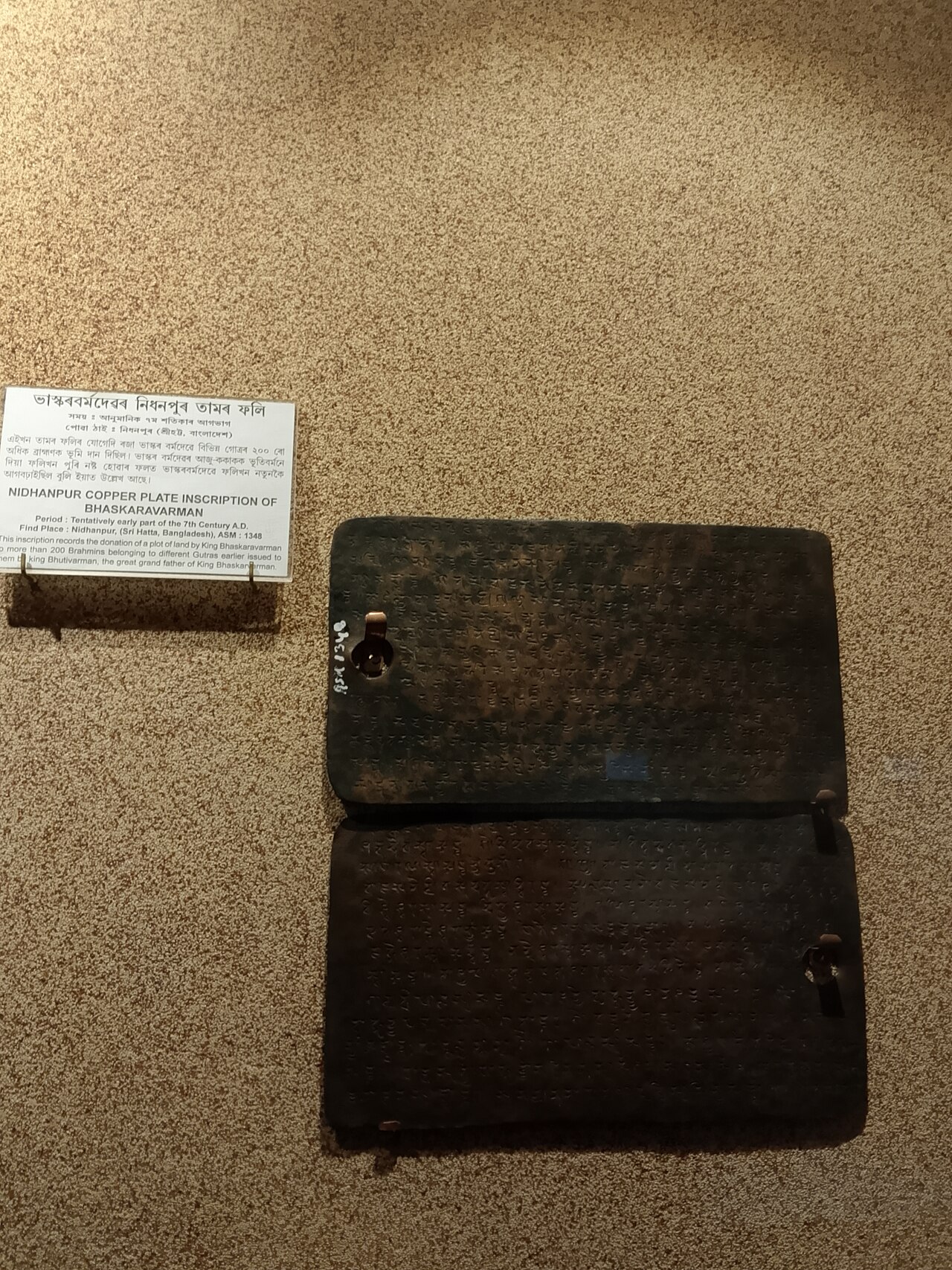
Bana's Harshacharita describes how, early in Harsha's reign, an envoy from Kamarupa named Hamsavega arrived with rich gifts, including a jewelled umbrella, and proposed a lasting friendship. Both kings had reason to fear Shashanka, the king of Gauda in Bengal, who had killed Harsha's brother. The alliance held for the rest of their lives. After Shashanka's death, Bhaskaravarman extended his power into Bengal; his Nidhanpur copper plates were issued from his victorious camp at Karnasuvarna, Shashanka's old capital.
Xuanzang's visit
The Chinese pilgrim Xuanzang, then studying at Nalanda, received a pressing invitation from Bhaskaravarman and visited Kamarupa around 642 CE. He describes a fertile, well-watered land, a people devoted to the Hindu gods, and a king who honoured scholars. When Harsha demanded that the pilgrim be sent to him, Bhaskaravarman at first refused — and then, after a sharp exchange, came in person with Xuanzang to meet Harsha.
He then attended Harsha's great assembly at Kanyakubja and the gift-giving at Prayag, marching in the procession beside the emperor.
Xuanzang also observed that the people of Kamarupa worshipped the Hindu gods, with around a hundred temples, while Buddhism had few followers there. Yet the king received the Buddhist pilgrim with great honour and listened to his teaching — an early example of the respect for scholars of every school for which Indian courts were known.
The copper plates
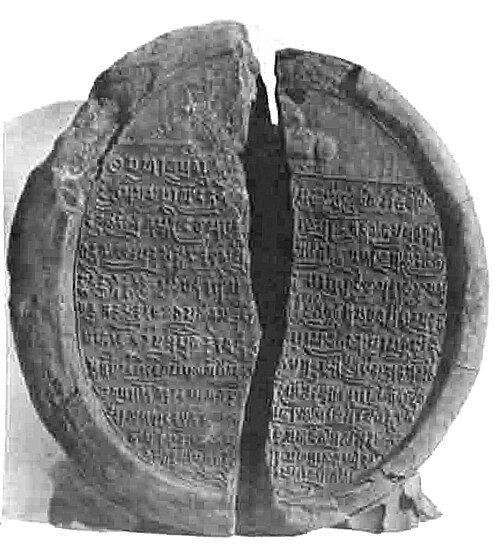
Two copper-plate grants of his reign are known. The Nidhanpur plates, found in the Sylhet region of today's Bangladesh, renew a large land grant to many brahmin families first made by his ancestor Bhutivarman, whose original plates had been burnt. They give a long genealogy of the dynasty and are one of the main sources for early Assamese history. The Dubi plates also record a grant and the royal line. Both show Sanskrit learning and Vedic schools well established in the Brahmaputra and Surma valleys.
Ties with China
Chinese records report that envoys of the Tang court reached Kamarupa in the 640s, and that the king asked for an image of Laozi and a Sanskrit translation of the Daodejing — a translation that, according to Chinese sources, was entrusted to Xuanzang. He is also said to have sent gifts to the Tang emperor. These contacts show Kamarupa as a link between India and China along the eastern routes.
How they are remembered
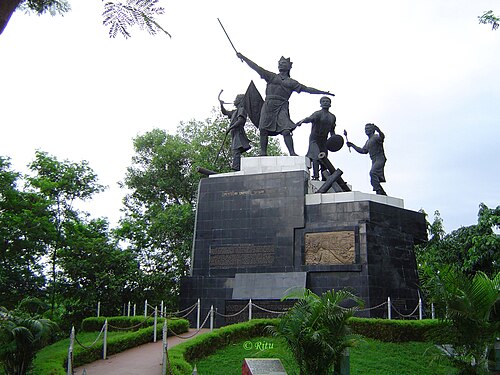
Bhaskaravarman's reign was the high point of ancient Kamarupa, when an Assamese king stood as an equal partner of the emperor of North India and was known by name in China. Assam remembers him as a symbol of its ancient place in Bharat's history; the Kumar Bhaskar Varma Sanskrit and Ancient Studies University at Nalbari is named after him. After his death power passed to a new line founded by Salasthambha, and the Varman name disappeared from the record.
Ekatmata Stotra · Stanza 23
Named in Stanza 23 of the Ekatmata Stotra — those who held the line against invasion.
लाचित्-भास्करवर्मा च यशोधर्मा नृपोत्तमः।
कृष्णदेवश्च ललितादित्यो वीराः प्रकीर्तिताः॥
Sources: Wikipedia: Bhaskaravarman · Wikipedia: Nidhanpur copper-plate inscription · Wikipedia: Varman dynasty. Written afresh for The Hindu Book; corrections welcome at [email protected].