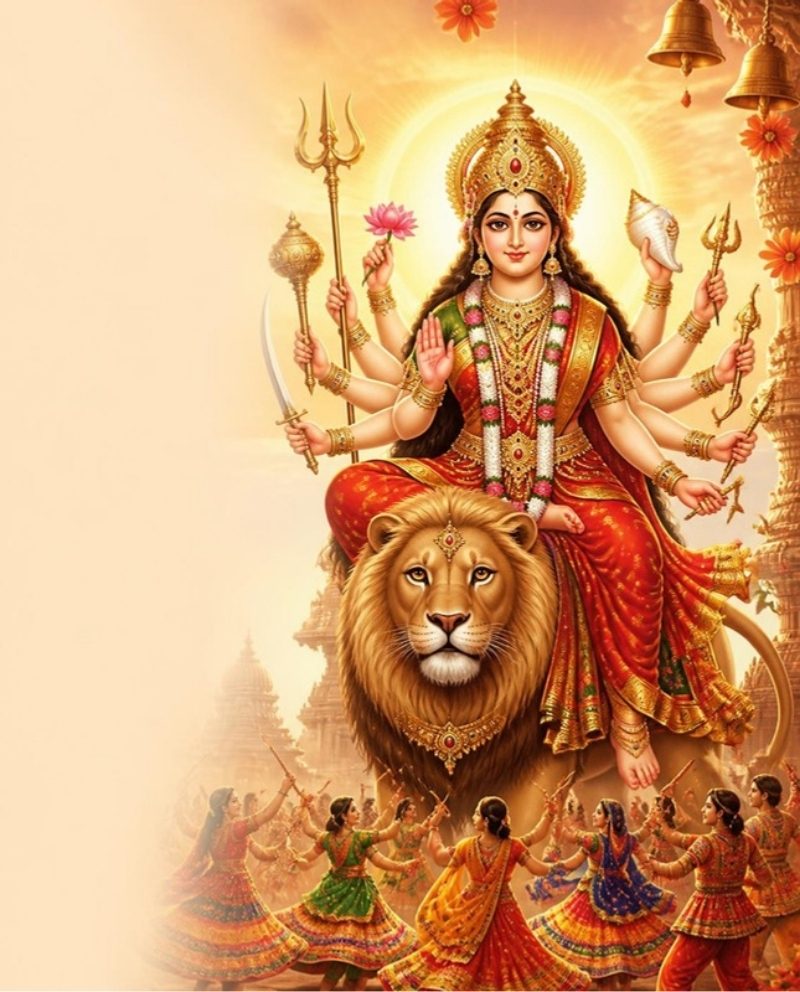
When is Sharad Navratri?
| Year | Date | Day |
|---|---|---|
| 2026 | 11 October | Sunday |
| 2027 | 30 September | Thursday |
| 2028 | 19 September | Tuesday |
Observed on Shukla Pratipada to Navami, Ashwin month. Dates follow the Panchang for New Delhi and can differ by a day in other places — check the Panchang for your city.
What Sharad Navratri means
Sharad Navratri — 'the nine nights of autumn' — begins on the first day of the bright half of Ashvin and is the most widely celebrated of the year's Navratris. For nine nights the Divine Mother is worshipped in her nine forms, the Navadurga, and on the tenth day, Vijayadashami, her victory is celebrated.
The Devi Mahatmya (Durga Saptashati) tells how the gods, defeated by the buffalo-demon Mahishasura, poured their combined radiance into one blazing form — Durga — and armed her with their weapons. Navratri relives that victory, and is also read inwardly: the first three nights are often dedicated to Durga, who destroys our impurities, the next three to Lakshmi, who gives inner wealth, and the last three to Saraswati, who gives knowledge.
India keeps the festival in many ways. Homes set up the kalash (ghatasthapana) and sow barley (jau); devotees fast and read the Saptashati; Gujarat dances garba and dandiya through the night; Bengal worships Durga in grand pandals from Shashthi to Dashami; Tamil Nadu arranges Golu dolls; and North India stages the Ramlila, which ends with Ravana's effigy burning on Dussehra.
The story of Sharad Navratri
Mahishasura, son of the asura Rambha and a buffalo, won the heavens and drove out Indra and the devas. Later tradition says he had won a boon that no man or god could kill him. The gods went to Brahma, Vishnu and Shiva, and from their anger — and from the anger of every god — a great light streamed out and became the Devi. Shiva gave her a trident, Vishnu a discus, Varuna a conch, Agni a spear, Vayu a bow, Indra a thunderbolt, and Himavan a lion to ride.
The Devi Mahatmya describes her battle with Mahishasura's generals and his armies, and then with the demon himself, who kept changing form — buffalo, lion, man with a sword, elephant — until, as he was emerging from his buffalo form, she pinned him with her foot, pierced him with her trident and cut off his head. The gods sang her praises in the hymn that includes 'Ya Devi sarvabhuteshu'.
Tradition holds that the battle lasted nine days and nights and that the Devi won on the tenth, Vijayadashami. Another story links Navratri to Rama, who is said to have worshipped the Devi before his battle with Ravana — the 'akal bodhan', untimely awakening, of Bengal's autumn Durga Puja.
Sharad Navratri puja vidhi, step by step
A simple Navratri observance for home with ghatasthapana. Families differ greatly — some keep a full fast, some fast on the first and last days, some read the Saptashati daily — follow your own tradition.
What you need
- A clay or copper kalash with water, mango leaves, a coconut wrapped in red cloth, and red thread (mauli)
- A wide clay pot with clean soil and barley (jau) seeds to sow beside the kalash
- An image of Durga, red cloth, a red chunari, sindoor, kumkum, akshat, red flowers and a garland
- An akhand jyoti (a ghee lamp kept burning through the nine days) if your family keeps it
- The Durga Saptashati or Durga Chalisa for daily reading
- Fasting foods: fruit, milk, makhana, sabudana, kuttu and singhara flour, sendha namak
When to do the puja
In 2027 Sharad Navratri begins on Thursday, 30 September. Pratipada starts that morning after Amavasya ends, so ghatasthapana is done on 30 September once Pratipada has begun, in the morning or at Abhijit muhurat. Vijayadashami is on 9 October. Because the Ashtami and Navami tithis fall unevenly this year, calendars may differ on the days of Durga Ashtami and Maha Navami — check your local Panchang. See the Panchang for your city.
Steps
- Ghatasthapana (day 1). Sow barley in the clay pot, set the kalash with water, mango leaves and the coconut on it, tie mauli, and invoke the Devi. Light the akhand jyoti if you keep one.
- Daily puja. Each day, worship that day's form of the Navadurga — Shailaputri, Brahmacharini, Chandraghanta, Kushmanda, Skandamata, Katyayani, Kalaratri, Mahagauri, Siddhidatri — with flowers, a diya and naivedya, and water the barley.
- Daily reading. Read the Durga Saptashati, either in full or a portion each day (with the Kavach, Argala and Keelak), or the Durga Chalisa and 'Ya Devi sarvabhuteshu'.
- Fast. Keep the fast your family follows — fruit and milk, one sattvic meal, or fasting on the first and eighth days — without grains, onion or garlic.
- Kanya puja (Ashtami or Navami). Invite nine young girls (and often one boy as Bhairav or Langur), wash their feet, apply tilak, feed them puri, chana and halwa, and give them gifts — honouring them as the Devi.
- Conclusion. Do a havan on Navami if it is your custom, then on Dashami offer the barley shoots, immerse the kalash water and the shoots, and break the fast.
Offerings & food: Day-by-day colours and bhogs. Puri, chana, halwa on Ashtami/Navami. Kheer, singhade ki kadhi, sabudana khichdi during fast
Mantras for Sharad Navratri
Ya Devi sarvabhuteshu (Durga Saptashati 5)
या देवी सर्वभूतेषु शक्तिरूपेण संस्थिता ।
नमस्तस्यै नमस्तस्यै नमस्तस्यै नमो नमः ॥
yā devī sarvabhūteṣu śaktirūpeṇa saṃsthitā |
namas tasyai namas tasyai namas tasyai namo namaḥ ||
To the Devi who dwells in all beings in the form of power — salutations to her, salutations to her, salutations to her, salutations again and again.
Full text with meaning →Sarva mangala mangalye (Durga Saptashati 11)
सर्वमङ्गलमाङ्गल्ये शिवे सर्वार्थसाधिके ।
शरण्ये त्र्यम्बके गौरि नारायणि नमोऽस्तु ते ॥
sarvamaṅgalamāṅgalye śive sarvārthasādhike |
śaraṇye tryambake gauri nārāyaṇi namo'stu te ||
O auspiciousness of all that is auspicious, O Shiva (the auspicious one), who fulfils every aim, the refuge of all, three-eyed Gauri, Narayani — salutations to you.
Full text with meaning →The nine Durgas (Devi Kavach)
प्रथमं शैलपुत्री च द्वितीयं ब्रह्मचारिणी ।
तृतीयं चन्द्रघण्टेति कूष्माण्डेति चतुर्थकम् ॥
पञ्चमं स्कन्दमातेति षष्ठं कात्यायनीति च ।
सप्तमं कालरात्रीति महागौरीति चाष्टमम् ॥
नवमं सिद्धिदात्री च नवदुर्गाः प्रकीर्तिताः ।
prathamaṃ śailaputrī ca dvitīyaṃ brahmacāriṇī |
tṛtīyaṃ candraghaṇṭeti kūṣmāṇḍeti caturthakam ||
pañcamaṃ skandamāteti ṣaṣṭhaṃ kātyāyanīti ca |
saptamaṃ kālarātrīti mahāgaurīti cāṣṭamam ||
navamaṃ siddhidātrī ca navadurgāḥ prakīrtitāḥ |
First is Shailaputri, second Brahmacharini, third Chandraghanta, fourth Kushmanda, fifth Skandamata, sixth Katyayani, seventh Kalaratri, eighth Mahagauri, and ninth Siddhidatri — these are proclaimed as the nine Durgas.
Full text with meaning →Navarna mantra
ॐ ऐं ह्रीं क्लीं चामुण्डायै विच्चे
oṁ aiṁ hrīṁ klīṁ cāmuṇḍāyai vicce
The nine-syllable mantra of the Devi Mahatmya, chanted with the Saptashati in Navratri. Traditionally taken from a guru before regular japa.
Sharad Navratri across India
Durga Puja in Bengal (massive, Sashti-Dashami), Garba-Dandiya in Gujarat, Golu doll display in Tamil Nadu, Mysore Dasara in Karnataka (royal procession), Ramlila in North India
- West Bengal, Assam, Odisha and Tripura
- Durga Puja: Durga with Lakshmi, Saraswati, Ganesha and Kartikeya is worshipped in pandals from Shashthi to Dashami, with Sandhi Puja at the junction of Ashtami and Navami, and sindoor khela and immersion on Dashami.
- Gujarat
- Nine nights of garba and dandiya raas around a garbo, the lamp-lit pot that stands for the womb of the Devi; Ambaji and Pavagadh draw pilgrims.
- Tamil Nadu, Karnataka and Andhra
- Golu (Bombe Habba): steps of dolls are arranged at home and women visit one another; Saraswati Puja and Ayudha Puja fall on Navami; in Telangana women celebrate Bathukamma with flower stacks.
- Karnataka (Mysuru)
- Mysuru Dasara: the palace is lit every evening, and on Vijayadashami the golden howdah of Chamundeshwari is carried on an elephant in the Jamboo Savari.
- North India
- Ramlila is staged every night, kanya puja is done on Ashtami or Navami, and pilgrims climb to Vaishno Devi and other Devi shrines; the festival ends with Ravan Dahan on Dussehra.
- Kerala
- Books and tools are placed for worship on Durgashtami (Pooja Vaypu) and taken back on Vijayadashami, when young children are initiated into writing (Vidyarambham).
Prayers to recite
Do’s and don’ts
Do
- Follow proper fast rules
- Participate in community garba
- Feed kanya on Ashtami/Navami
Avoid
- Avoid alcohol and non-veg
- Avoid buying leather items
- Avoid cutting hair and nails during the 9 days
Temples to visit for Sharad Navratri


Frequently asked questions
When is Sharad Navratri in 2026?
Sharad Navratri 2026 falls on Sunday, 11 October 2026 (Shukla Pratipada to Navami, Ashwin month). Dates are for New Delhi and may differ by a day in other places.
Sharad Navratri 2027 kab hai?
Sharad Navratri 2027 Thursday, 30 September 2027 ko hai. Apne shahar ki sahi tithi ke liye Panchang dekhein.
शरद नवरात्रि 2027 कब है?
शरद नवरात्रि 2027 गुरुवार, 30 सितंबर 2027 को है। अपने शहर की सही तिथि और मुहूर्त के लिए पंचांग देखें।
When is Sharad Navratri in 2027?
Sharad Navratri 2027 falls on Thursday, 30 September 2027 (Shukla Pratipada to Navami, Ashwin month). Dates are for New Delhi and may differ by a day in other places.
When is Sharad Navratri in 2028?
Sharad Navratri 2028 falls on Tuesday, 19 September 2028 (Shukla Pratipada to Navami, Ashwin month). Dates are for New Delhi and may differ by a day in other places.
Why is Sharad Navratri celebrated?
The autumnal nine-night worship of the Divine Mother in her nine forms. The most celebrated Navratri of the year.
How is Sharad Navratri celebrated?
Ghatasthapana (Kalash installation) on first day. Daily worship of each of the 9 forms (one per day). Fasting — fruits, milk, singhade ka atta. Garba and Dandiya raas (Gujarat tradition, now pan-India). Kanya pujan on Ashtami/Navami (feeding 9 young girls as Devi). Reading Durga Saptashati (Devi Mahatmyam). Ramlila performances across North India (ends on Dussehra). Durga Puja pandals in Bengal (five days, Shashthi to Dashami).
What is offered or eaten on Sharad Navratri?
Day-by-day colours and bhogs. Puri, chana, halwa on Ashtami/Navami. Kheer, singhade ki kadhi, sabudana khichdi during fast
When is Sharad Navratri in 2027?
It begins on Thursday, 30 September 2027 with ghatasthapana after Amavasya ends that morning, and Vijayadashami is on Saturday, 9 October. Calendars may differ on Durga Ashtami and Maha Navami this year because of how the tithis fall — check your local Panchang.
What are the nine forms of Durga?
Shailaputri, Brahmacharini, Chandraghanta, Kushmanda, Skandamata, Katyayani, Kalaratri, Mahagauri and Siddhidatri — one worshipped on each day, as listed in the Devi Kavach.
What can be eaten during the Navratri fast?
Fruit, milk and curd, makhana, sabudana, potatoes, kuttu (buckwheat), singhara (water chestnut) and rajgira flour, and sendha namak. Grains, pulses, onion, garlic and ordinary salt are avoided.
When should kanya puja be done?
On Ashtami or Navami, according to family custom. Nine girls, usually between two and ten years old, are honoured as forms of the Devi.
Do the Navratri colours of the day come from scripture?
No. The popular list of a colour for each day is a modern custom, set each year by weekday; it is not found in the Puranas or the Saptashati. Wear what you like — red is traditional for the Devi.
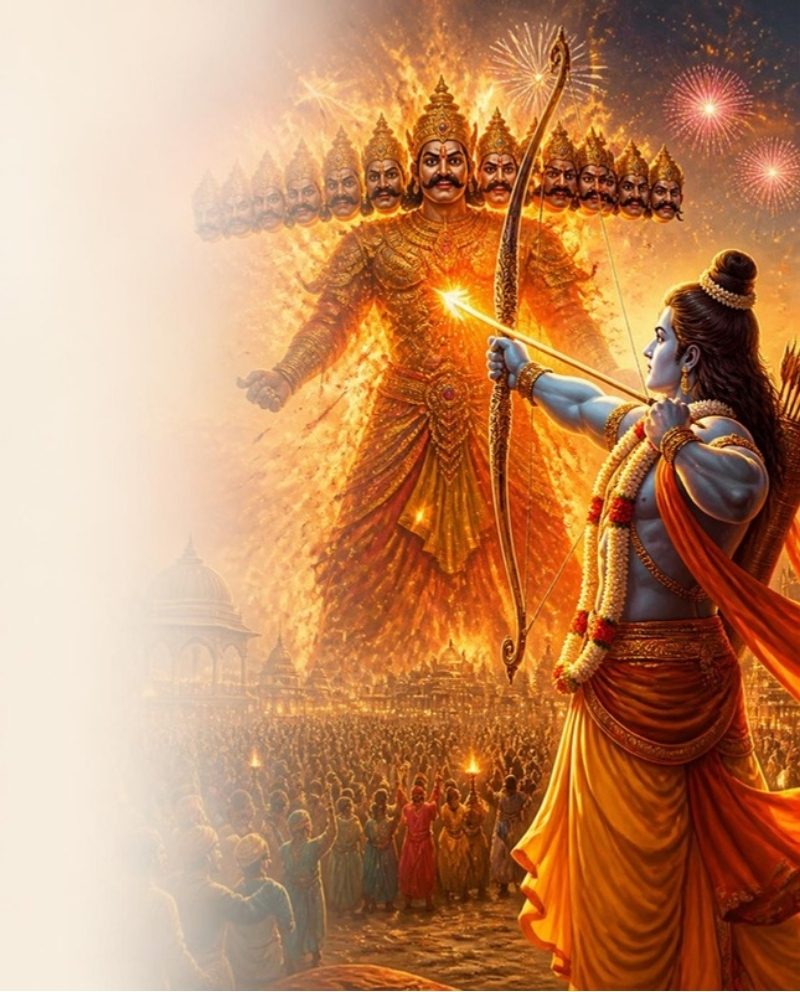 9 Oct2027
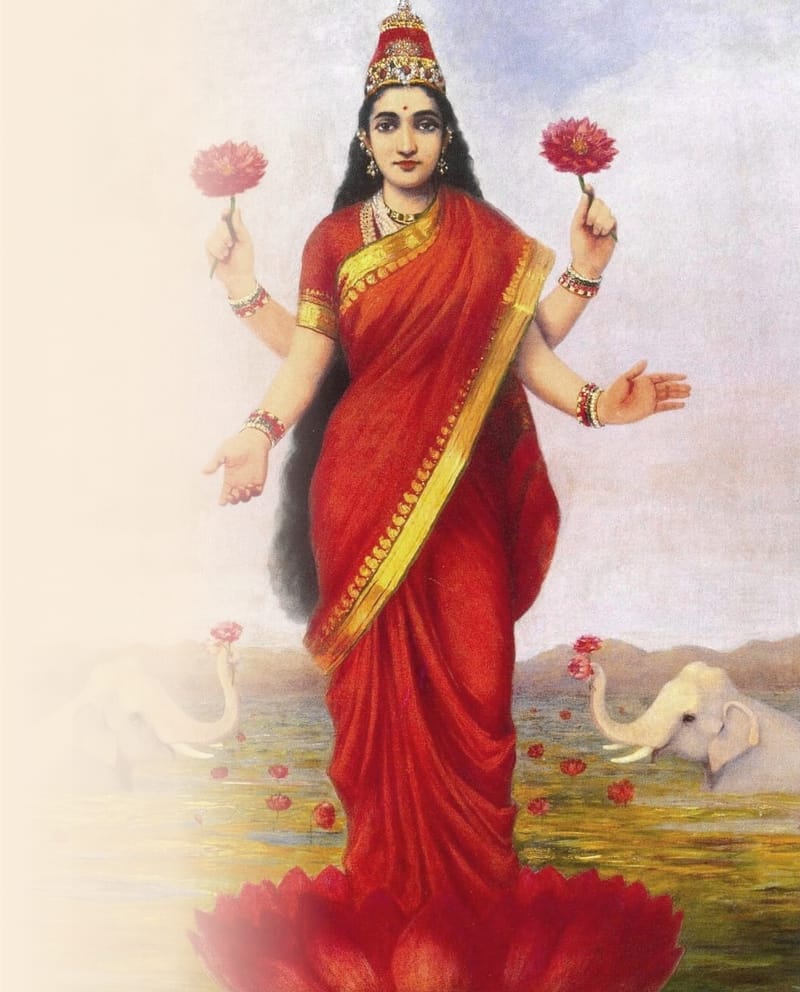 15 Oct2027
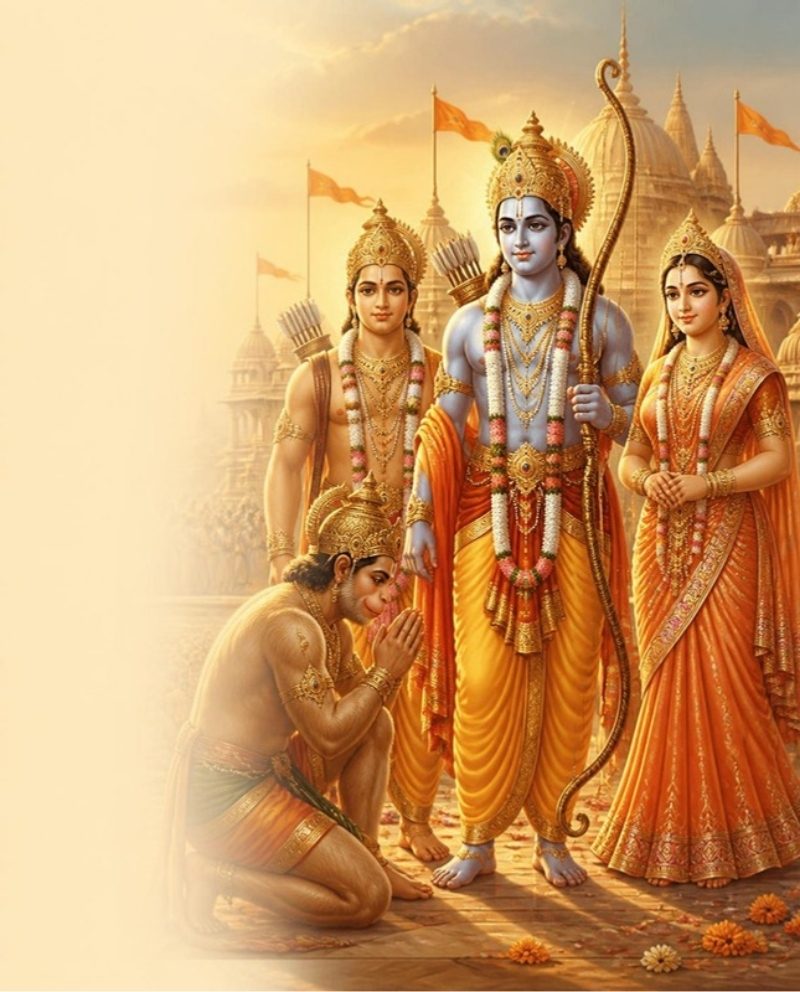 15 Oct2027
 18 Oct2027