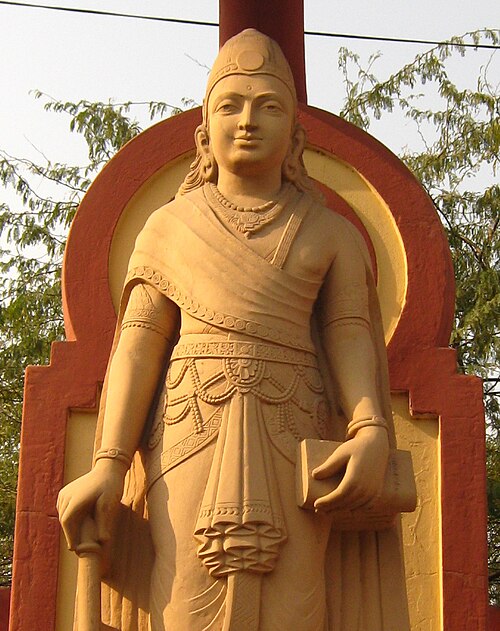
Ashoka was a grandson of Chandragupta Maurya and the son of Bindusara. Buddhist chronicles say that he served as governor at Ujjain and Taxila, and came to the throne at Pataliputra around 268 BCE after a struggle among the princes; later legends exaggerate his early cruelty to make his change more dramatic.
“All men are my children.”Ashoka's Separate Rock Edict at Dhauli
At its height his empire stretched from Afghanistan to Bengal and deep into the south — the largest Indian state until the Mughals and the British. In his own inscriptions he calls himself Devanampiya Piyadasi, "beloved of the gods, of gracious looks".
Kalinga
About eight years after his coronation Ashoka conquered Kalinga, on the coast of today's Odisha. In his Thirteenth Rock Edict he records that 150,000 people were carried away, 100,000 killed and many times that number died — and declares his deep remorse. From then on, he says, the only conquest worth making is dhamma-vijaya, conquest by righteousness.
The edicts
Ashoka had his messages carved on rocks and polished sandstone pillars across the empire, in Prakrit in the Brahmi script, and in Kharoshthi, Greek and Aramaic in the northwest. They are the oldest deciphered Indian writings. He asks his people to respect parents, teachers and elders, be generous to brahmins and shramanas, be kind to servants and animals, and honour the faiths of others: "whoever praises his own sect while condemning others harms his own". He banned many animal sacrifices, built hospitals for people and animals, planted shade trees and dug wells along roads.
Buddhism and beyond
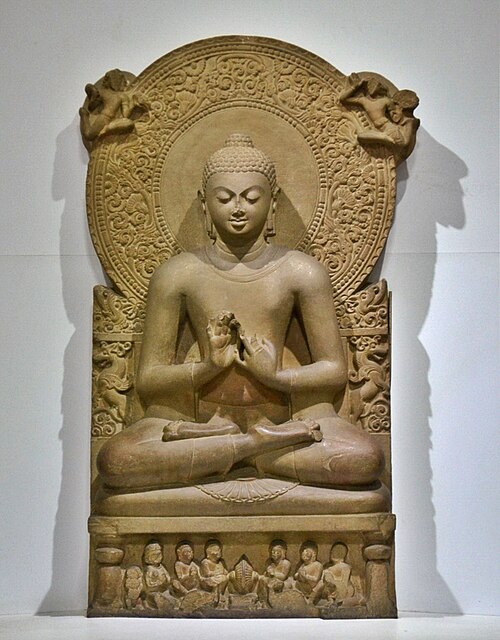
Ashoka became a lay follower of the Buddha, visited Lumbini and Bodh Gaya, and built stupas, including the first at Sanchi. Buddhist tradition credits him with the Third Council at Pataliputra and with sending missions abroad — his son Mahinda and daughter Sanghamitta took the teaching to Sri Lanka. After his death the empire declined within fifty years, and his name was largely forgotten in India until James Prinsep deciphered the Brahmi script in 1837.
How they are remembered
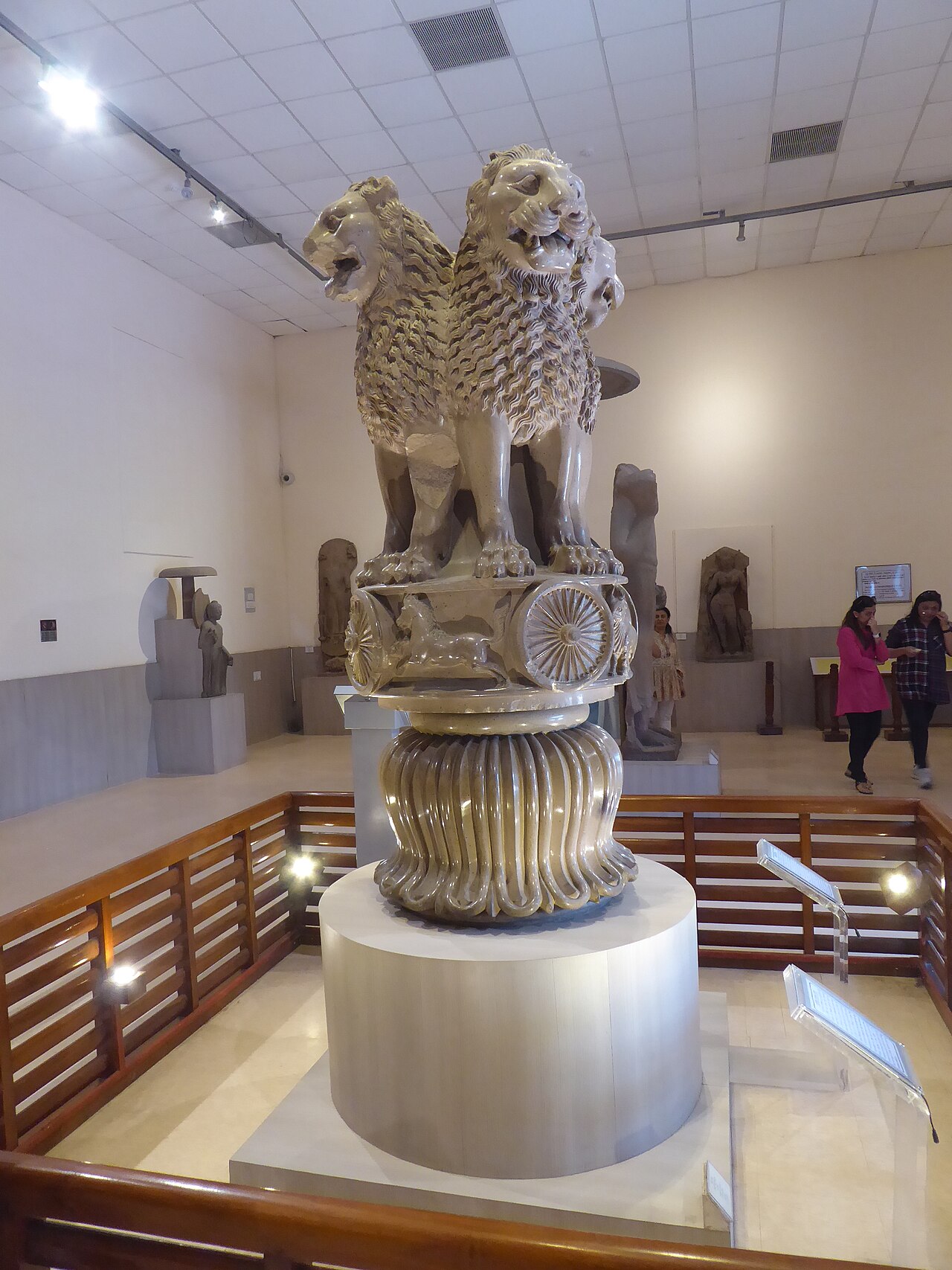
Free India took the Lion Capital of Sarnath as its national emblem, with "Satyameva Jayate" beneath, and placed the 24-spoked Ashoka Chakra at the centre of the flag. His edicts at Girnar, Dhauli, Kalsi and elsewhere, and the stupa at Sanchi, still stand.
Ekatmata Stotra · Stanza 21
Named in Stanza 21 of the Ekatmata Stotra — early sages and empire-builders.
अगस्त्यः कम्बुरुचिरः कौण्डिन्यो राजेन्द्रचोल:।
अशोकः पुष्यमित्रश्च खारवेलः प्रकीर्तिताः॥
Sources: Wikipedia: Ashoka · Wikipedia: Edicts of Ashoka. Written afresh for The Hindu Book; corrections welcome at [email protected].