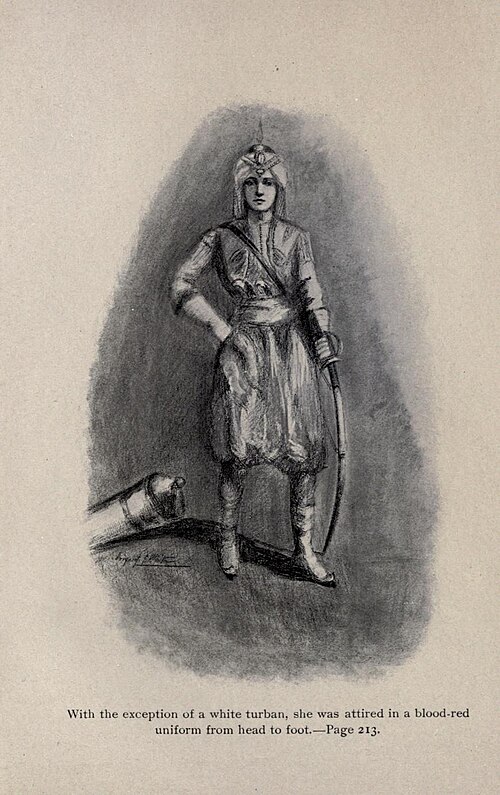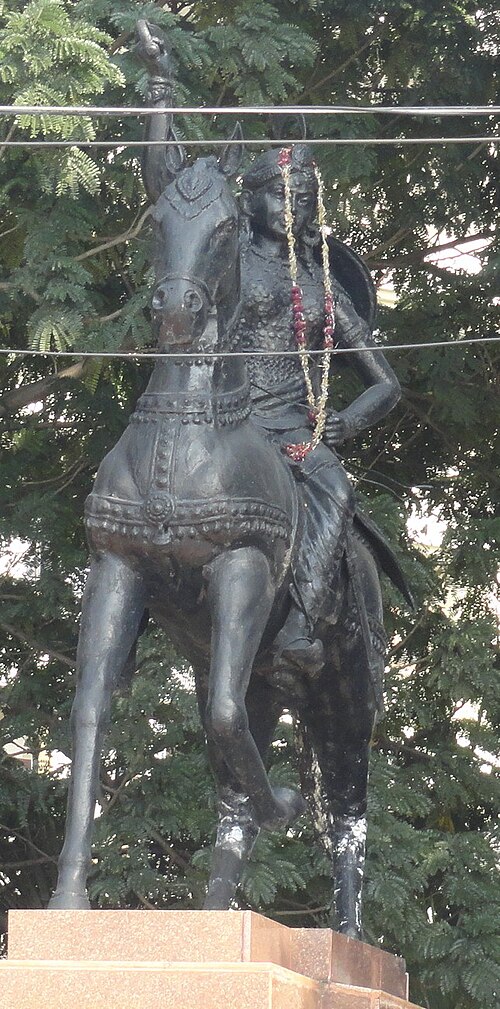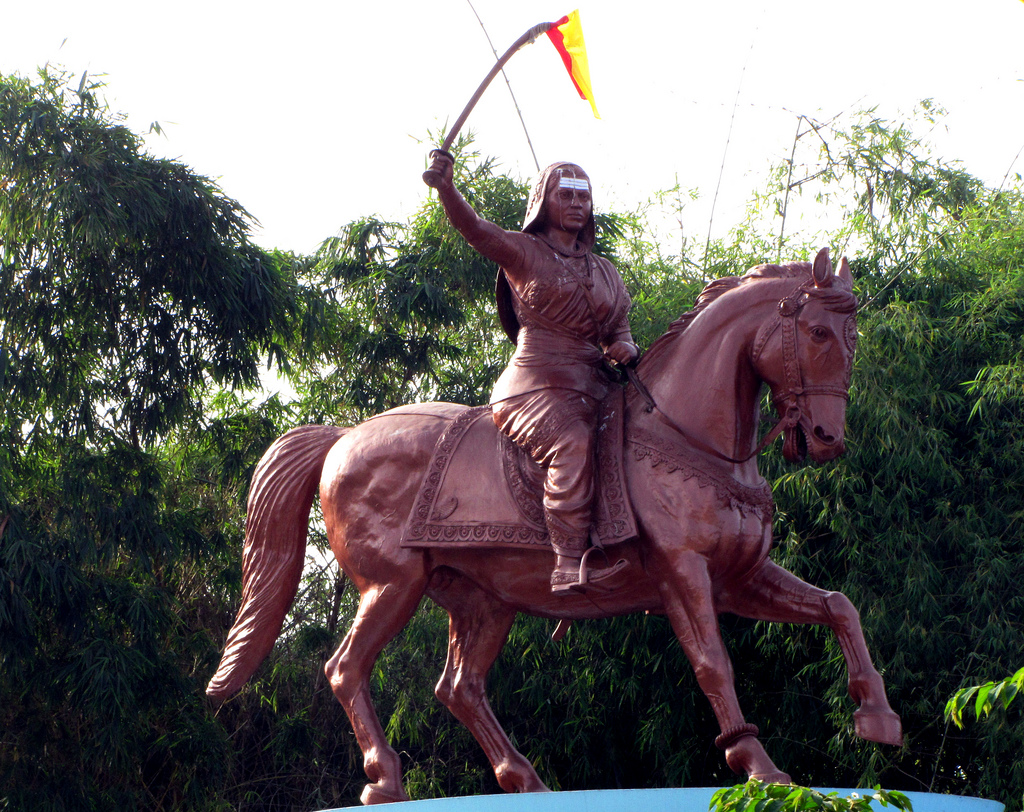
Chennamma was born in 1778 at Kakati near Belagavi in northern Karnataka, into a Lingayat family. She was trained in riding, archery and swordsmanship from childhood. At fifteen she married Raja Mallasarja Desai of Kittur, a small but prosperous kingdom.
Kittur is ours; we shall not hand it over to strangers.Her stand, as remembered in Kannada ballads
Her husband died in 1816, and their only son in 1824. Chennamma adopted a boy, Shivalingappa, as heir — as Indian custom allowed.
The battle of 1824
The East India Company, through the Dharwad collector St John Thackeray, refused to recognise the adopted son and sought to take over Kittur and its treasury. Chennamma refused. When Thackeray attacked in October 1824, Kittur's soldiers, led by the queen and her lieutenant Amatur Balappa, defeated the Company's force; Thackeray was killed and two British officers taken hostage. She released them on a promise that the attack would stop.
Defeat and prison
The Company broke its word and returned with a much larger army in December 1824. After fierce resistance Kittur fell, and Chennamma was captured. She was imprisoned in the fort of Bailhongal, where she spent her last years in prayer and died in February 1829.
Sangolli Rayanna
Her loyal soldier Sangolli Rayanna carried on a guerrilla war in the queen's name until he was betrayed and hanged by the British in 1831. Kannada folk songs, lavanis, kept both their memories alive long before the history books did.
How they are remembered
Karnataka celebrates the Kittur Utsav every October to mark her victory. Her statue was installed in the Parliament complex in New Delhi in 2007, and her samadhi at Bailhongal is a memorial.
Ekatmata Stotra · Stanza 11
Named in Stanza 11 of the Ekatmata Stotra — six women of the last four centuries.
लक्ष्मीबाई अहल्या च चेन्नम्मा रुद्रमादेवी।
निवेदिता शारदा मातृविभूत्य: नमो नमः॥
Sources: Wikipedia: Kittur Chennamma · Wikipedia: Sangolli Rayanna. Written afresh for The Hindu Book; corrections welcome at [email protected].