Basava, known with love as Basavanna, was born in the early twelfth century at Basavana Bagewadi (or, by another account, Ingaleshwar) in northern Karnataka, into a Shaiva brahmin family. As a youth he refused the sacred thread, saying he would wear no symbol that divided people, and went to study at Kudalasangama, where the Krishna and Malaprabha rivers meet, devoting himself to Shiva as Kudalasangamadeva.
ಎನ್ನ ಕಾಲೇ ಕಂಬ, ದೇಹವೇ ದೇಗುಲ, ಶಿರ ಹೊನ್ನ ಕಳಸವಯ್ಯಾ“The rich build temples for Shiva; what shall I, a poor man, do? My legs are the pillars, my body the shrine, my head the golden dome.”A vachana of Basavanna
He later moved to Kalyana, capital of the Kalachuri king Bijjala II, and rose to become his chief minister and treasurer.
The Anubhava Mantapa
At Kalyana Basavanna founded the Anubhava Mantapa, "hall of experience", where mystics of every caste and both sexes met to discuss spiritual life. Allama Prabhu presided, and Akka Mahadevi, Channabasavanna and hundreds of others — potters, washermen, cobblers, weavers — took part. It has been called one of the earliest democratic assemblies in India.
Vachanas
Basavanna and his fellow sharanas expressed their faith in vachanas, short free-verse sayings in plain Kannada. They taught devotion to Shiva through the ishtalinga, a small linga worn on the body; rejected caste, idol temples run by priests, and empty ritual; and honoured honest labour with the motto Kayakave Kailasa — "work is heaven". Basavanna also taught dasoha, sharing what one earns.
The crisis at Kalyana
When the sharanas celebrated a marriage between a brahmin's daughter and the son of a cobbler-caste family, orthodox anger led to the punishment of the families and violence in Kalyana. Basavanna left the city and died at Kudalasangama. His followers carried the vachanas across Karnataka and beyond, forming the Lingayat community.
How they are remembered
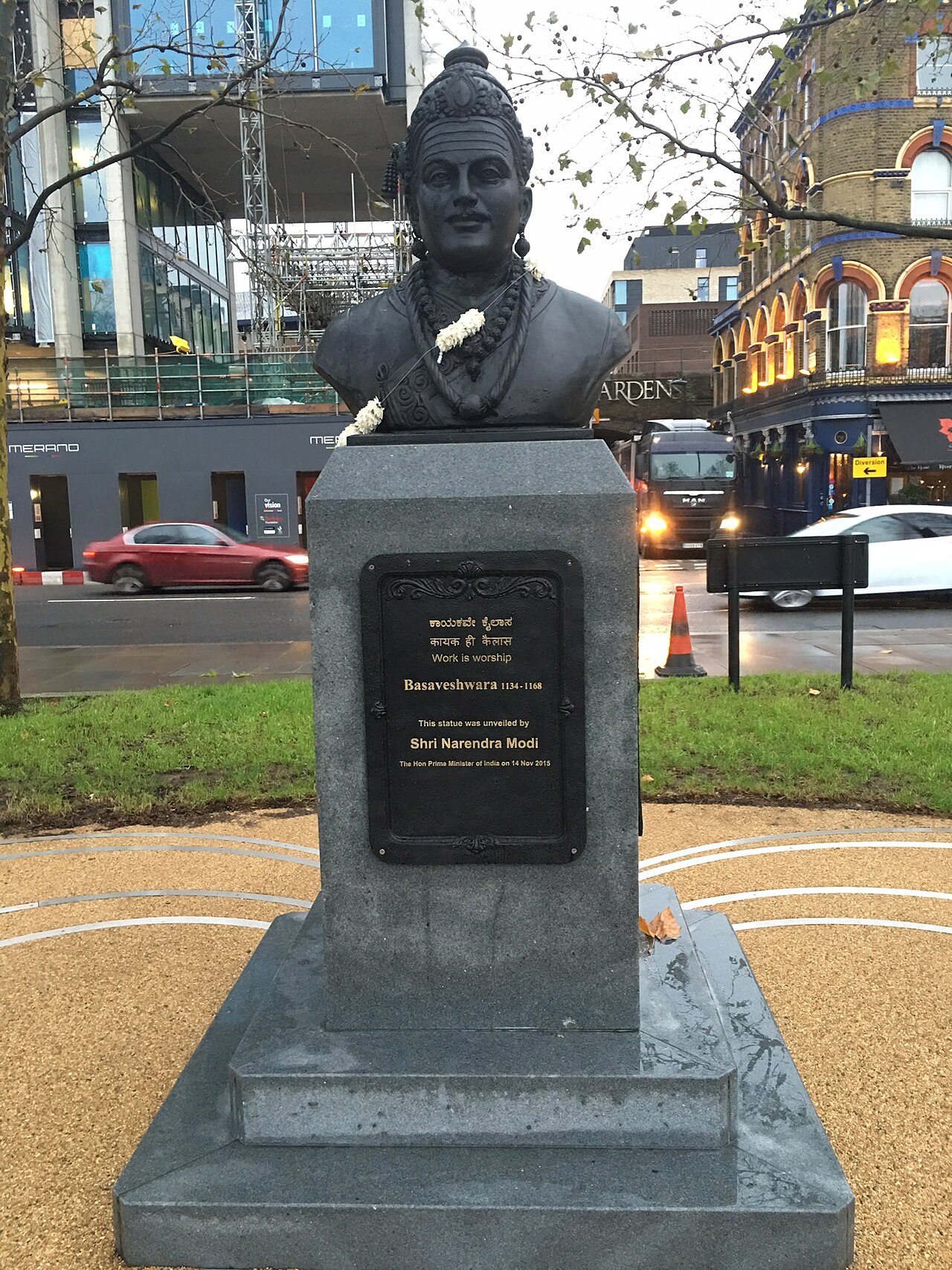
Basava Jayanti on Akshaya Tritiya is celebrated across Karnataka, which declared him its cultural leader in 2024. His statue stands on the Albert Embankment in London, unveiled in 2015, and the Basava Kalyana and Kudalasangama memorials draw pilgrims.
Ekatmata Stotra · Stanza 15
Named in Stanza 15 of the Ekatmata Stotra — from Buddha and Mahāvīra to Basaveśvara.
बुद्धो जिनश्च गोरक्षो वल्लुवस्तिरुनामकः।
नायन्माराश्च आळ्वाराः कम्बन्बसवेश्वरौ तथा॥
Sources: Wikipedia: Basava · Wikipedia: Vachana sahitya. Written afresh for The Hindu Book; corrections welcome at [email protected].