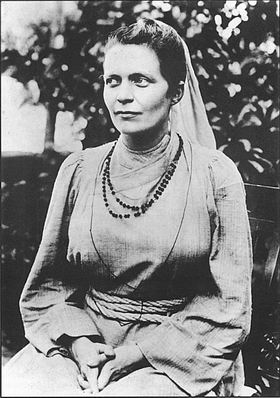
Margaret Elizabeth Noble was born on 28 October 1867 at Dungannon in County Tyrone, Ireland, the daughter of a Protestant minister. She trained as a teacher, became interested in new methods of child education, and ran her own school in Wimbledon, London, where she was also part of literary and reform circles.
“The mother's heart, the hero's will, / The sweetness of the southern breeze…”Swami Vivekananda, "A Benediction" — the poem he wrote for Nivedita
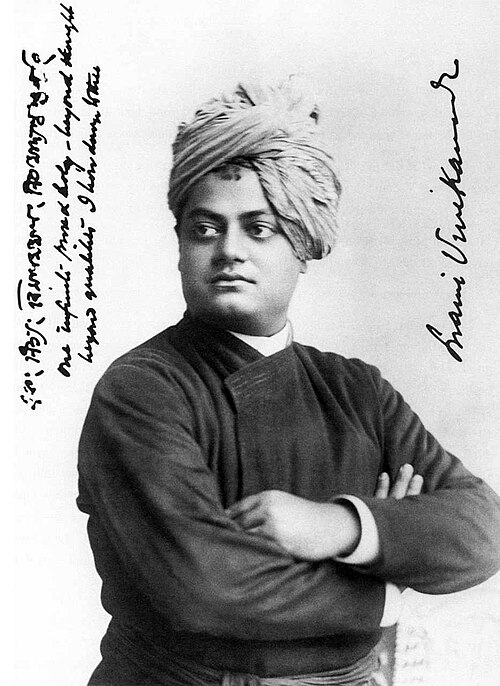
In November 1895 she heard Swami Vivekananda speak at a private gathering in London. His teaching, and his call for workers to serve the women of India, changed the course of her life. She sailed for India and reached Calcutta in January 1898. On 25 March 1898 Vivekananda initiated her into brahmacharya and gave her the name Nivedita — "the dedicated one".
The school at Bagbazar
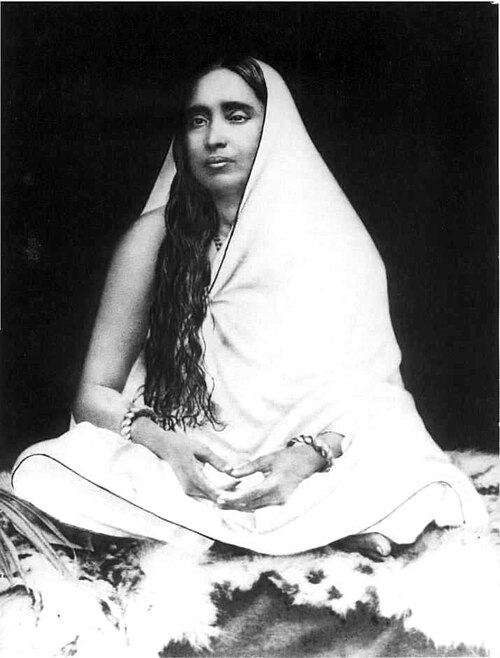
In November 1898, in a small house in the Bagbazar quarter of north Calcutta, Nivedita opened a school for girls, blessed by Sarada Devi. She went from house to house persuading families to send their daughters, and combined Indian ideals with practical skills. The school, later run by the Ramakrishna Sarada Math, continues today.
When plague struck Calcutta in 1899 she organised relief work with the young monks, cleaning lanes and nursing the sick herself.
In 1898 she travelled with Vivekananda and a small group of Western disciples through North India to Almora and Kashmir, and with him to the cave of Amarnath — journeys she recorded in Notes of Some Wanderings with the Swami Vivekananda. From 1899 to 1902 she lectured in England and America to raise money for her school.
Nationalism
After Vivekananda's death in 1902, Nivedita threw herself into the national movement. Because the Ramakrishna Order kept away from politics, she formally separated from it, while remaining close to its monks and to Sarada Devi. She knew Aurobindo Ghosh, Gopal Krishna Gokhale and many leaders of the swadeshi movement, wrote and lectured on Indian unity, and helped families of political prisoners. Her letters and work were watched by the British authorities.
Around 1904 she designed one of the earliest proposals for an Indian national flag, bearing the vajra, the thunderbolt, as a symbol of selfless strength.
Her house in Bosepara Lane became a meeting place for writers, scientists and patriots, and she was a frequent visitor to the Tagore and Bose households.
Science, art and letters
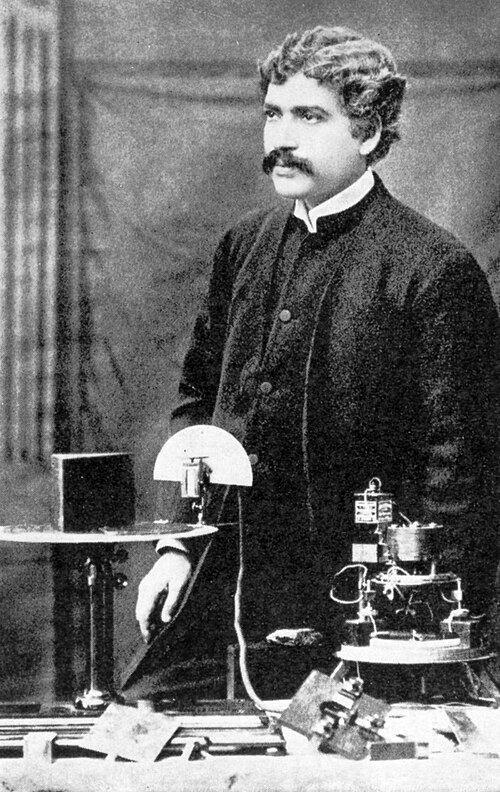
Nivedita encouraged the physicist Jagadish Chandra Bose, helping him write and edit his books and raise support for his research. She championed the Bengal School of painters around Abanindranath Tagore and urged Indian artists to draw on their own traditions. Her own books — The Web of Indian Life, Kali the Mother, Cradle Tales of Hinduism and The Master as I Saw Him — presented Indian life and religion to Western readers with deep sympathy. Later writers have observed that her portrait of Hindu society was at times idealised, though few doubt her sincerity.
How they are remembered
Worn out by work, Nivedita died at Darjeeling on 13 October 1911, aged forty-three. Her memorial there reads: "Here reposes Sister Nivedita who gave her all to India." Rabindranath Tagore called her Lokamata, mother of the people. India issued a postage stamp in her honour in 1968, and schools, colleges and institutions across the country, many of them for girls, still bear her name today.
Ekatmata Stotra · Stanza 11
Named in Stanza 11 of the Ekatmata Stotra — six women of the last four centuries.
लक्ष्मीबाई अहल्या च चेन्नम्मा रुद्रमादेवी।
निवेदिता शारदा मातृविभूत्य: नमो नमः॥
Sources: Wikipedia: Sister Nivedita · britannica.com/biography/Sister-Nivedita. Written afresh for The Hindu Book; corrections welcome at [email protected].