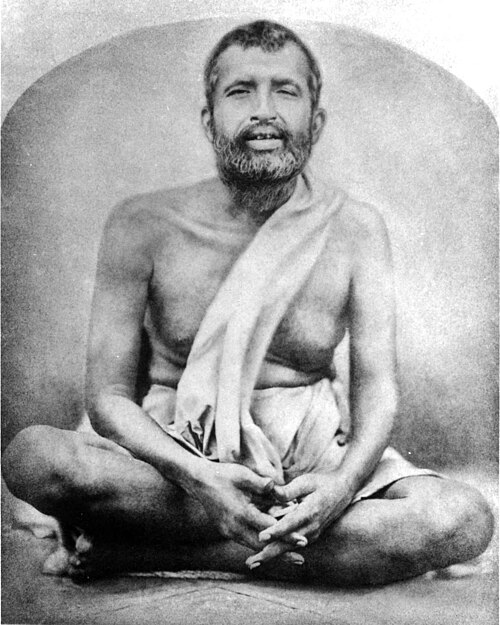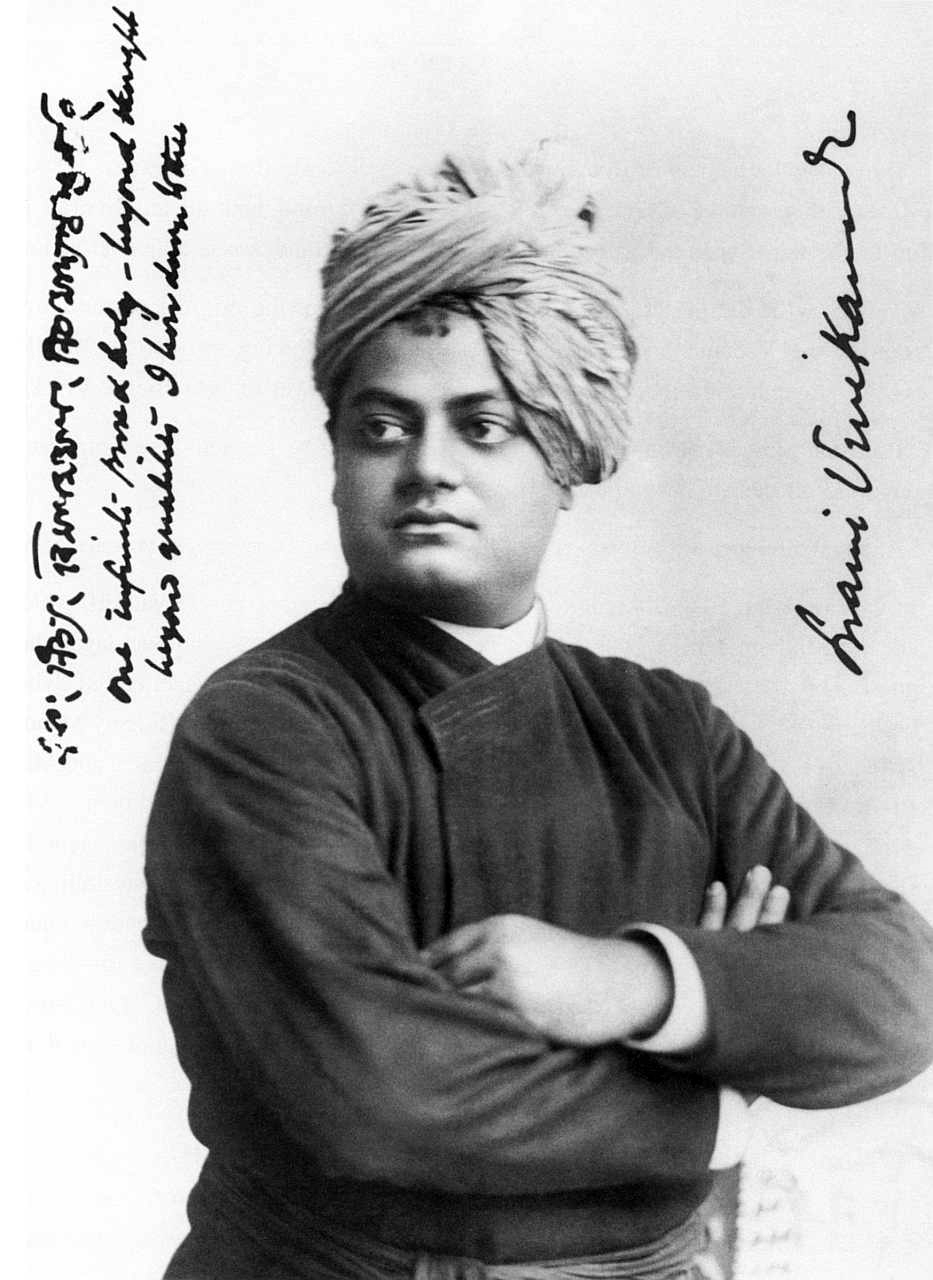
Narendranath Datta was born in Calcutta to Vishwanath Datta, a lawyer, and Bhuvaneshwari Devi. A gifted student of philosophy, music and western science, he asked everyone he met the same question — have you seen God? — until, in 1881, a priest at the Dakshineswar temple answered simply that he had. That priest was Shri Ramakrishna, and the meeting changed the young man's life.
उत्तिष्ठत जाग्रत प्राप्य वरान्निबोधत“Arise, awake, and stop not till the goal is reached.”His call to the nation, after the Katha Upanishad (1.3.14)
After his guru's death he took sannyasa as Swami Vivekananda and walked the length of the country, sharing the poverty of the people he met. In 1893 he spoke at the World's Parliament of Religions in Chicago, and in less than a decade of public life he gave modern India a new confidence in its own heritage.
Disciple of Ramakrishna
For five years Narendra argued with, doubted and finally surrendered to Ramakrishna, who saw in him a teacher of the world. When Ramakrishna died in 1886, Narendra gathered the young disciples into a monastery at Baranagar, where they took vows of sannyasa. Ramakrishna's lesson — that God is to be served in every human being, shiva jnane jiva seva — became the heart of his work.
The wandering monk
From 1888 to 1893 he travelled as a parivrajaka from the Himalaya to the southern tip of the land, staying in palaces and huts alike. At Kanyakumari, in December 1892, he swam out to a rock in the sea and meditated on the condition of his country. He resolved that India's poverty had to be fought with education and service, and that India in turn had something to give the world.
Chicago, 1893
On 11 September 1893 he rose at the World's Parliament of Religions and began, “Sisters and Brothers of America” — and the hall stood to applaud. He spoke of a faith that accepts all religions as true and of the oneness of existence. Over the next years he taught Vedanta and Yoga across America and Britain, and his lectures became the books Raja Yoga, Karma Yoga, Bhakti Yoga and Jnana Yoga.
Work for the nation
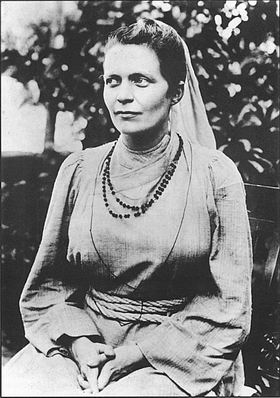
Returning in 1897 to a hero's welcome from Colombo to Almora, he founded the Ramakrishna Mission on 1 May 1897 to join monastic life with service — famine relief, schools and hospitals. He set up Belur Math on the Ganga as its headquarters. Worn out by work, he died there on 4 July 1902, aged thirty-nine. His disciple Sister Nivedita carried his vision forward in education.
How they are remembered
His birthday, 12 January, is observed as National Youth Day in India. The Vivekananda Rock Memorial at Kanyakumari, built in 1970 through a nationwide effort led by Eknath Ranade, stands on the rock where he meditated. The Ramakrishna Math and Mission runs schools, hospitals and relief work across India and abroad, and his complete works remain among the most widely read books in the country.
Ekatmata Stotra · Stanza 27
Named in Stanza 27 of the Ekatmata Stotra — those who woke the sleeping civilisation.
रामकृष्णो दयानन्दः ठाकुर रामतीर्थकः।
विवेकानन्द-मोहनौ राष्ट्र-जागरणेऽग्रिमौ॥
Sources: Wikipedia: Swami Vivekananda · belurmath.org. Written afresh for The Hindu Book; corrections welcome at [email protected].