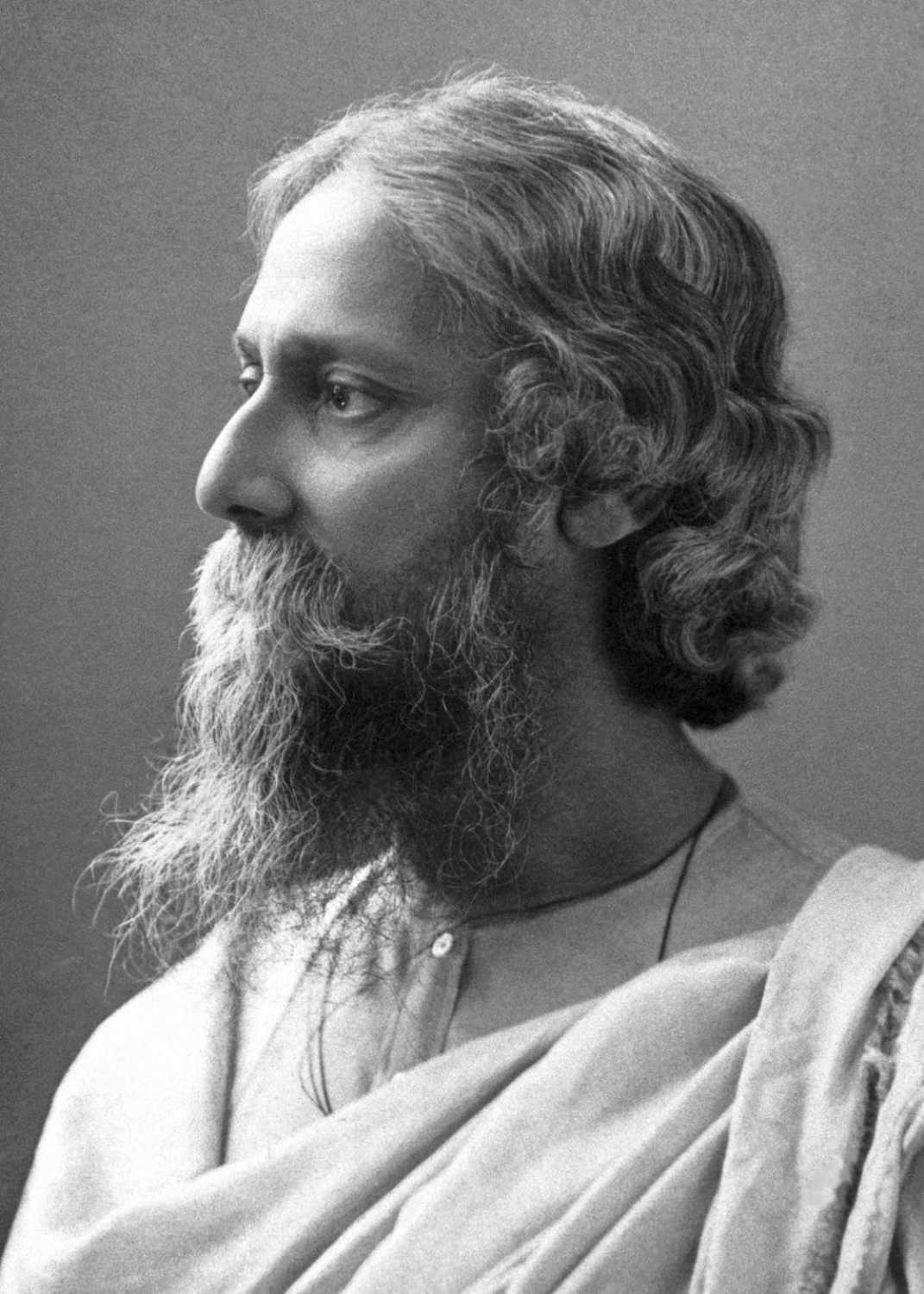
Rabindranath Tagore was born in 1861 at Jorasanko in Calcutta, the youngest son of Debendranath Tagore, a leader of the Brahmo Samaj. He grew up in a great household of musicians, writers and reformers, disliked school, and was taught mostly at home. He published his first poems as a teenager under the pen name Bhanusimha.
“Where the mind is without fear and the head is held high… into that heaven of freedom, my Father, let my country awake.”Gitanjali, poem 35
Over seventy years he wrote some 2,000 songs, thousands of poems, novels such as Gora and Ghare Baire, short stories such as Kabuliwala and The Postmaster, plays, essays — and, in his sixties, took up painting.
Gitanjali and the Nobel Prize
In 1912 Tagore translated a selection of his devotional poems into English prose. Published as Gitanjali: Song Offerings with an introduction by W. B. Yeats, it won him the Nobel Prize in Literature in 1913 — the first for a non-European. The poems speak to a personal God found in nature, in work and in the life of ordinary people, in the spirit of the Upanishads and the Bhakti poets.
Shantiniketan
In 1901 he started a school at Shantiniketan, where his father had built an ashram, teaching children under the trees in close touch with nature, music and art. In 1921 it grew into Visva-Bharati University, "where the world makes a home in a single nest". He also founded Sriniketan for rural reconstruction.
Songs for nations
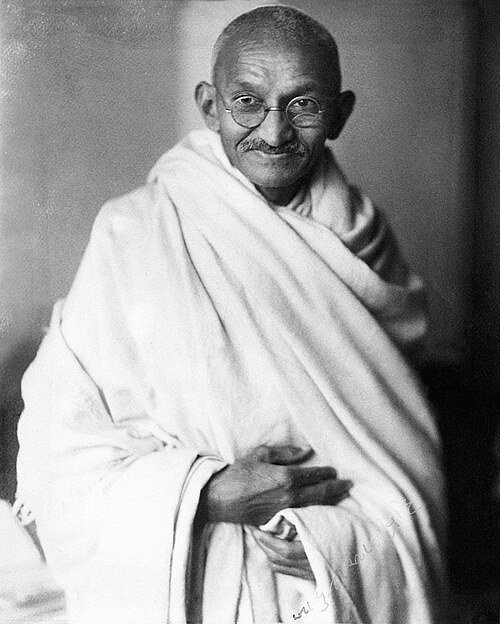
His songs, Rabindra Sangeet, are sung across Bengal. "Jana Gana Mana", first sung at the Calcutta Congress of 1911, became India's national anthem, and "Amar Shonar Bangla" Bangladesh's. After the Jallianwala Bagh massacre of 1919 he renounced the knighthood the British had given him. He admired and debated Gandhi, who called him Gurudev, and warned against aggressive nationalism of every kind.
How they are remembered
Rabindra Jayanti (25 Baishakh) is celebrated across Bengal with his songs and dance-dramas. Shantiniketan was inscribed as a UNESCO World Heritage Site in 2023, and Jorasanko Thakurbari, his family home, is now a museum.
Ekatmata Stotra · Stanza 27
Named in Stanza 27 of the Ekatmata Stotra — those who woke the sleeping civilisation.
रामकृष्णो दयानन्दः ठाकुर रामतीर्थकः।
विवेकानन्द-मोहनौ राष्ट्र-जागरणेऽग्रिमौ॥
Sources: Wikipedia: Rabindranath Tagore · Wikipedia: Gitanjali. Written afresh for The Hindu Book; corrections welcome at [email protected].