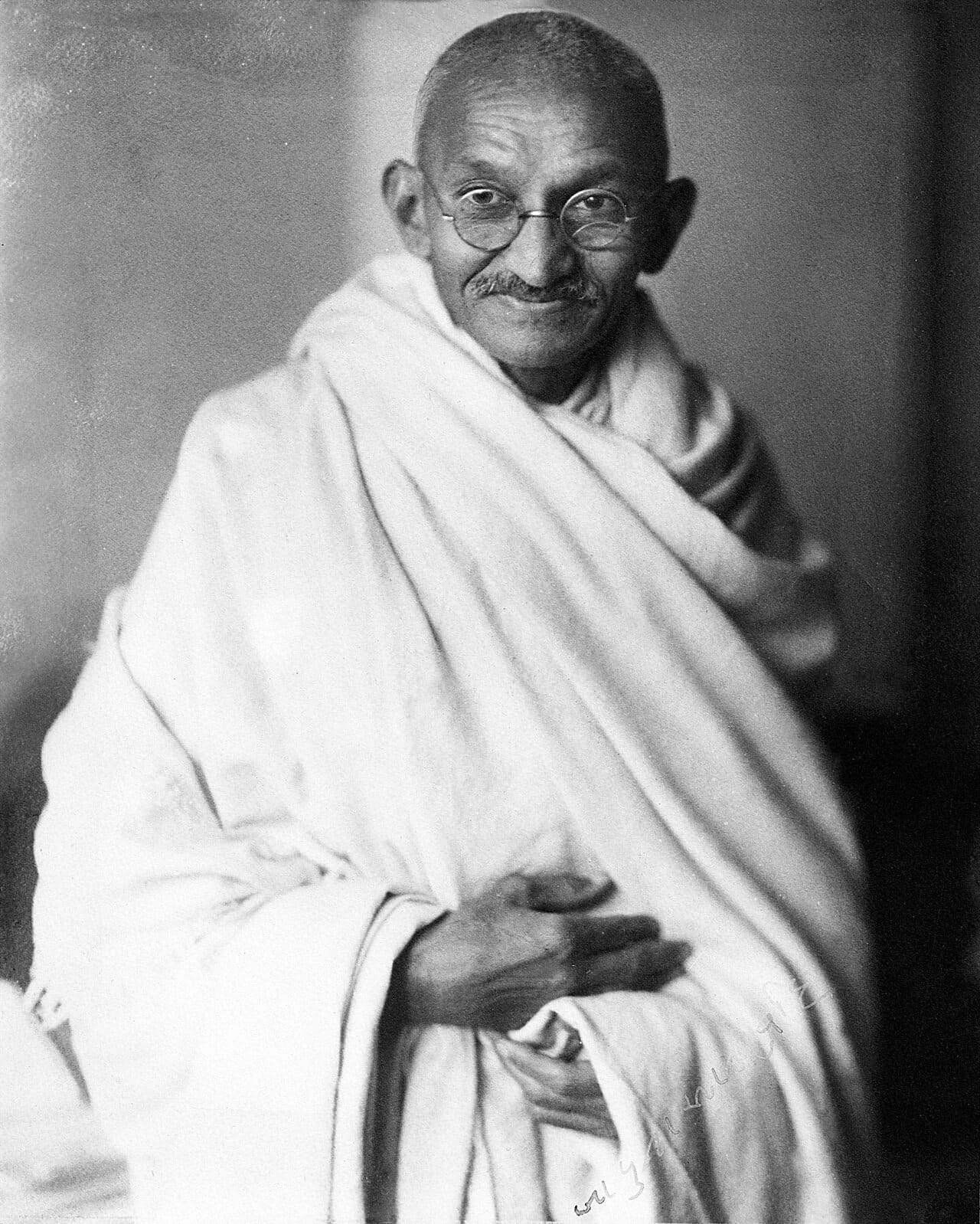
Mohandas Karamchand Gandhi was born in 1869 at Porbandar in Kathiawar, where his father was diwan. His devout mother Putlibai, a follower of the Pranami tradition, fasted often and taught him the Vaishnava values he never lost. He studied law in London and in 1893 went to South Africa for a legal case.
“When doubts haunt me… I turn to the Bhagavad Gita and find a verse to comfort me.”Gandhi in Young India, 1925
Thrown out of a first-class compartment at Pietermaritzburg because of his colour, he stayed on for twenty-one years to fight discrimination against Indians. There he developed satyagraha — "holding fast to truth" — resisting injustice openly and non-violently, and accepting the punishment.
Champaran to Dandi
Back in India in 1915, Gandhi took up the cause of indigo farmers in Champaran (1917), mill workers in Ahmedabad and peasants in Kheda. After the Jallianwala Bagh massacre of 1919 he led the Non-Cooperation movement, which he called off in 1922 after violence at Chauri Chaura. In 1930 he walked about 390 km from Sabarmati to Dandi and picked up a handful of salt in defiance of the salt tax — a simple act that drew the whole country into civil disobedience.
Faith and village India
Gandhi called himself a sanatani Hindu. He read the Gita daily as his "mother", sang "Raghupati Raghava Raja Ram", and believed that the ideal state was Ram Rajya. In Hind Swaraj (1909) he set out his vision of self-reliant villages, khadi and the spinning wheel. He campaigned against untouchability, calling the oppressed "Harijans", and for Hindu–Muslim unity.
Quit India, Partition and death
In 1942 he launched the Quit India movement with the call "Do or die" and was imprisoned with the Congress leadership. Independence in 1947 came with Partition and terrible violence; Gandhi spent it walking among the riot-torn villages of Noakhali and fasting for peace in Calcutta and Delhi. On 30 January 1948 he was shot dead at Birla House by Nathuram Godse. His last words, by tradition, were "He Ram".
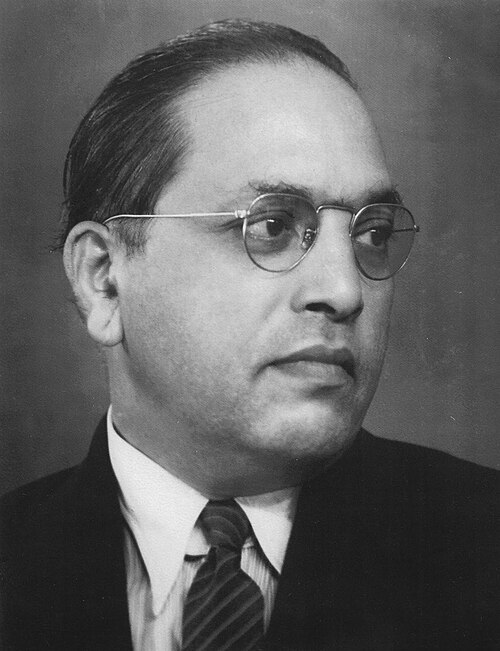
He has had serious critics: Ambedkar disputed his defence of varna and the Poona Pact of 1932; others fault his support for the Khilafat movement and his handling of Partition.
How they are remembered
Gandhi Jayanti on 2 October is a national holiday and the UN's International Day of Non-Violence. India calls him the Father of the Nation; his samadhi at Raj Ghat, Sabarmati Ashram and the hundred volumes of his Collected Works keep his legacy alive, and his methods inspired Martin Luther King Jr. and Nelson Mandela.
Ekatmata Stotra · Stanza 28
Named in Stanza 28 of the Ekatmata Stotra — the Grand Old Men and the gentle revolutionaries.
दादाभाई-गोपबन्धुः तिलको गान्धि-महर्षिकः।
मालवीय: भारती च सप्तर्षयो नरोत्तमाः॥
Sources: Wikipedia: Mahatma Gandhi · Wikipedia: Salt March. Written afresh for The Hindu Book; corrections welcome at [email protected].