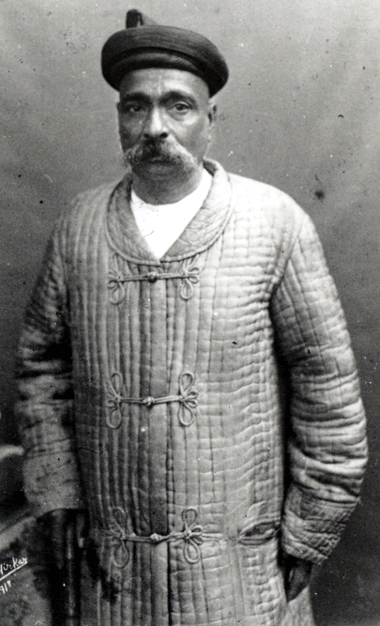
Bal Gangadhar Tilak was born in 1856 at Ratnagiri on the Konkan coast, in a Chitpavan Brahmin family, and studied mathematics and law in Pune and Bombay. With Vishnushastri Chiplunkar and Gopal Ganesh Agarkar he founded the New English School and the Deccan Education Society, believing that Indians must educate their own children.
स्वराज्य हा माझा जन्मसिद्ध हक्क आहे आणि तो मी मिळवणारच“Swaraj is my birthright, and I shall have it.”Tilak's slogan, from about 1916
In 1881 he started two newspapers, Kesari in Marathi and The Mahratta in English. Through them he became the most forceful voice of what came to be called the "extremist" wing of the Indian National Congress — those who demanded self-rule rather than petitioning for reforms.
Festivals of the people
In 1893–94 Tilak turned the household worship of Ganesha into a public festival, with pandals, music and lectures, and in 1895 began the Shiv Jayanti celebrations. The Sarvajanik Ganeshotsav brought people of every caste together in the street at a time when the British restricted political meetings — and it remains Maharashtra's greatest festival.
Sedition and Mandalay
Tilak was tried for sedition three times. In 1897, during the plague, his articles were blamed for stirring the killing of the plague commissioner Rand, and he was jailed for eighteen months. In 1908, after he defended young revolutionaries in Kesari, he was sentenced to six years and sent to Mandalay prison in Burma. There, in poor health, he wrote Shrimad Bhagavad Gita Rahasya, reading the Gita as a call to selfless action (karma-yoga) rather than renunciation.
Home Rule and the last years
Released in 1914, he rejoined the Congress, founded his Indian Home Rule League in 1916 (alongside Annie Besant's), and helped bring about the Lucknow Pact with the Muslim League. His scholarship continued too: The Orion and The Arctic Home in the Vedas argued for great antiquity for the Vedas. Critics then and since point out that he opposed some social reforms, such as the Age of Consent Bill of 1891, insisting that political freedom must come first.
He died in Bombay on 1 August 1920, on the eve of Gandhi's non-cooperation movement. Gandhi called him "the maker of modern India".
How they are remembered
The title Lokmanya — "accepted by the people" — was given to him by the public, not the government. His statue stands at Girgaum Chowpatty where he was cremated, the Ganeshotsav he made public draws millions each year, and Gita Rahasya is still read as a classic of Gita interpretation.
Ekatmata Stotra · Stanza 28
Named in Stanza 28 of the Ekatmata Stotra — the Grand Old Men and the gentle revolutionaries.
दादाभाई-गोपबन्धुः तिलको गान्धि-महर्षिकः।
मालवीय: भारती च सप्तर्षयो नरोत्तमाः॥
Sources: Wikipedia: Bal Gangadhar Tilak · Wikipedia: Gita Rahasya. Written afresh for The Hindu Book; corrections welcome at [email protected].