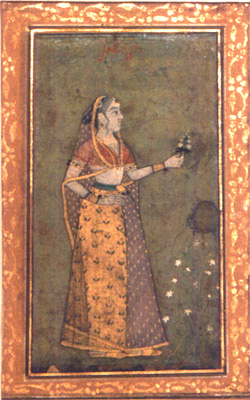
Manikarnika Tambe — "Manu" — was born in Varanasi, probably in 1828, the daughter of Moropant Tambe, an adviser at the court of the exiled Peshwa Bajirao II. After her mother's death she grew up at the Peshwa's court in Bithoor, where she learned to ride, fence and shoot alongside the boys, among them Nana Sahib and Tatya Tope.
ख़ूब लड़ी मर्दानी वह तो झाँसी वाली रानी थी“Bravely she fought like a man — she was the Rani of Jhansi.”Subhadra Kumari Chauhan, "Jhansi ki Rani" (1930)
In 1842 she was married to Gangadhar Rao Newalkar, Maharaja of Jhansi, and given the name Lakshmibai. Their only son died in infancy; in 1853, shortly before his death, the Maharaja adopted a boy, Damodar Rao.
"I will not give up my Jhansi"
Governor-General Dalhousie refused to recognise the adopted heir and, under the "Doctrine of Lapse", annexed Jhansi in 1854, granting the Rani a pension. She is remembered as answering, "Main apni Jhansi nahin dungi" — "I will not give up my Jhansi". She appealed through lawyers, without success.
1857
When the great rising of 1857 reached Jhansi, the Company's officers and their families were killed by the rebels; the Rani's role in this is disputed. She took charge of the state, raised an army, and when Sir Hugh Rose besieged Jhansi in March 1858 she led its defence. As the city fell, she escaped at night on horseback, tradition says with her son tied to her back, and joined Tatya Tope at Kalpi.
Gwalior
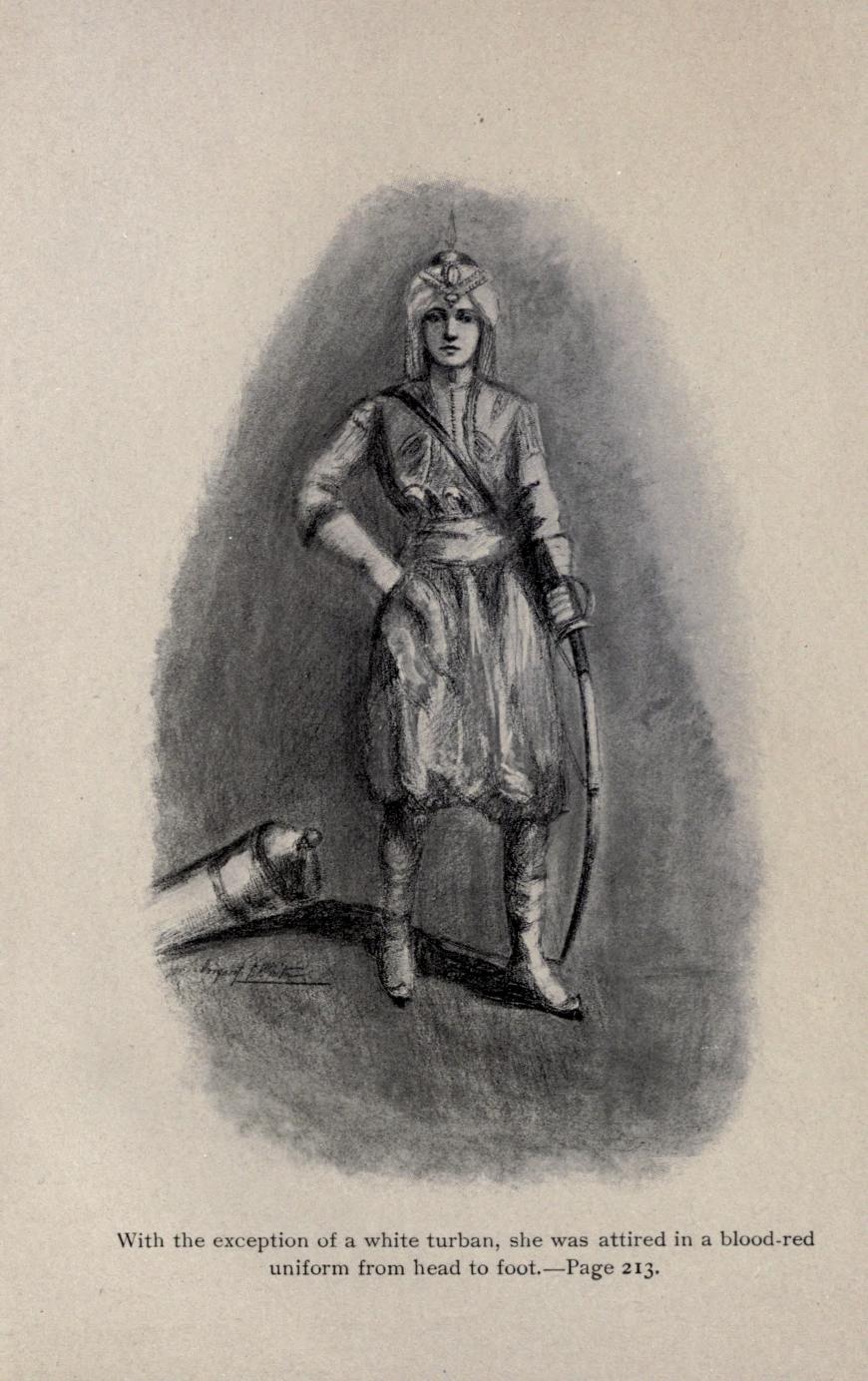
With Tatya Tope and Rao Sahib she seized the great fortress of Gwalior. When British forces attacked, she rode into battle in soldier's dress and was killed at Kotah-ki-Serai on 18 June 1858. Hugh Rose himself called her "the best and bravest military leader of the rebels".
How they are remembered
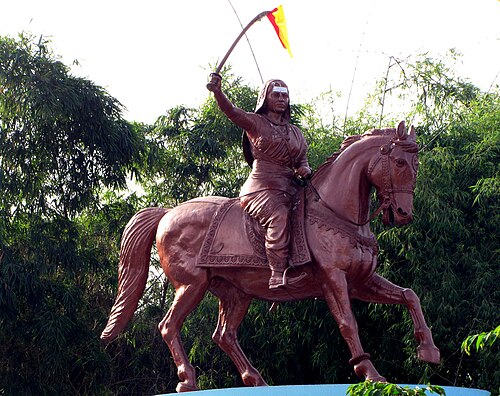
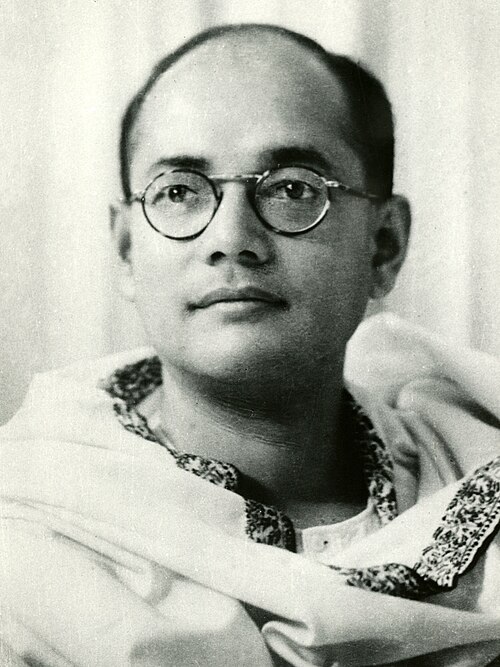
Her equestrian statues stand in Jhansi, Gwalior and many cities, and her samadhi at Gwalior is a national memorial. Netaji named the women's regiment of the Azad Hind Fauj the Rani of Jhansi Regiment, and Subhadra Kumari Chauhan's poem about her is recited by every Hindi-speaking schoolchild.
Ekatmata Stotra · Stanza 11
Named in Stanza 11 of the Ekatmata Stotra — six women of the last four centuries.
लक्ष्मीबाई अहल्या च चेन्नम्मा रुद्रमादेवी।
निवेदिता शारदा मातृविभूत्य: नमो नमः॥
Sources: Wikipedia: Rani of Jhansi · Wikipedia: Indian Rebellion of 1857. Written afresh for The Hindu Book; corrections welcome at [email protected].