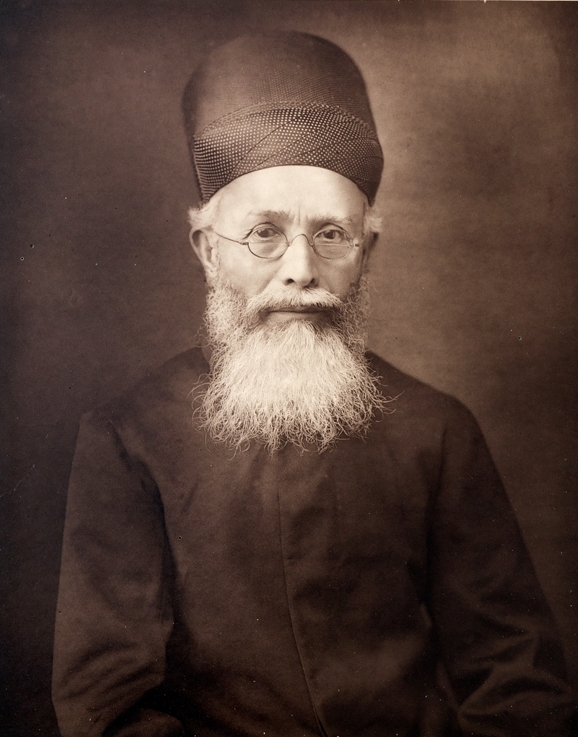
Dadabhai Naoroji was born on 4 September 1825 in Bombay, into a poor Parsi priestly family from Navsari in Gujarat. His father died when he was four, and his mother brought him up on very little. He won scholarships to the Elphinstone Institution in Bombay, and in the 1850s became a professor of mathematics and natural philosophy there — the first Indian to hold such a professorship at the college.
"Self-government is the only and chief remedy."Dadabhai Naoroji, presidential address to the Indian National Congress, Calcutta, 1906
In those early years he was already a reformer: he helped found schools for girls, started the Gujarati reformist paper Rast Goftar ("The Truth-Teller") in 1851, and worked for reform within the Parsi community.
London and the case for India
In 1855 Naoroji went to London as a partner in Cama and Co., the first Indian business firm established in Britain, and later set up his own firm. For most of the next half-century he lived largely in England, using his position to argue India's case before the British public. He founded the London Indian Society (1865) and the East India Association (1867), and gave evidence to parliamentary inquiries. In India he served briefly as Diwan of Baroda in 1874 and sat in the Bombay Legislative Council.
In 1885 he was among the founders of the Indian National Congress, and he presided over its sessions three times.
The drain theory
Naoroji's lasting contribution was economic. Working from official figures, he tried to estimate India's national income per head and concluded that it was far too low to sustain life decently. The cause, he argued, was the "drain": a large part of India's revenue left the country every year without return — as "home charges", pensions and salaries of British officials, interest and profits — impoverishing the country. He set out this case in papers from the 1860s onward and in his book Poverty and Un-British Rule in India (1901).
The drain theory became the economic foundation of Indian nationalism, taken up by R. C. Dutt, Gokhale and others. Later economic historians have debated his figures and how large the drain really was, but his central point — that colonial rule transferred wealth out of India — is widely accepted.
Member of Parliament
In 1892 Naoroji was elected to the House of Commons as the Liberal member for Finsbury Central in London, by a margin of just five votes — the first Indian elected to the British Parliament. The Conservative prime minister Lord Salisbury had earlier sneered that British voters would not elect a "black man"; the remark caused an outcry and helped make Naoroji famous. He took his oath on the Avesta and used his seat to press for Indian representation and for simultaneous civil service examinations in India. He lost the seat in 1895, but served on the Royal Commission on Indian Expenditure.
Swaraj, 1906
In 1906, at the age of eighty-one, Naoroji was called back to preside over the Calcutta session of the Congress, when the party was split between Moderates and Extremists. In his address he declared that the goal was swaraj — self-government like that of the self-governing British colonies. It is widely regarded as the first time a Congress president set self-rule as the national aim. Critics among the Extremists, then and later, felt that his reliance on petitions and on British justice was too patient; his defenders reply that his patient case-making gave the movement its arguments.
How they are remembered
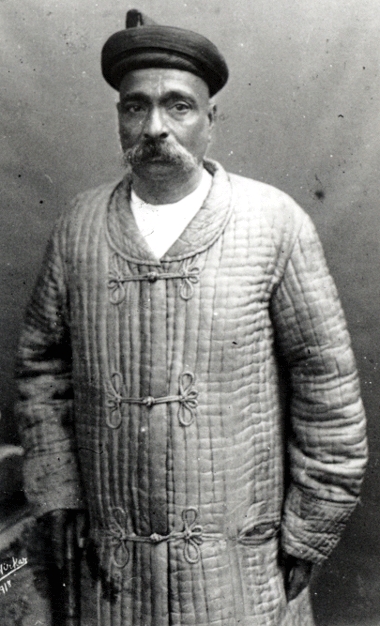
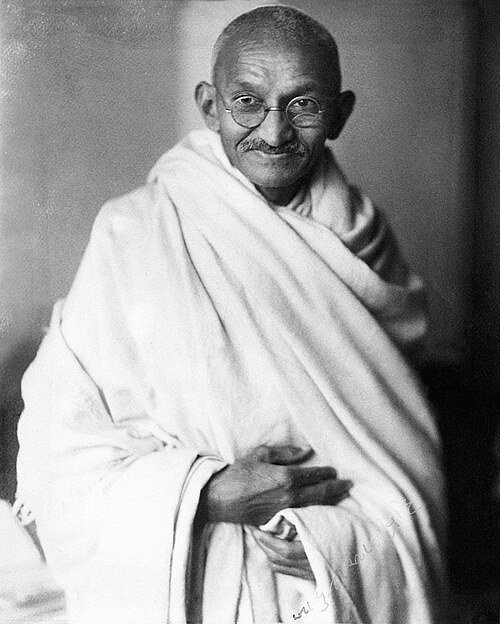
Naoroji died in Bombay on 30 June 1917. Gandhi, Gokhale and Tilak all regarded him as their elder and teacher; the young Muhammad Ali Jinnah began his political life as his secretary. By turning India's poverty into a question of economics and placing self-government at the heart of the national movement, he laid the foundation on which the freedom struggle was built.
Ekatmata Stotra · Stanza 28
Named in Stanza 28 of the Ekatmata Stotra — the Grand Old Men and the gentle revolutionaries.
दादाभाई-गोपबन्धुः तिलको गान्धि-महर्षिकः।
मालवीय: भारती च सप्तर्षयो नरोत्तमाः॥
Sources: Wikipedia: Dadabhai Naoroji · scroll.in/article/813379/meet-the-man-whom-mahatma-gandhi-called-the-father-of-the-nation · inc.in/congress-sandesh/tribute/dadabhai-naoroji-pioneer-of-indian-nationalism. Written afresh for The Hindu Book; corrections welcome at [email protected].