Funan was a kingdom of the Mekong delta, in what is now southern Vietnam and Cambodia, that flourished from about the 1st to the 6th century CE. It is known mainly from Chinese records and from archaeology, especially the port city of Oc Eo, where Roman coins, Indian beads and seals with Brahmi writing have been found alongside goods from China.
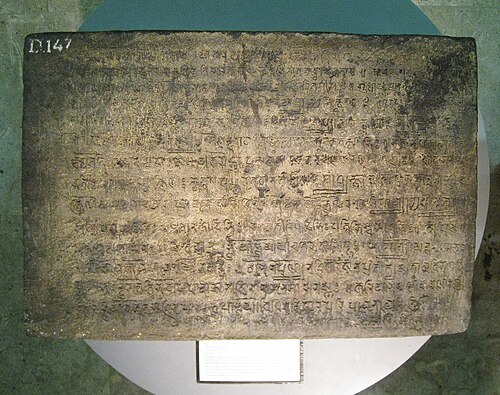
The Cham inscription of My Son, dated 658 CE, tells that Kaundinya, foremost of Brahmins, planted at Bhavapura the spear given to him by Ashvatthama, son of Drona, and married the Naga princess Soma.My Son stele of King Prakashadharma of Champa (7th century)
Both Chinese chronicles and later Southeast Asian inscriptions tell of a founder named Kaundinya, a Brahmin who came over the sea and married a local ruler. Whether one man stands behind these stories, and where he came from, cannot be known. But the tradition preserves a real memory: that Indian ideas reached the Mekong early and helped shape its first states.
The Chinese account
Chinese envoys reached Funan in the 3rd century, and their reports were later used in official histories such as the Book of Liang. These tell that Funan was once ruled by a queen called Liu-ye, “Willow Leaf”. A man named Hun-tian — generally understood as a Chinese rendering of Kaundinya — dreamed that a god gave him a bow and told him to set out by ship. He landed in Funan, defeated the queen's forces with an arrow from that bow, married her, and became king.
The same history mentions a second Kaundinya, around the late 4th or early 5th century, described as a Brahmin from India who came to Funan, was chosen as king, and reformed the kingdom according to Indian laws and customs.
Kaundinya and the Naga princess
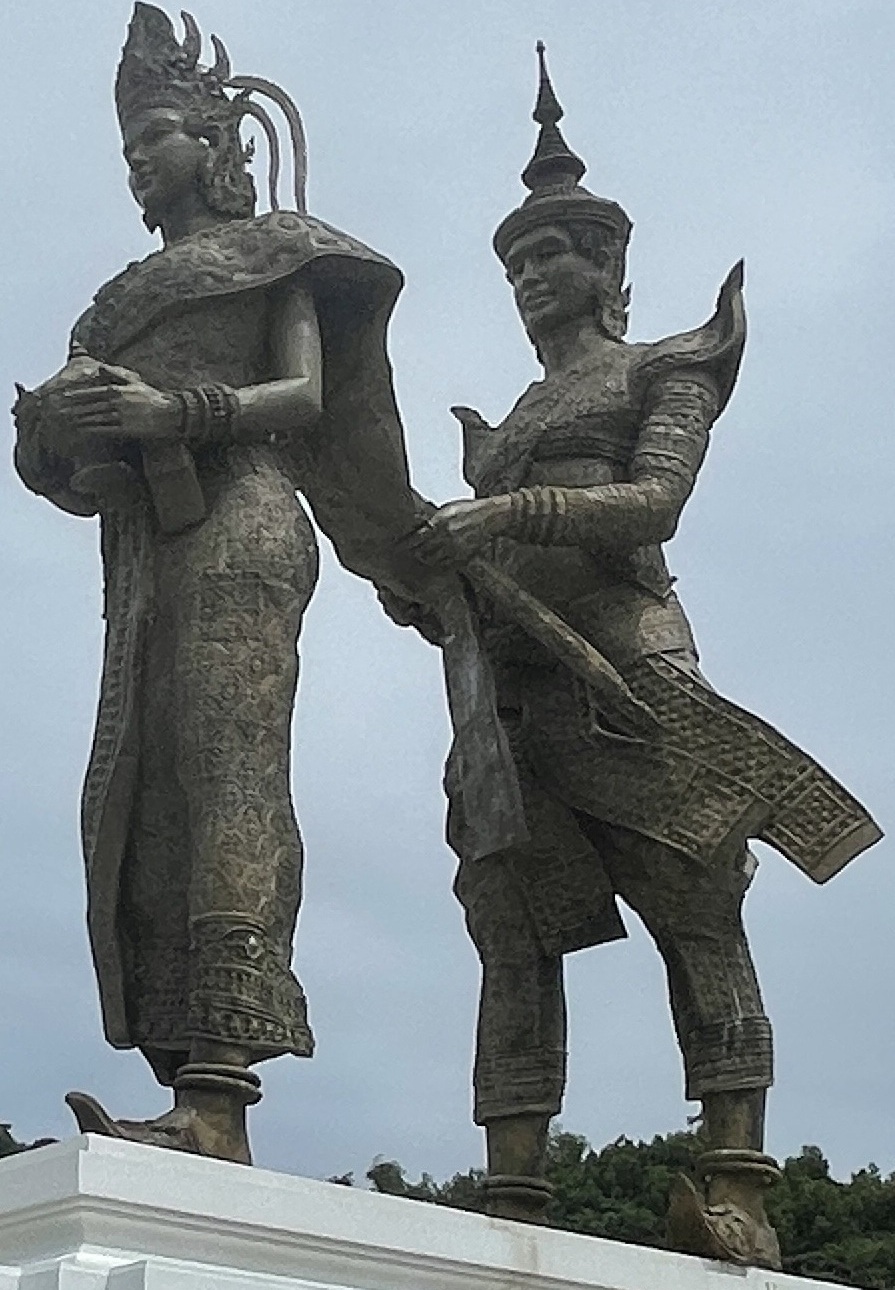
Southeast Asian sources tell the story differently. In a Sanskrit inscription of 658 CE from My Son, in the Cham kingdom of central Vietnam, Kaundinya receives a spear from Ashvatthama, the son of Drona from the Mahabharata, and marries Soma, daughter of a Naga king. In Khmer tradition the pair are remembered as Preah Thong and Neang Neak, the prince and the serpent maiden, whose wedding is still recalled in Cambodian marriage customs.
The local queen of the Chinese account and the Naga princess of the inscriptions are probably two forms of one story, in which an Indian newcomer and a native ruler join to found a royal line.
Sea roads of the south
The Kaundinya stories belong to a wider movement. From early centuries CE, ships sailed between the ports of eastern and southern India and Southeast Asia, carrying merchants, Brahmins and Buddhist monks. Kingdoms in the region adopted Sanskrit, Indian scripts, Hindu and Buddhist worship, and Indian ideas of kingship — not through conquest, but by choice and exchange. The Kaundinya gotra is an old Brahmin lineage in India, which may explain the name.
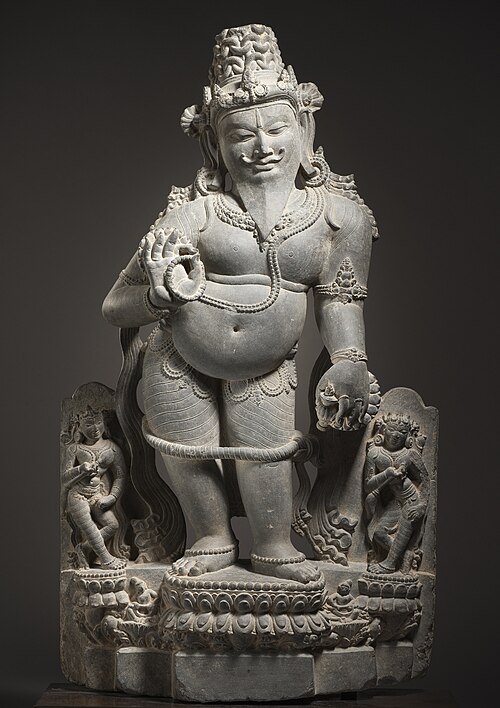
Funan itself became a rich trading state. Chinese visitors described walled cities, a written script derived from India, taxes paid in gold, silver and pearls, and kings who sent embassies to the Chinese court. Statues of Vishnu and the Buddha found in the Mekong delta show that both traditions flourished there.
How they are remembered
Funan gave way to the Khmer kingdom of Chenla and, in time, to Angkor, whose kings remembered Kaundinya and Soma among their ancestors. Through stories like his, the Ramayana, the Mahabharata and the worship of Shiva and Vishnu became part of Southeast Asian life, where they remain in dance, sculpture and festivals today.
Ekatmata Stotra · Stanza 21
Named in Stanza 21 of the Ekatmata Stotra — early sages and empire-builders.
अगस्त्यः कम्बुरुचिरः कौण्डिन्यो राजेन्द्रचोल:।
अशोकः पुष्यमित्रश्च खारवेलः प्रकीर्तिताः॥
Sources: Wikipedia: Kaundinya I · Wikipedia: Funan · Wikipedia: Preah Thong. Written afresh for The Hindu Book; corrections welcome at [email protected].