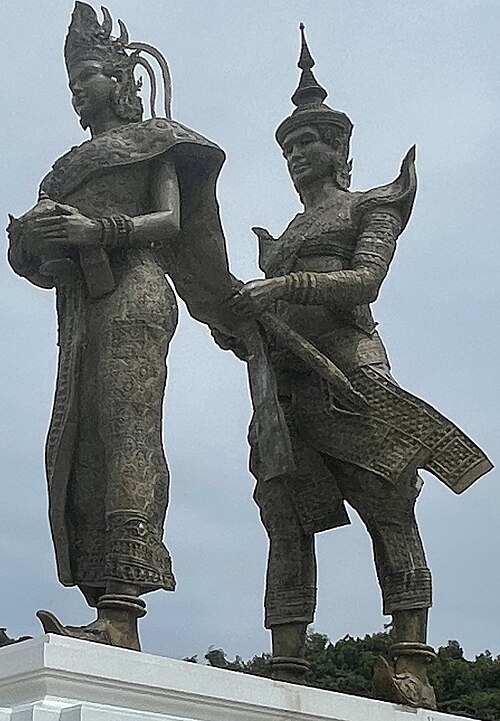
The Ekatmata Stotra names, among the heroes of Bharat, one dynasty that ruled outside the subcontinent: the Shailendras, "lords of the mountain", of the island of Java. Their name, their royal titles and their inscriptions were in Sanskrit, their religion was Mahayana Buddhism drawn from eastern India, and their great monuments are among the clearest signs of how far Indian culture travelled across the sea.
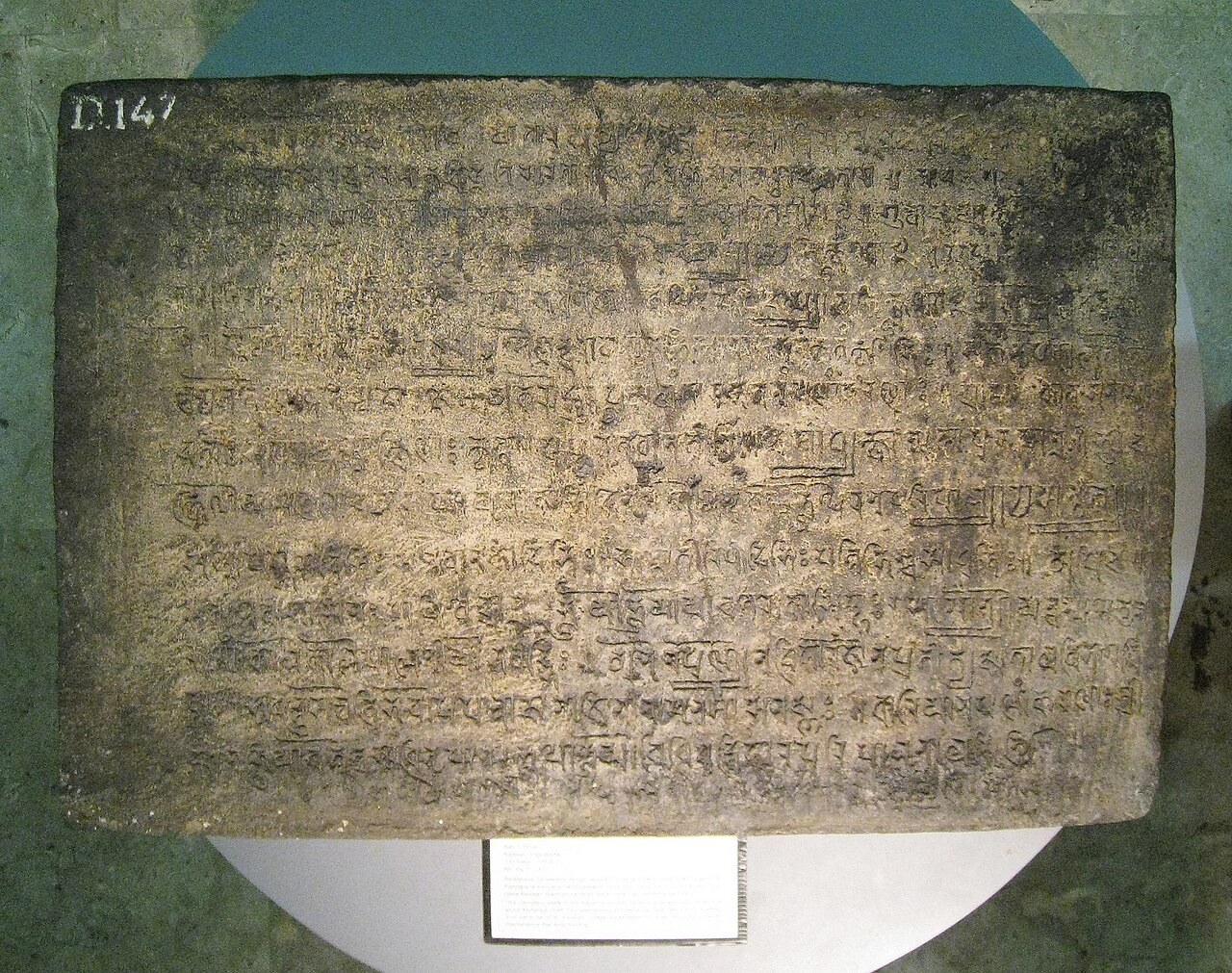
At the request of <em>Balaputradeva</em>, king of Suvarnadvipa and grandson of the king of Yavabhumi of the Shailendra line, the Pala emperor Devapala granted five villages to support the monastery he had built at Nalanda.Summary of the Nalanda copper-plate grant of Devapala, 9th century
The family appears in Central Java in the second half of the eighth century. Where it came from is still argued: some scholars have proposed an Indian origin, others a link with the old kingdom of Funan in Cambodia, whose kings were also called "kings of the mountain", and many now regard the Shailendras as a Javanese family that took up Indian forms. The evidence does not settle the question.
In their own words
The Shailendras are known mainly from Sanskrit inscriptions. The Kalasan inscription of 778 CE records the founding of a temple to the goddess Tara by a Shailendra king, at the urging of his gurus; the temple still stands near Yogyakarta. The Kelurak inscription of 782 mentions a teacher from Gauda (Bengal) consecrating an image of Manjushri. The Karangtengah inscription of 824 names King Samaratunga and his daughter Pramodavardhani. The exact sequence of kings and their relationship with the Hindu Sanjaya line of Mataram in the same region are still debated.
Borobudur
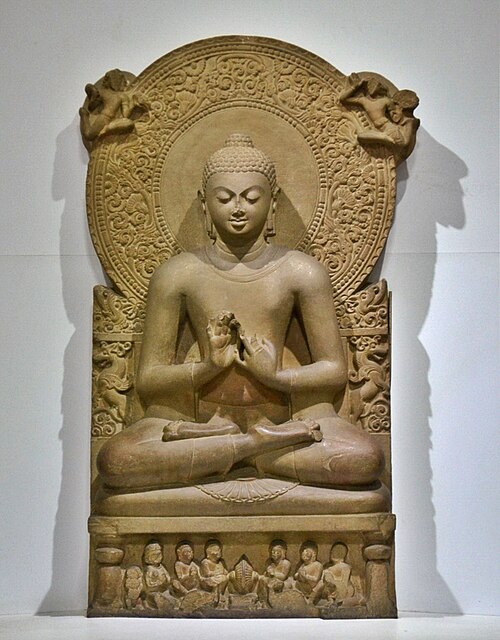
The Borobudur monument in Central Java is generally dated to about 780–830 CE and credited to the Shailendras, with completion often placed in Samaratunga's reign. It is a stepped hill of stone, a mandala in three dimensions, rising through square galleries to circular terraces crowned with seventy-two perforated stupas around a great central one. Its galleries carry some 2,600 relief panels — the life of the Buddha, the Jataka tales, and the pilgrimage of Sudhana from the Gandavyuha — and around 500 Buddha images.
Nearby temples of the same age, Mendut and Pawon, line up with Borobudur on a single axis. After the dynasty's power in Java faded, Borobudur was gradually covered by volcanic ash and jungle until its restoration in the nineteenth and twentieth centuries. It is now a UNESCO World Heritage Site.
From Java to Nalanda
In the mid-ninth century a Shailendra prince, Balaputra, appears ruling Srivijaya in Sumatra, the great sea power of the Malacca Straits — apparently after losing out in Java, though the details are unclear. A copper plate of the Pala emperor Devapala, found at Nalanda in Bihar, records that Balaputradeva had built a monastery at Nalanda for monks and asked Devapala to endow it; the emperor granted the revenue of five villages.
The grant is a rare document of direct ties between an Indian and a Southeast Asian court, and shows that Nalanda drew support from across the Buddhist world.
How they are remembered
The Shailendras left no empire, but Borobudur outlasted the dynasty by more than a thousand years and remains a place of pilgrimage for Buddhists every Vesak. Together with Prambanan, built nearby by their Hindu neighbours, it shows how Sanskrit learning, Indian iconography and local Javanese genius combined into something new. For the Ekatmata Stotra, they stand for the reach of Bharat's culture beyond its shores.
Ekatmata Stotra · Stanza 22
Named in Stanza 22 of the Ekatmata Stotra — the architects of empire — Chanakya to Bappa Rawal.
चाणक्यश्च चन्द्रगुप्तो विक्रमादित्यशालिवाहनौ।
समुद्रगुप्तो हर्षः शैलेन्द्रो बप्पारावलः॥
Sources: Wikipedia: Shailendra dynasty · Wikipedia: Borobudur · whc.unesco.org/en/list/592 · Wikipedia: Kalasan inscription. Written afresh for The Hindu Book; corrections welcome at [email protected].