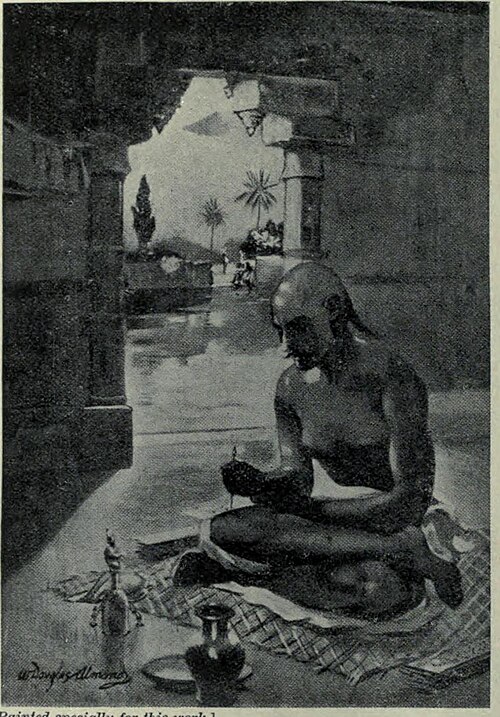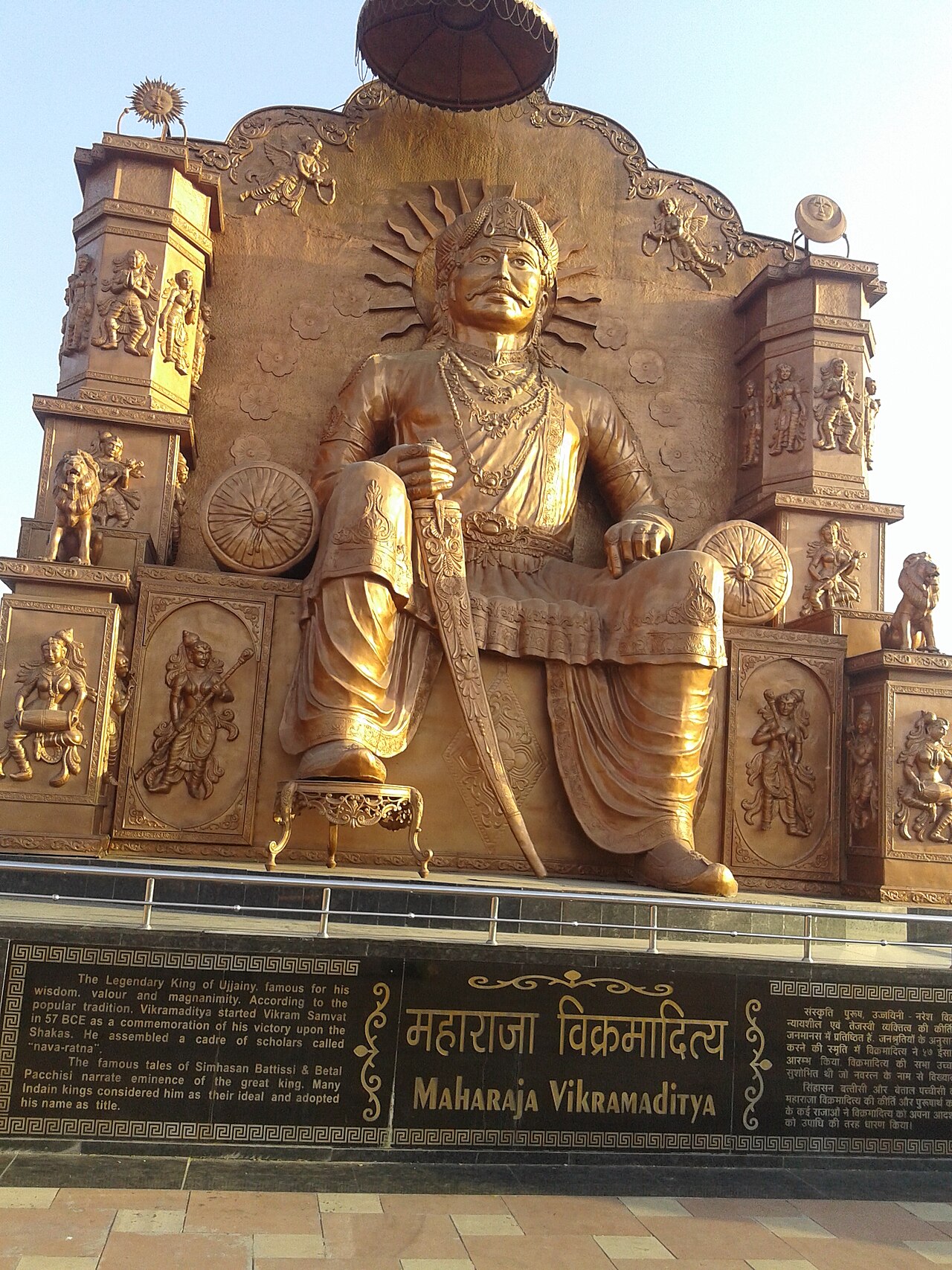
Vikramaditya — “sun of valour” — is one of the most loved kings of Indian story. Tradition makes him the ruler of Ujjain in Malwa, a brave, wise and generous king who drove out the foreign Shakas and started the era still used across much of India and in Nepal, the Vikram Samvat, which begins in 57 BCE.
धन्वन्तरिः क्षपणकोऽमरसिंहशङ्कुवेतालभट्टघटकर्परकालिदासाः। ख्यातो वराहमिहिरो नृपतेः सभायां रत्नानि वै वररुचिर्नव विक्रमस्य॥“Dhanvantari, Kshapanaka, Amarasimha, Shanku, Vetalabhatta, Ghatakarpara, Kalidasa, the famed Varahamihira and Vararuchi — these were the nine jewels in the court of King Vikrama.”Traditional verse of the Navaratnas, found in the Jyotirvidabharana (a late text)
Historians, however, have found no inscription, coin or contemporary record of a king named Vikramaditya ruling at Ujjain in the 1st century BCE. His story is best understood in two parts: the legend, which is rich and ancient in its own right, and the history, which suggests that the legend gathered around memories of several real kings.
The legend
Jain tradition, in the Kalakacharya Kathanaka, tells that King Gardabhilla of Ujjain wronged the sister of the Jain monk Kalaka, who brought the Shakas from the west to overthrow him. Gardabhilla's son Vikramaditya later drove the Shakas out, and the era was counted from his victory. Other stories make him the brother of the poet-king Bhartrihari.
Two famous story cycles turn on his character. In the Vetala Panchavimshati (the Hindi Baital Pachisi), he carries a corpse possessed by a vetala, who tells him a riddle-tale each night and flies back to its tree whenever the king breaks his silence to answer. In the Simhasana Dvatrimshika (Singhasan Battisi), Raja Bhoja finds Vikramaditya's buried throne, and its thirty-two statues each tell a tale of his virtue before Bhoja may sit on it.
Tradition also places nine jewels (Navaratnas) in his court, including Kalidasa, Varahamihira and Amarasimha. These men in fact lived centuries apart — Varahamihira in the 6th century CE — so the list is a celebration of a golden age rather than a historical record.
What history shows
The era of 57 BCE was originally known by other names — the Krita era and then the Malava era — in early inscriptions. Its first known link with the name Vikrama comes from an inscription of the 9th century. Historians therefore doubt that the era was founded by a king of that name.
Many real rulers took “Vikramaditya” as a title. The most important was the Gupta emperor Chandragupta II (c. 375–415 CE), who conquered the Shaka rulers of western India, took Ujjain, and presided over a court of great culture; many scholars think his fame shaped the legend. Skandagupta, the Chalukya Vikramaditya VI and others also bore the name.
Ujjain's king
In Ujjain, Vikramaditya is still very much present. The Harsiddhi temple is traditionally regarded as the shrine of his family goddess, and stories link him with the Mahakaleshwar temple. Madhya Pradesh honours him through cultural festivals and named institutions, including Vikram University in Ujjain.
Each telling of the Vetala and throne stories adds new tales, and they have been retold in many Indian languages, in comics, and in popular television serials, keeping the king's name familiar to every generation.
How they are remembered
The Vikram Samvat is the official calendar of Nepal and is used for festivals and religious dates across North and West India; in 2026 its year 2083 is current. Above all, Vikramaditya lives on as an ideal — the king who wins by courage, rules by justice and holds his tongue only when wisdom requires it.
Ekatmata Stotra · Stanza 22
Named in Stanza 22 of the Ekatmata Stotra — the architects of empire — Chanakya to Bappa Rawal.
चाणक्यश्च चन्द्रगुप्तो विक्रमादित्यशालिवाहनौ।
समुद्रगुप्तो हर्षः शैलेन्द्रो बप्पारावलः॥
Sources: Wikipedia: Vikramaditya · Wikipedia: Vikram Samvat · Wikipedia: Navaratnas. Written afresh for The Hindu Book; corrections welcome at [email protected].