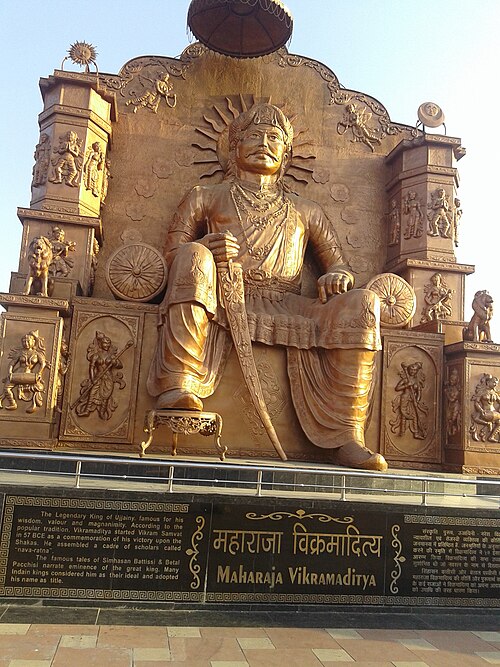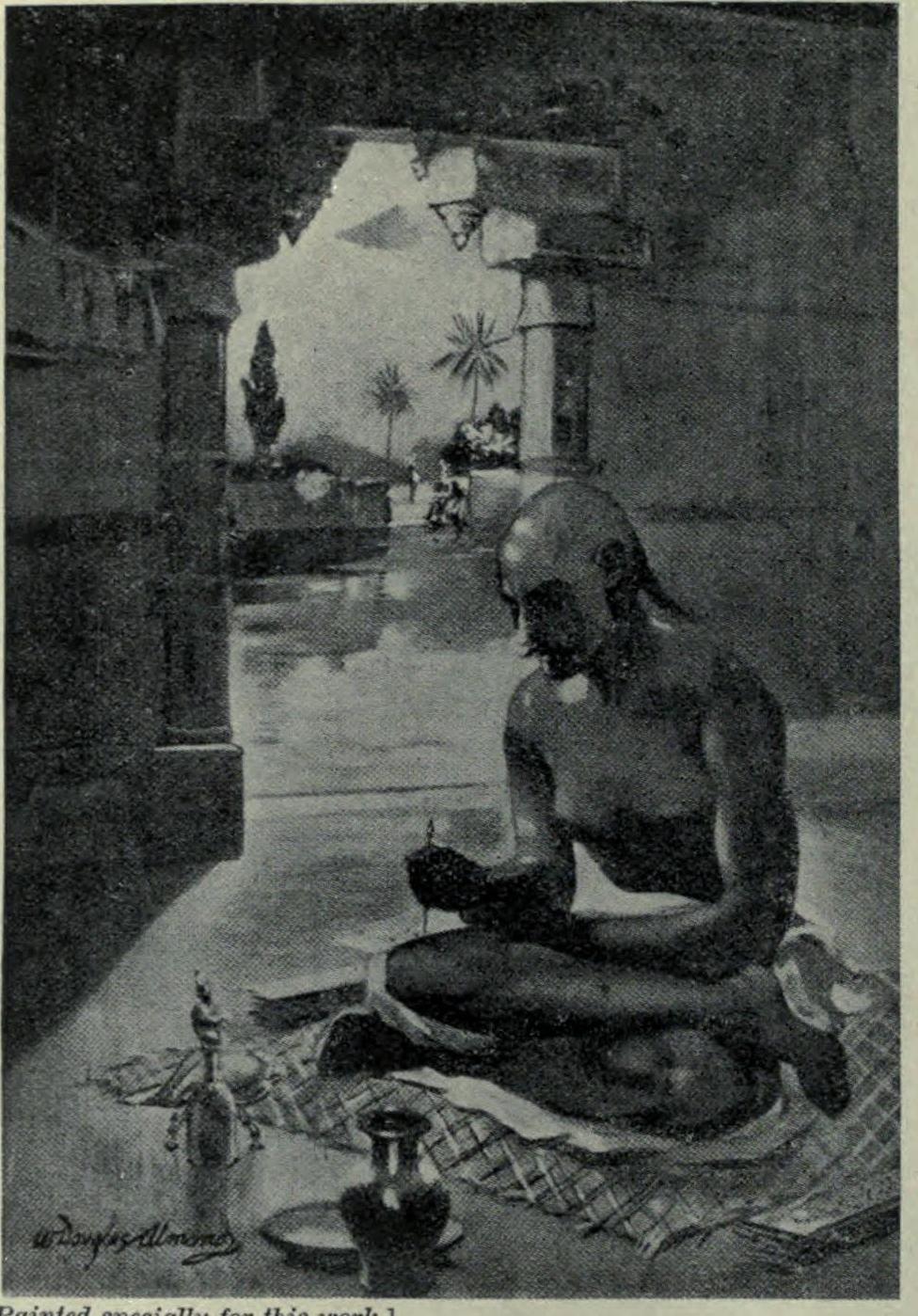
Of Kalidasa the man we know almost nothing for certain. Most scholars place him in the age of the Guptas, around the fourth or fifth century, and tradition counts him among the navaratna, the nine jewels of King Vikramaditya's court at Ujjain. A well-loved legend says he began life as a simple, unlettered man and became a poet by the grace of the goddess Kali — hence his name, “servant of Kali”.
उपमा कालिदासस्य“For simile, Kalidasa.”From a traditional verse praising the great poets
What we do have are his works: three plays, two great epics and two shorter poems that set the standard for Sanskrit literature ever after. Their love of nature, their warmth towards every living thing and the precision of their images have made them classics far beyond India.
The plays
Abhijnanashakuntalam, “Shakuntala recognised”, tells of King Dushyanta and Shakuntala, a girl of the forest hermitage, their love, his loss of memory under a curse, and their reunion. It is the most celebrated play in Sanskrit. His other plays are Vikramorvashiyam, the love of King Pururavas and the apsara Urvashi, and Malavikagnimitram, a court comedy set in the Shunga age.
The poems
In the Meghaduta, an exiled yaksha asks a passing rain cloud to carry a message to his wife in the Himalayan city of Alaka — and the poem follows the cloud across the rivers, hills and cities of India. The Raghuvamsha sings of the kings of Rama's line, and the Kumarasambhava tells of Parvati's tapas and her marriage to Shiva. The Ritusamhara, a poem of the six seasons, is also traditionally ascribed to him.
Beyond India
William Jones translated Shakuntala into English in 1789, and a German version soon followed. Goethe was so moved that he wrote a famous verse in its praise, and the play shaped the prologue of his Faust. Through these translations Kalidasa became, for many in Europe, their first window into Sanskrit literature.
How they are remembered
The Kalidas Samaroh, a festival of drama, music and dance, has been held at Ujjain every year since 1958, and the Madhya Pradesh government's Kalidas Samman is one of India's major arts awards. The Kavikulaguru Kalidas Sanskrit University at Ramtek — often identified with the Ramagiri of the Meghaduta — carries his title. His verses are still taught in every Sanskrit classroom.
Ekatmata Stotra · Stanza 19
Named in Stanza 19 of the Ekatmata Stotra — from Kālidāsa to Tyāgarāja.
भरतो मुनिरीशानः कालिदासो महाकविः।
भोजो जक्कणसूरदासस्त्यागराजो रसखानकः॥
Sources: Wikipedia: Kālidāsa. Written afresh for The Hindu Book; corrections welcome at [email protected].