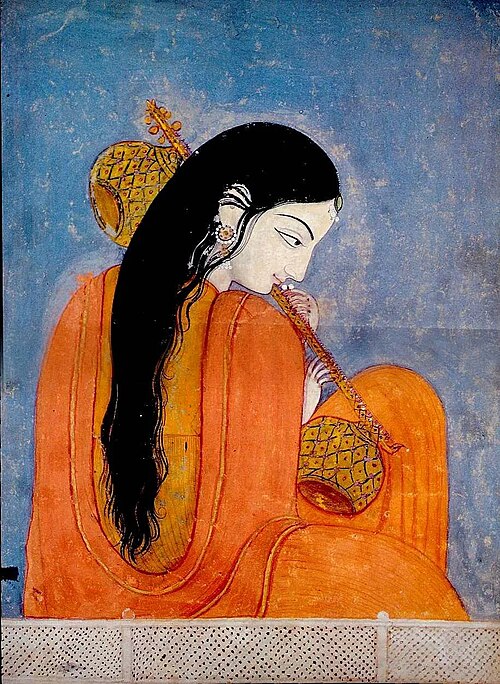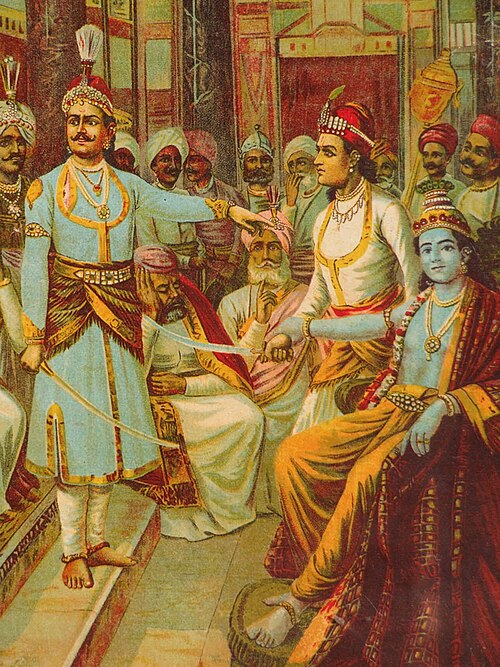
Raskhan — "mine of rasa" — was the pen name of Sayyid Ibrahim, a Pathan of noble family who lived in the late sixteenth and early seventeenth centuries, around the time of Akbar and Jahangir. Tradition says he was in Delhi when, through a love of beauty — some stories speak of an earthly beloved — he was drawn to the beauty of Krishna.
मानुस हौं तो वही रसखानि, बसौं ब्रज गोकुल गाँव के ग्वारन।“If I am born a man, let me be a cowherd in Gokul in Braj; if a beast, let me graze with Nanda's cows.”Raskhan, from his most famous savaiya
He went to Braj and, according to the Pushtimarg chronicle Do Sau Bavan Vaishnavan ki Varta, became a disciple of Goswami Vitthalnath, son of Vallabhacharya. He spent the rest of his life there, writing in Braj Bhasha.
Songs of Braj
Raskhan's poems, mainly savaiyas and kavittas, are collected in Sujan Raskhan; his Prem Vatika is a short work on divine love. He paints Krishna's beauty — the peacock feather, the flute, the yellow cloth — and the love of the gopis with simple words and great feeling.
Every birth in Braj
His best-known savaiya asks that in every future birth he may live in Braj: as a man, a cowherd of Gokul; as an animal, among Nanda's cows; as a stone, part of Govardhan, the hill Krishna lifted; as a bird, perched on the kadamba tree by the Yamuna. It is sung across North India and learnt by schoolchildren.
A bridge of devotion
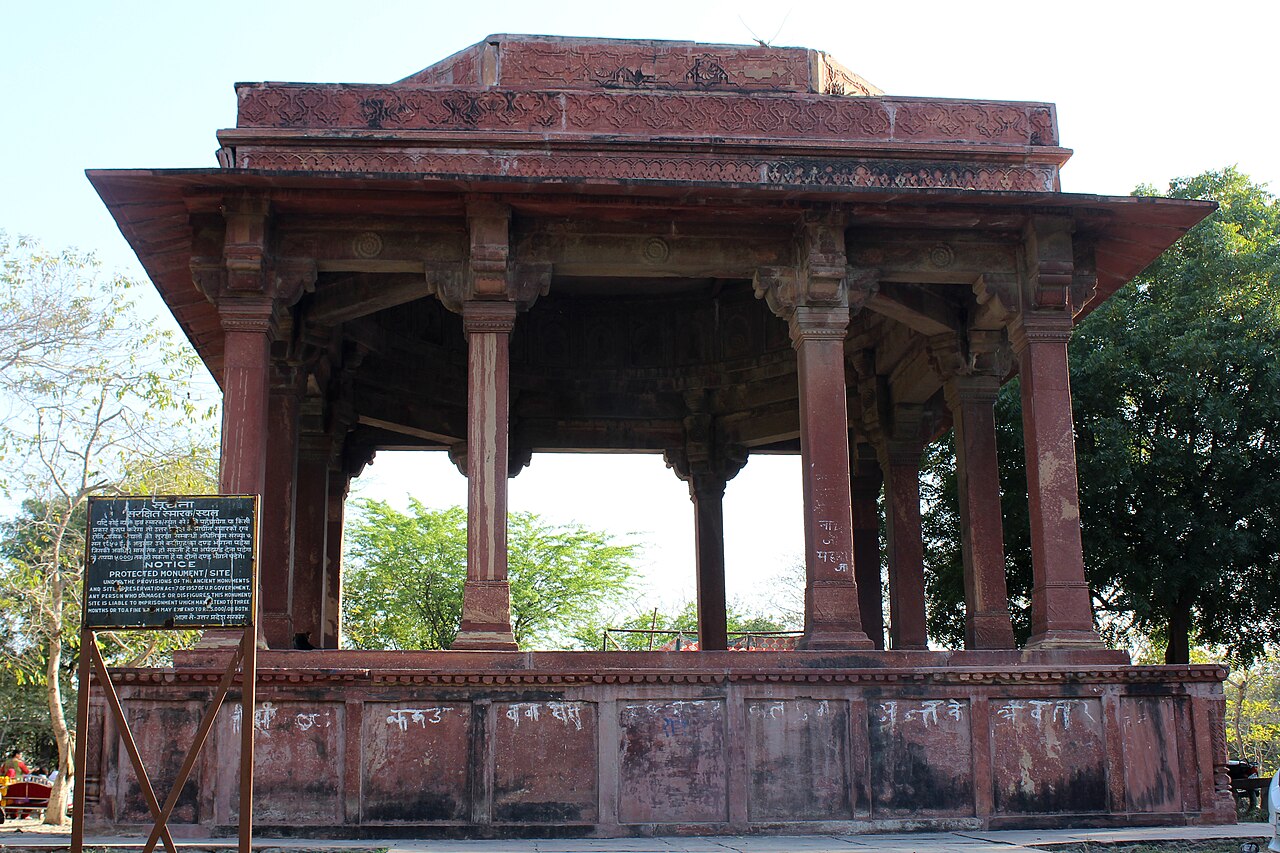
Raskhan is remembered, with Rahim and others, as one of the Muslim poets who loved Krishna. Bharatendu Harishchandra wrote that for such devotees "crores of Hindus could be sacrificed". His tomb stands at Mahaban near Gokul, where pilgrims still stop.
How they are remembered
Raskhan's savaiyas remain part of the Hindi literature syllabus and of Braj temple singing, and pilgrims to Braj still visit his tomb at Mahaban.
Ekatmata Stotra · Stanza 19
Named in Stanza 19 of the Ekatmata Stotra — from Kālidāsa to Tyāgarāja.
भरतो मुनिरीशानः कालिदासो महाकविः।
भोजो जक्कणसूरदासस्त्यागराजो रसखानकः॥
Sources: Wikipedia: Raskhan. Written afresh for The Hindu Book; corrections welcome at [email protected].