In Maharashtra, Karnataka, Andhra Pradesh and Telangana, the traditional year that begins on Gudi Padwa or Ugadi is counted in the Shalivahana Shaka, an era that starts in 78 CE. Tradition says it marks the victory of King Shalivahana of Pratishthana — today's Paithan on the Godavari — over the Shakas, foreign rulers who had pushed into western India.
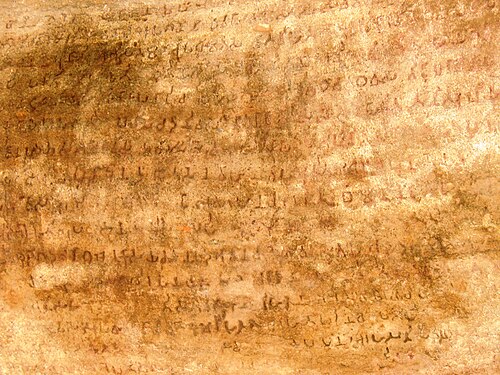
सक-यवन-पल्हव-निसूदनस“…destroyer of the Shakas, Yavanas and Pahlavas.”Nashik cave inscription of Queen Gautami Balashri, describing her son Gautamiputra Satakarni (2nd century CE)
As with Vikramaditya, legend and history must be separated. No contemporary record names a king Shalivahana. The name is generally understood as a later form of Satavahana, the dynasty that ruled the Deccan from Pratishthana for some four centuries, and the legend appears to keep alive the memory of real Satavahana victories.
The legend
Medieval Jain story collections, such as Merutunga's Prabandha Chintamani (14th century), tell Shalivahana's tale. He is born at Pratishthana to a widowed Brahmin woman and Shesha, king of the Nagas, and grows up in humble surroundings. When the mighty Vikramaditya of Ujjain marches against Pratishthana, the boy shapes soldiers, horses and elephants out of clay and, by his father's blessing, brings them to life. His clay army defeats Vikramaditya, and Shalivahana becomes king.
Other versions differ in detail. In some, the defeated king is a Shaka ruler; in others, Shalivahana and Vikramaditya become rivals for the honour of founding India's two great eras. The stories share one theme: a hero of the Deccan, born of divine and human parents, who saves his land from a powerful enemy.
The history behind it
The Satavahanas (also called Andhras in the Puranas) ruled much of the Deccan from about the 1st century BCE to the early 3rd century CE. Their greatest king, Gautamiputra Satakarni, reigned in the early 2nd century CE by most reckonings. He defeated Nahapana, the Shaka ruler of western India; a large hoard of Nahapana's silver coins found at Jogalthembi near Nashik had been re-stamped with Gautamiputra's name. His mother's inscription at the Nashik caves praises him as the destroyer of Shakas, Yavanas and Pahlavas. Many scholars think the Shalivahana legend draws mainly on his memory.
The era of 78 CE itself almost certainly began elsewhere: historians link its start to the Kushana emperor Kanishka or to the Western Kshatrapa rulers, who were themselves Shakas — hence the name Shaka era. Its association with Shalivahana appears in sources only from around the 13th century onward.
The Satavahana age
Whatever the truth of the legend, the dynasty behind it was a great one. Satavahana kings performed Vedic sacrifices while supporting Buddhist monasteries at Amaravati, Nashik and Karle, and the Prakrit anthology Gaha Sattasai is credited to one of them, King Hala. Under them, the Deccan traded with Rome across the Arabian Sea.
Satavahana coins, some bearing ships, and the many Buddhist cave inscriptions recording gifts by merchants, artisans and royal women give a rare picture of a busy, prosperous society in the early centuries CE.
How they are remembered
In 1957 India adopted a reformed version of the Shaka calendar as its national calendar, used alongside the Gregorian in official notices. Each Gudi Padwa and Ugadi, as households raise the gudi and share neem and jaggery, the new year of Shalivahana's era begins, keeping alive the memory of a Deccan king who stood against invaders.
Ekatmata Stotra · Stanza 22
Named in Stanza 22 of the Ekatmata Stotra — the architects of empire — Chanakya to Bappa Rawal.
चाणक्यश्च चन्द्रगुप्तो विक्रमादित्यशालिवाहनौ।
समुद्रगुप्तो हर्षः शैलेन्द्रो बप्पारावलः॥
Sources: Wikipedia: Shalivahana · Wikipedia: Gautamiputra Satakarni · Wikipedia: Shaka era. Written afresh for The Hindu Book; corrections welcome at [email protected].