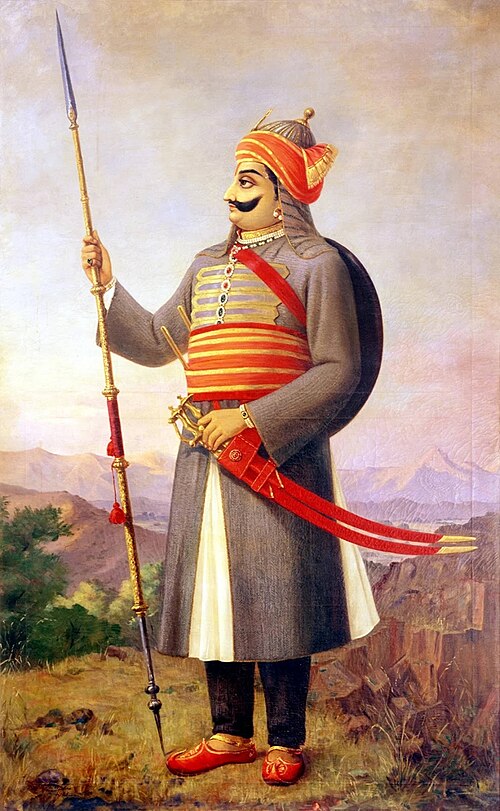
For more than a thousand years the rulers of Mewar — the line of Rana Kumbha, Rana Sanga and Maharana Pratap — traced their royal glory to one ancestor, Bappa Rawal. In bardic songs he is the boy-prince saved from enemies, the disciple of a Shaiva sage, the conqueror of Chittor and the hammer of foreign invaders. Separating this towering memory from the thin historical record is not easy, and historians still disagree about who exactly he was.
समुद्रगुप्तो हर्षः शैलेन्द्रो बप्पारावलः॥"Samudragupta, Harsha, the Shailendras, Bappa Rawal."Ekatmata Stotra, stanza 22, which names him among the heroic kings
"Bappa" means something like "father" and "Rawal" is a royal title, so several scholars think the name is an honorific rather than a personal name. G. H. Ojha, the great historian of Rajasthan, identified him with the Guhila king Kalabhoja; others have suggested Shiladitya or Khummana. The 15th-century Ekalinga Mahatmya gives 728 CE for the start of his rule, a date Ojha and D. R. Bhandarkar accepted, but it cannot be confirmed.
The legend
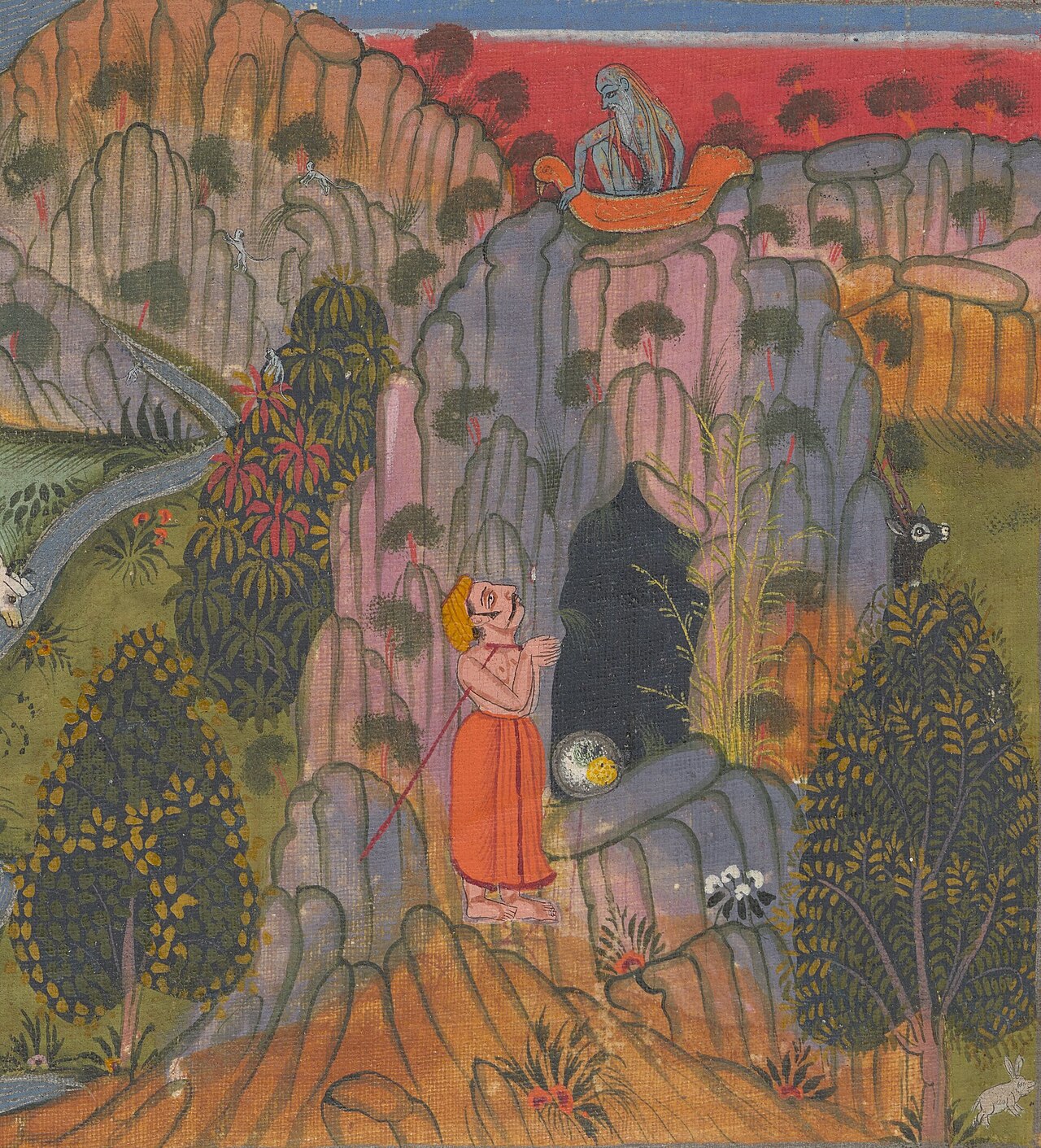
The bardic chronicles of Mewar tell that his father was killed and the infant Bappa was hidden and raised among cowherds near Nagda, in the hills north of today's Udaipur. Grazing cattle in the forest, he came upon a hidden Shiva linga and the hermit Harita Rashi, a Pashupata ascetic who became his guru. The sage initiated him into the worship of Shiva as Ekalinga, and blessed him with kingship. Later tales add that the goddess gave him a sword and that he grew to giant size and strength.
Such stories are found about other founders too, and scholars treat them as a pattern of royal legend rather than as history. What they show clearly is how closely the Mewar kingship was bound to Shiva.
What the inscriptions say
Bappa appears in Guhila inscriptions of the tenth century — the Unawas grant of 959 CE and the inscription at the Eklingji temple of 971 CE — but not in some other records of the same family, such as the Atpur inscription of 977. Gold coins reading "Shri Voppa" were attributed to him by Ojha, but numismatists have questioned this. Chronicles say he took Chittor from its Mori (Maurya) rulers or from foreign invaders; one historian has suggested he first served the Mori king Manuraja.
Against the Arab raids
In the early eighth century, after the Arab conquest of Sindh in 712, Arab armies raided deep into western India. Inscriptions of other dynasties record that these raids were turned back around the 730s, notably by the Gurjara-Pratihara king Nagabhata I and the Chalukyas of Gujarat. Historians such as R. C. Majumdar and R. V. Somani have argued that Bappa was part of this resistance — perhaps recovering Chittor after the Arabs defeated the Moris — and that this fame made him the remembered founder of the line. This reconstruction is reasonable but rests on later chronicles, not on a contemporary record naming him.
Diwan of Eklingji
Tradition holds that Bappa founded the temple of Eklingji at Kailashpuri near Nagda. The present temple is a later rebuilding, but the idea it embodies lasted: the Maharanas of Mewar ruled as the Diwan, the minister, of Eklingji, who was regarded as the true king of Mewar. The guru-lineage of Harita Rashi continued to serve the shrine for centuries.
How they are remembered
Whatever his real name and dates, Bappa Rawal became the founding hero of Mewar's long story of independence, invoked by its rulers in their struggles with the Delhi Sultanate and the Mughals. The 1925 silent film Mewadpati Bappa Rawal and countless ballads keep his memory alive, and every Maharana's devotion at Eklingji recalls the bond between the boy-king and the Shaiva sage.
Ekatmata Stotra · Stanza 22
Named in Stanza 22 of the Ekatmata Stotra — the architects of empire — Chanakya to Bappa Rawal.
चाणक्यश्च चन्द्रगुप्तो विक्रमादित्यशालिवाहनौ।
समुद्रगुप्तो हर्षः शैलेन्द्रो बप्पारावलः॥
Sources: Wikipedia: Bappa Rawal · Wikipedia: Guhila dynasty · Wikipedia: Eklingji. Written afresh for The Hindu Book; corrections welcome at [email protected].