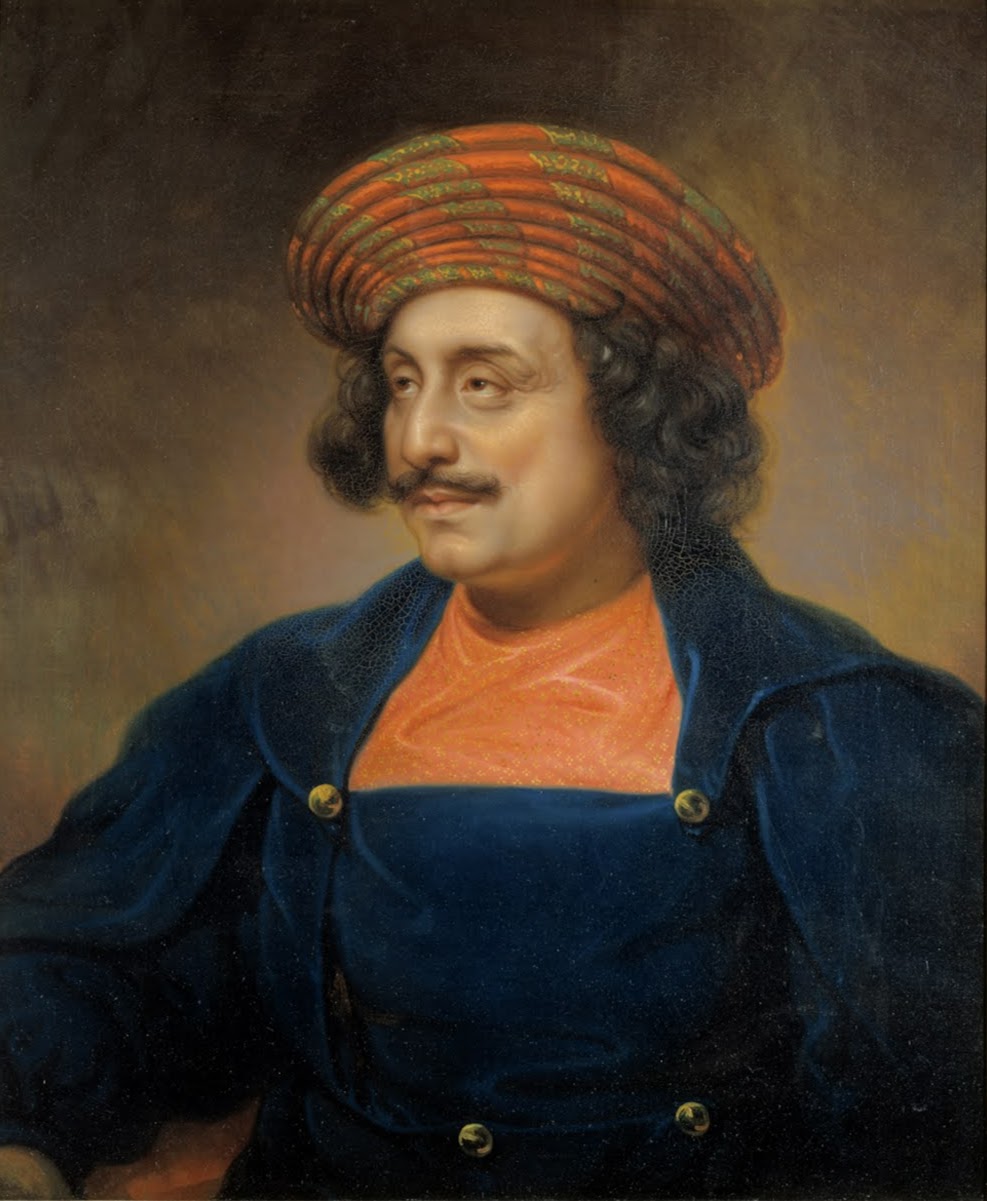
Ram Mohan Roy was born in 1772 at Radhanagar in the Hooghly district of Bengal, into a well-off brahmin family. He studied Persian and Arabic at Patna, Sanskrit and the scriptures at Varanasi, and later English, Hebrew and Greek. His wide reading led him early to question idol worship and ritual.
He argued that the Upanishads taught the worship of one formless God, and translated them into Bengali and English so that all could read them.The basis of his reform
He worked for the East India Company's revenue service until 1814, then settled in Calcutta to devote himself to reform, founding the Atmiya Sabha in 1815.
Against sati
Ram Mohan was deeply affected, it is said, by seeing his brother's widow burnt on her husband's pyre. He campaigned for years against sati, showing from the shastras that it was not required, writing pamphlets and petitions and visiting cremation grounds to dissuade families. In 1829 Governor-General William Bentinck banned the practice; when orthodox groups appealed to London, Ram Mohan defended the ban there.
The Brahmo Samaj
In 1828 he founded the Brahmo Sabha, later the Brahmo Samaj, for the worship of one God without images, based on the Upanishads. It became the nursery of the Bengal Renaissance; Debendranath Tagore and Keshab Chandra Sen carried it forward. Orthodox Hindus opposed him strongly, and some critics saw too much Christian Unitarian influence in his ideas.
Education, press and England
He supported modern education in science and English alongside Indian learning, helped found schools in Calcutta, and started newspapers in Bengali and Persian, including Sambad Kaumudi, defending the freedom of the press. In 1830 the Mughal emperor Akbar II gave him the title Raja and sent him to England to plead for his allowance. He died of fever in Bristol in 1833 and is buried there at Arnos Vale.
How they are remembered
He is widely called the father of the Indian Renaissance. His tomb in Bristol, where a statue of him also stands, is visited by Indians, and the Raja Rammohun Roy Library Foundation promotes libraries across India in his name.
Ekatmata Stotra · Stanza 27
Named in Stanza 27 of the Ekatmata Stotra — those who woke the sleeping civilisation.
रामकृष्णो दयानन्दः ठाकुर रामतीर्थकः।
विवेकानन्द-मोहनौ राष्ट्र-जागरणेऽग्रिमौ॥
Sources: Wikipedia: Ram Mohan Roy · Wikipedia: Brahmo Samaj. Written afresh for The Hindu Book; corrections welcome at [email protected].