Rama Tirtha was born Tirath Ram Goswami on 22 October 1873 at Muraliwala, a village in the Gujranwala district of the Punjab, now in Pakistan, into a family of Gosain brahmins. His mother died when he was an infant, and he was raised largely by his elder brother and grandmother. He was married, as was the custom, while still a boy.
"After China, the sun of prosperity and learning will again smile at India."Swami Rama Tirtha, In Woods of God-Realization, vol. IV
Poor but brilliant, he studied in Gujranwala and then at Government College, Lahore, often going hungry to pay his fees. He took his master's degree in mathematics and became a professor of mathematics at Forman Christian College, Lahore. His students remembered him as a gifted teacher who also loved Persian and Urdu poetry.
From professor to sannyasi
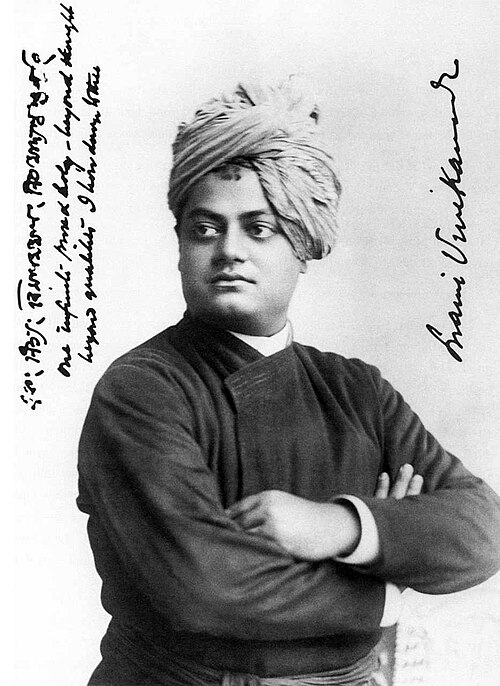
In Lahore, Tirath Ram became a devotee of Krishna and a student of Vedanta, giving lectures on the Gita and the Upanishads. In 1897 Swami Vivekananda, newly returned from the West, visited Lahore; the meeting deeply moved the young professor and confirmed his wish to give up worldly life. He began spending vacations in the Himalaya.
On Deepavali in 1899 he left his post and his family and took sannyasa, becoming Swami Rama Tirtha. From then on he spoke of himself in the third person as "Rama" — a habit meant to express that the little self had dissolved into the one Self of Vedanta.
Japan and America
With the support of the Maharaja of Tehri he sailed for Japan in 1902, reportedly to attend a congress of religions, and from there went on to the United States, where he spent about two years. He lectured in San Francisco and other cities and lived for a time in the mountains of northern California, near Mount Shasta. He was among the earliest Indian teachers in America after Vivekananda.
He called his message Practical Vedanta: the oneness of all beings was not a theory for the cloister but a way to live — in work, in family life, in the service of one's country. He spoke with humour and poetry, and Americans who heard him described a joyful, childlike presence.
Return and death
Rama Tirtha returned to India at the end of 1904 and toured giving lectures, urging Indians to combine spiritual strength with education, science and patriotism. He spoke against caste pride and the neglect of women's education, and encouraged young Indians to study abroad and bring back modern knowledge.
In 1906 he withdrew to the Himalaya near Tehri to write a book on Vedanta. On 17 October 1906, while bathing in the Bhilangana river, he was swept away by the current and drowned, a few days before his thirty-third birthday. Tradition holds that it was Deepavali — the festival on which he is also said to have been born, and on which he had taken sannyasa.
How they are remembered
Rama Tirtha's lectures and writings, gathered by his disciple Puran Singh and others into the volumes of In Woods of God-Realization, were widely read in India and abroad. His Urdu and Persian poems are still sung, and the Swami Rama Tirtha Mission and several institutions in Uttarakhand and Punjab carry his name. His message that Vedanta should make people fearless, cheerful and useful anticipated much of later Indian thought on spirituality in public life.
Ekatmata Stotra · Stanza 27
Named in Stanza 27 of the Ekatmata Stotra — those who woke the sleeping civilisation.
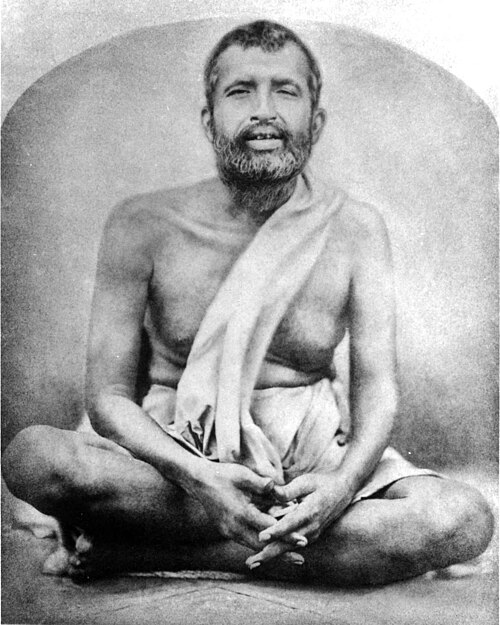
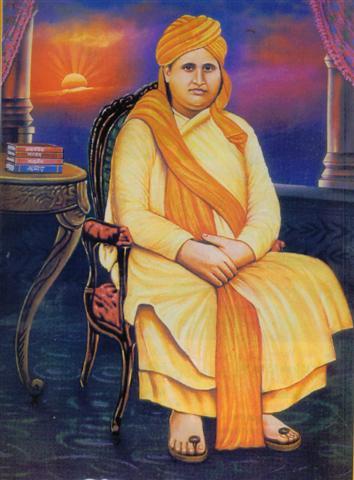
रामकृष्णो दयानन्दः ठाकुर रामतीर्थकः।
विवेकानन्द-मोहनौ राष्ट्र-जागरणेऽग्रिमौ॥
Sources: Wikipedia: Rama Tirtha. Written afresh for The Hindu Book; corrections welcome at [email protected].