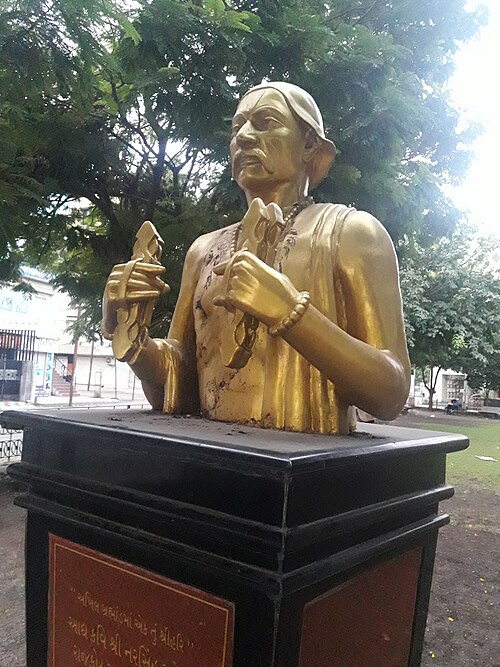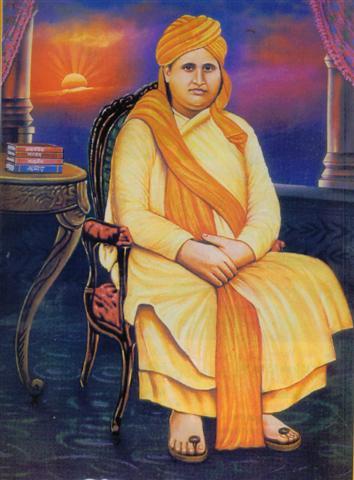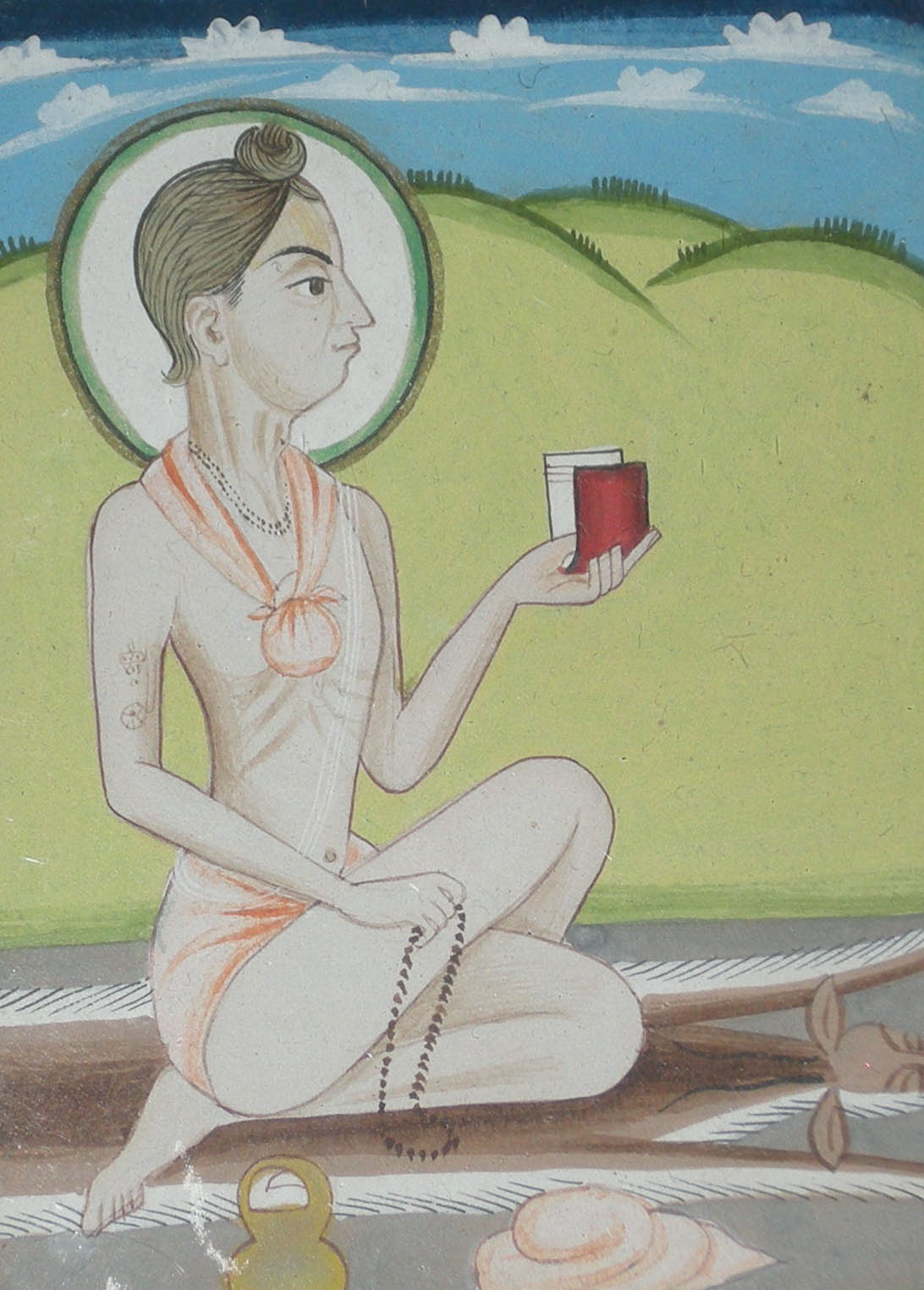
Ghanshyam Pande was born on 3 April 1781 at Chhapaiya, near Ayodhya, to Dharmadev and Bhaktimata. A gifted and devout child, he lost both parents by the age of eleven and then left home as a boy ascetic, Nilkanth Varni.
His Shikshapatri asks followers never to harm any living being, never to steal, to avoid intoxicants, and to treat all with kindness.From the Shikshapatri (1826), paraphrased
For seven years he walked across India — to the Himalayas and Nepal, to Jagannath Puri, to Rameswaram and the south — practising yoga and visiting holy places, a journey of thousands of kilometres. In 1799 he reached Loj in Saurashtra, at the ashram of Ramanand Swami.
Sahajanand Swami
Ramanand Swami initiated the young ascetic as Sahajanand Swami, and in 1801 named him his successor. Sahajanand taught the mantra "Swaminarayan", and his followers came to worship him by that name. He drew people from every community — farmers, artisans, merchants, Kathis and Kolis — teaching devotion to God along with a strict moral life.
Reform
In the unsettled Gujarat of the early nineteenth century, he campaigned against female infanticide, sati, animal sacrifice, opium, alcohol and banditry, and against exploitation of the poor. He organised famine relief, established separate assemblies so that women could worship and learn, and won the respect of British officials such as Bishop Reginald Heber and Governor John Malcolm, who met him.
Temples and scriptures
He built six temples, at Ahmedabad (1822), Bhuj, Vadtal, Dholera, Junagadh and Gadhada, and wrote the Shikshapatri (1826), a short code of conduct. His spoken teachings were collected as the Vachanamrut. He died at Gadhada in 1830.
How they are remembered
The Swaminarayan tradition, through several organisations including BAPS, has millions of followers in India and abroad; its Akshardham temples in Delhi and Gandhinagar and its mandirs worldwide are among the largest Hindu temples built in modern times. Swaminarayan Jayanti coincides with Ram Navami.
Ekatmata Stotra · Stanza 18
Named in Stanza 18 of the Ekatmata Stotra — nineteenth-century acharyas and reformers.
विरजानन्दः सहजानन्दो रामानन्दः परात्परः।
धर्मोद्धारकर्तारो नमस्यास्ते मुहुर्मुहुः॥
Sources: Wikipedia: Swaminarayan · Wikipedia: Shikshapatri. Written afresh for The Hindu Book; corrections welcome at [email protected].