When is Diwali?
| Year | Date | Day |
|---|---|---|
| 2026 | 8 November | Sunday |
| 2027 | 29 October | Friday |
| 2028 | 17 October | Tuesday |
Observed on Amavasya of Kartik. Dates follow the Panchang for New Delhi and can differ by a day in other places — check the Panchang for your city.
What Diwali means
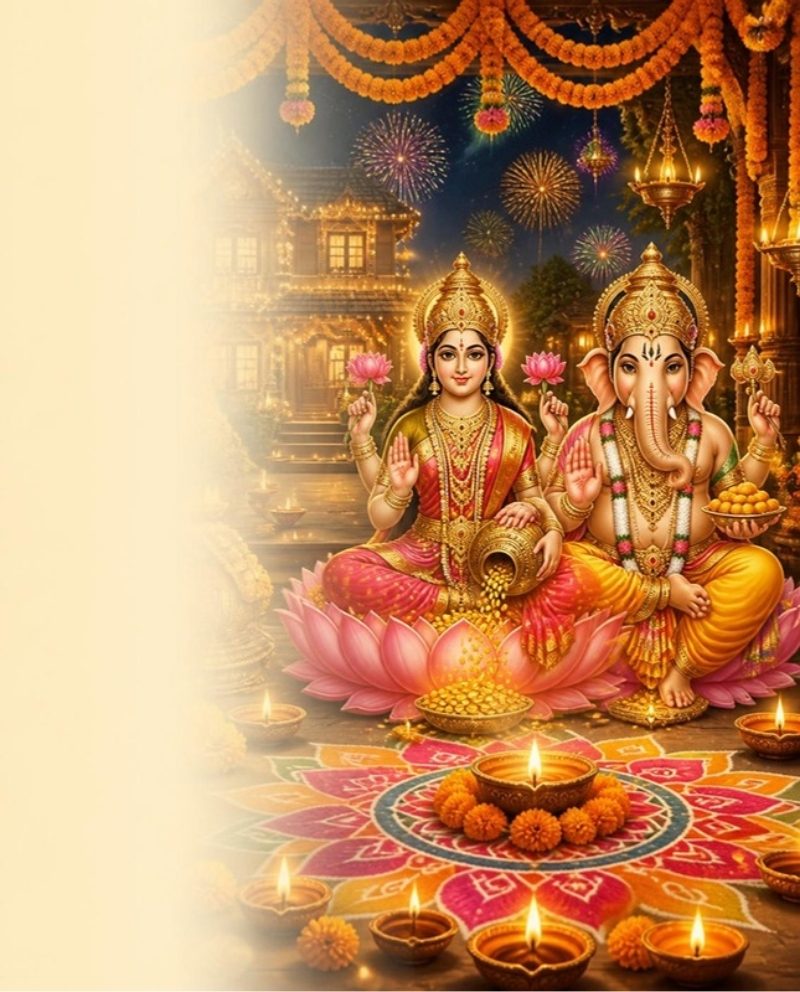
Diwali — Deepavali, the 'row of lamps' — is the night when the darkest Amavasya of the year is filled with light. On the surface it is a celebration of homecoming and prosperity; underneath, every tradition that keeps it carries the same idea: light is not simply the absence of darkness, it is something we choose to kindle, one lamp at a time.
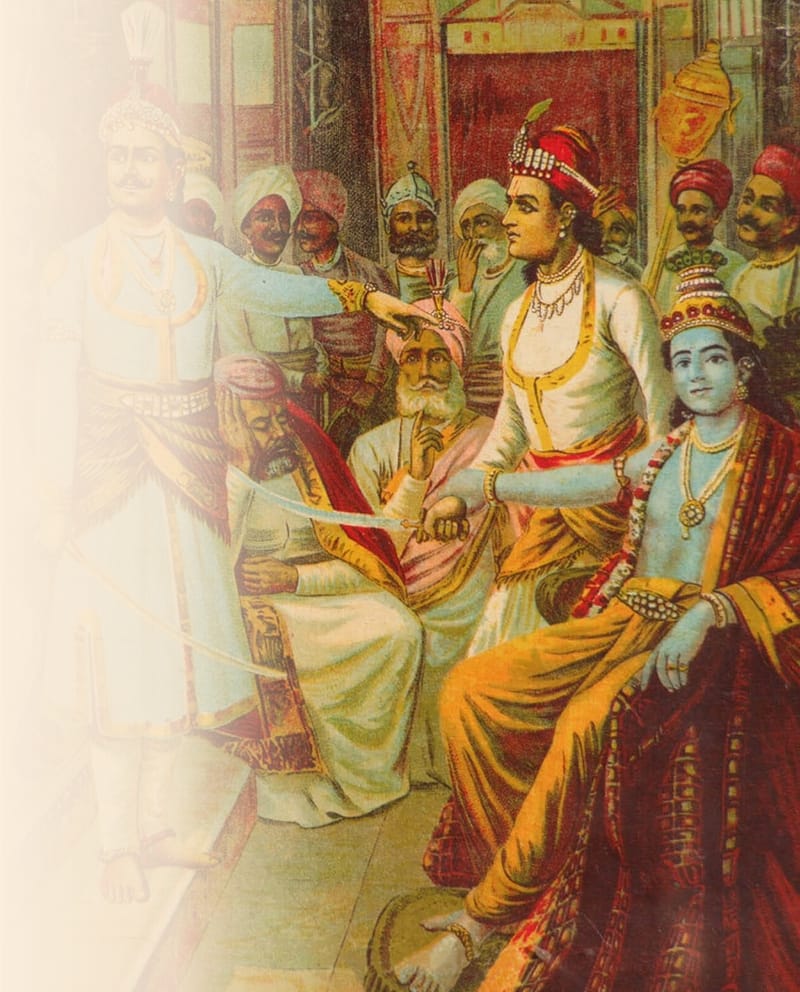
The festival gathers several stories into one night. For most of North India it is Bhagavan Rama's return to Ayodhya. For many families it is first of all Lakshmi Puja: tradition holds that Mahalakshmi emerged from the churning of the ocean on Kartik Amavasya and that she visits homes that are clean, lit and welcoming on this night. In the South, the day before is Naraka Chaturdashi, the victory of Krishna and Satyabhama over Narakasura. Jains mark the nirvana of Bhagavan Mahavira, and Sikhs celebrate Bandi Chhor Divas.
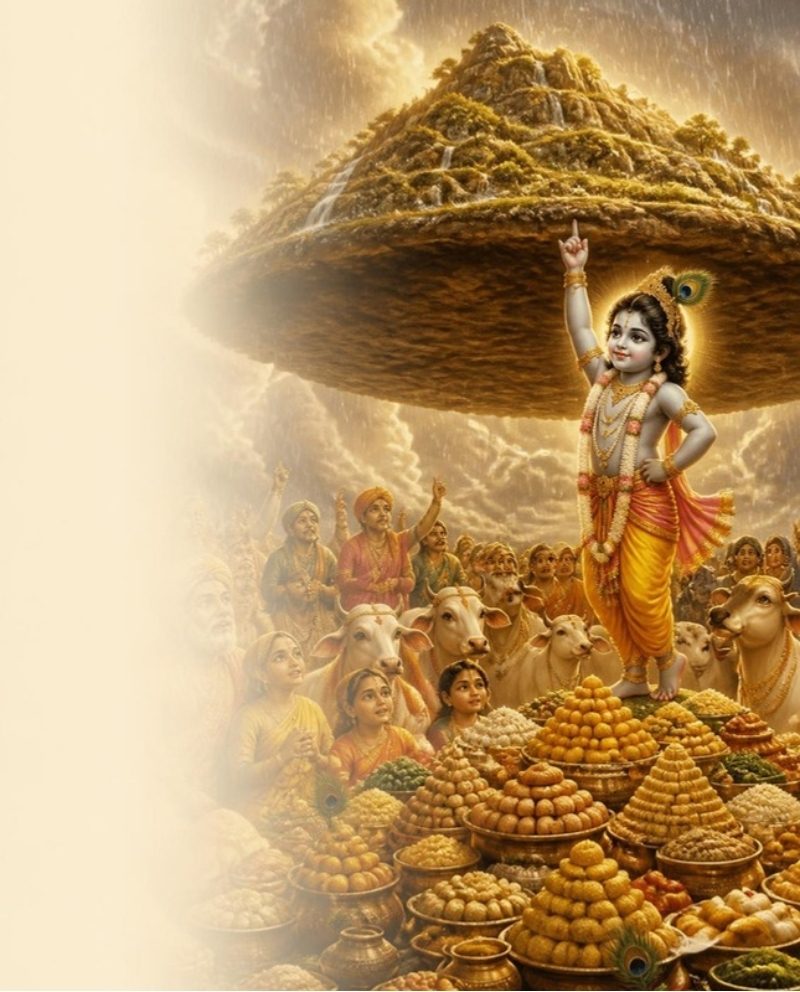
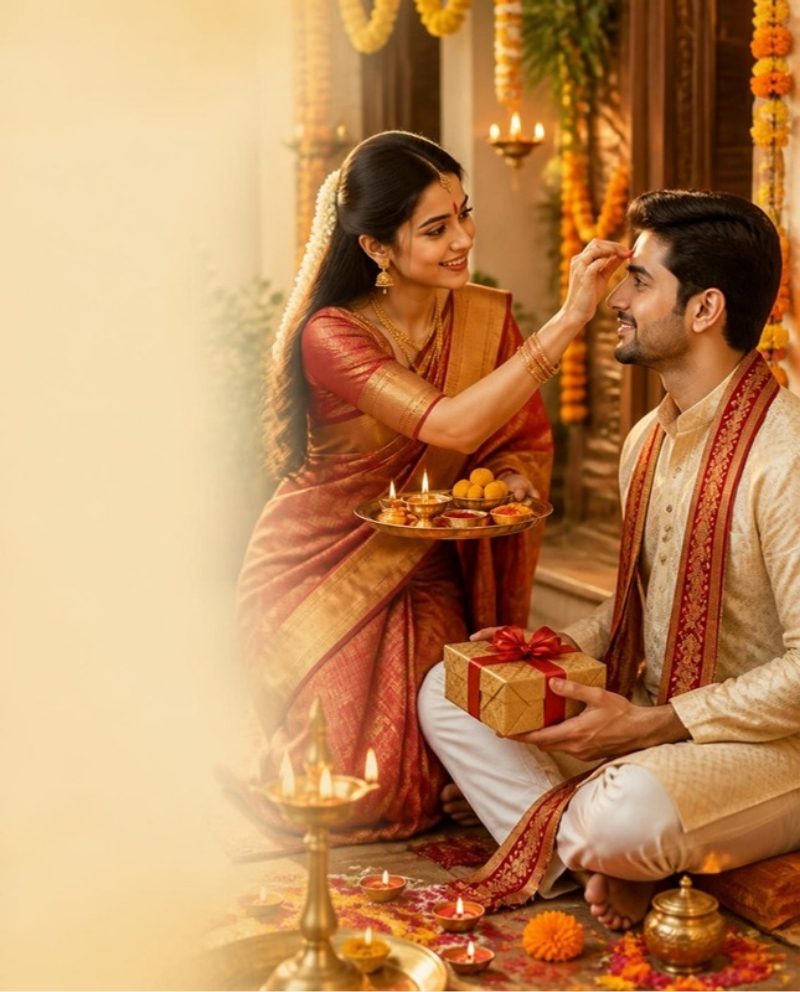
That is why Diwali is less a single ritual than a season of five days — cleaning and buying on Dhanteras, the early bath of Naraka Chaturdashi, the Lakshmi Puja itself, Govardhan Puja and the new year for many communities, and finally Bhai Dooj. Each day has its own small observance, and together they turn a whole household towards renewal: settling accounts, repairing relationships, giving to those who have less, and starting afresh.
The story of Diwali
The Ramayana tells that after fourteen years in the forest and the war in Lanka, Rama, Sita and Lakshmana returned to Ayodhya with Hanuman. The people had no warning of the exact night, so every household lit lamps along walls, roofs and lanes to make sure the path home was bright. The custom of filling the house with diyas — at the doorstep, at the tulsi, at the well, at the store-room — keeps that welcome alive.
The Lakshmi story comes from the Samudra Manthan. When the devas and asuras churned the ocean of milk, many treasures rose from it; among them was Lakshmi, seated on a lotus, who chose Vishnu as her consort. Because she represents prosperity that comes with dharma — not mere money — the Diwali puja always begins with Ganesha, the remover of obstacles, and is done in a clean, lit, peaceful home.
Diwali puja vidhi, step by step
This is a simple Lakshmi–Ganesh puja that a family can do at home. Families and communities have their own traditions — follow yours where they differ.
What you need
- Images or idols of Lakshmi and Ganesha (and Kuber or Saraswati if your family worships them)
- A raised platform (chowki) with a red or yellow cloth
- A kalash with water, mango leaves and a coconut
- Diyas with ghee or sesame oil, and cotton wicks
- Roli or kumkum, haldi, akshat (unbroken rice), sandalwood paste
- Flowers, especially lotus and marigold, and a garland
- Incense, camphor and an aarti thali
- Panchamrit, sweets, kheel-batashe, seasonal fruits
- New account books or a coin box for chopda pujan (business families)
- Coins or silver to place before Lakshmi
When to do the puja
Lakshmi Puja is done after sunset on Kartik Amavasya, in Pradosh Kaal; many families choose the steady (sthir) lagna within it, usually Vrishabha. The exact window changes by city every year. See the Panchang for your city.
Steps
- Clean and decorate. Clean the house, especially the entrance and the puja space. Draw a rangoli at the door and, if your family does, small footprints of Lakshmi walking in.
- Set up the altar. Place the chowki facing east or north. Put Ganesha on Lakshmi's right (your left as you face them). Place the kalash and a heap of rice beside them.
- Purify and take sankalp. Sprinkle a little water on yourself and the puja items. Holding water, rice and a flower, state your name, family, the place and the day, and the intention of the puja.
- Worship Ganesha first. Offer water, roli, akshat, flowers and a sweet to Ganesha with the Vakratunda shloka or 'Om Gam Ganapataye Namah'.
- Worship the kalash. Apply roli and haldi to the kalash and offer flowers — it represents the presence of all the devas in the puja.
- Lakshmi puja. Bathe the image symbolically with panchamrit and water, then offer sandalwood, kumkum, akshat, flowers, a garland, coins and sweets, chanting 'Om Shreem Mahalakshmyai Namah'. Families who know them recite the Shri Suktam or Lakshmi Ashtottara.
- Worship account books and wealth. Business families draw a swastika and 'Shubh–Labh' on the new books and worship them, along with the cash box or coins.
- Light the diyas. Light the main lamp before Lakshmi, then carry lamps to every doorway, window, the tulsi, the kitchen and the store-room, reciting 'Shubham Karoti Kalyanam'.
- Aarti and prasad. Sing the Lakshmi aarti and Ganesh aarti, offer the prasad, and share it with the family and neighbours. Keep a lamp burning through the night if you can do so safely.
Offerings & food: Mithai of every kind — kaju katli, mewa, soan papdi, barfi, besan laddoo, chakli, chivda
Mantras for Diwali
To begin — Ganesha
वक्रतुण्ड महाकाय सूर्यकोटिसमप्रभ ।
निर्विघ्नं कुरु मे देव सर्वकार्येषु सर्वदा ॥
vakratuṇḍa mahākāya sūryakoṭisamaprabha |
nirvighnaṃ kuru me deva sarvakāryeṣu sarvadā ||
O Ganesha of the curved trunk and mighty form, radiant as a crore suns — remove the obstacles from all my work, always.
Full text with meaning →Lakshmi mantra
ॐ श्रीं महालक्ष्म्यै नमः ॥
oṃ śrīṃ mahālakṣmyai namaḥ ||
Om, salutations to Mahalakshmi. Śrīṃ is her seed syllable. Chanted 108 times on a lotus-seed or crystal mala during the puja.
Lakshmi Gayatri
ॐ महालक्ष्म्यै च विद्महे विष्णुपत्न्यै च धीमहि ।
तन्नो लक्ष्मीः प्रचोदयात् ॥
oṃ mahālakṣmyai ca vidmahe viṣṇupatnyai ca dhīmahi |
tanno lakṣmīḥ pracodayāt ||
We know Mahalakshmi and meditate on the beloved of Vishnu; may Lakshmi inspire and guide us.
When lighting the lamps
शुभं करोति कल्याणम् आरोग्यं धनसम्पदा ।
शत्रुबुद्धिविनाशाय दीपज्योतिर्नमोऽस्तु ते ॥
śubhaṃ karoti kalyāṇam ārogyaṃ dhanasampadā |
śatrubuddhivināśāya dīpajyotirnamo'stu te ||
Salutations to the lamp's flame, which brings auspiciousness, well-being, health and prosperity, and destroys hostile thoughts.
Full text with meaning →Diwali across India
5-day celebration: Dhanteras → Chhoti Diwali (Naraka Chaturdashi) → Diwali → Govardhan Puja → Bhai Dooj. In Bengal: Kali Puja same night. In Gujarat: Vikram Samvat new year begins next day. In South India: Deepavali is celebrated on Chaturdashi (one day before North Indian Diwali).
- North India
- Diwali is Rama's homecoming: Ayodhya's Deepotsav lights the Saryu ghats, and homes keep Lakshmi–Ganesh puja in the evening.
- Bengal, Odisha, Assam
- The same Amavasya night is Kali Puja. In Odisha families light jute sticks (kauriya kathi) to call the ancestors and light their way back.
- Gujarat
- Diwali closes the Vikram Samvat year; the next morning is Bestu Varas, the Gujarati new year, and merchants open new books (chopda pujan).
- Maharashtra
- Diwali begins with Vasubaras (cow worship), includes the abhyanga snan before dawn on Naraka Chaturdashi, Lakshmi Puja, and Padwa for husbands and wives.
- Tamil Nadu, Kerala, Karnataka, Andhra
- Deepavali is mainly Naraka Chaturdashi: an oil bath before sunrise, new clothes and sweets, celebrating Krishna and Satyabhama's victory over Narakasura.
- Goa
- Effigies of Narakasura are made and burnt before dawn on Naraka Chaturdashi.
Prayers to recite
Do’s and don’ts
Do
- Light lamps throughout the home
- Donate to the needy
- Clean house thoroughly
- Welcome guests
Avoid
- Avoid gambling (though some communities play as tradition)
- Minimise firecrackers (noise and air pollution)
- Do not sleep during Lakshmi puja hours
Temples to visit for Diwali


Frequently asked questions
When is Diwali in 2026?
Diwali 2026 falls on Sunday, 8 November 2026 (Amavasya of Kartik). Dates are for New Delhi and may differ by a day in other places.
Diwali 2026 kab hai?
Diwali 2026 Sunday, 8 November 2026 ko hai. Apne shahar ki sahi tithi ke liye Panchang dekhein.
दीपावली 2026 कब है?
दीपावली 2026 रविवार, 8 नवंबर 2026 को है। अपने शहर की सही तिथि और मुहूर्त के लिए पंचांग देखें।
When is Diwali in 2027?
Diwali 2027 falls on Friday, 29 October 2027 (Amavasya of Kartik). Dates are for New Delhi and may differ by a day in other places.
When is Diwali in 2028?
Diwali 2028 falls on Tuesday, 17 October 2028 (Amavasya of Kartik). Dates are for New Delhi and may differ by a day in other places.
Why is Diwali celebrated?
The festival of lights — the most widely celebrated Hindu festival. Marks the return of Lord Rama to Ayodhya after 14 years of exile, the victory of light over darkness.
How is Diwali celebrated?
Clean and decorate the home — rangoli, flowers. Light diyas on every doorway, window, wall. Evening Lakshmi-Ganesh puja with mantras. Open doors and windows to welcome Lakshmi. Burst crackers (eco-friendly, if at all). Exchange sweets and gifts with neighbours and family. Chopda pujan (books/ledger worship) for businesses — new accounting year begins.
What is offered or eaten on Diwali?
Mithai of every kind — kaju katli, mewa, soan papdi, barfi, besan laddoo, chakli, chivda
What is the right time for Lakshmi Puja?
After sunset on Kartik Amavasya, during Pradosh Kaal; many families prefer the sthir (steady) Vrishabha lagna within it. The exact time changes every year and by city, so check the Panchang for your city on the day.
Why is Ganesha worshipped with Lakshmi on Diwali?
Every Hindu puja begins with Ganesha, who removes obstacles. With Lakshmi he also represents wisdom: prosperity is welcome when it comes with good sense and dharma.
How many days is Diwali?
Five days: Dhanteras, Naraka Chaturdashi (Chhoti Diwali), Lakshmi Puja on Amavasya, Govardhan Puja or Padwa, and Bhai Dooj.
Can Diwali puja be done without a priest?
Yes. Most families do the Lakshmi–Ganesh puja themselves with a simple sankalp, offerings, mantras and aarti. Sincerity matters more than elaborate ritual.
 8 Nov2026
 10 Nov2026
 11 Nov2026
 15 Nov2026