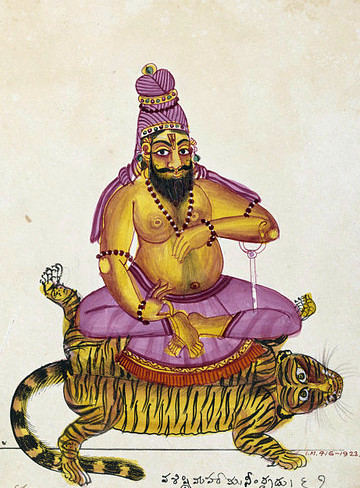
Agastya is one of the most widely honoured sages of Hindu tradition. The Rigveda attributes a group of hymns in its first book (roughly 1.165–191) to him, and one of them (1.179) is a dialogue with his wife Lopamudra on the balance between ascetic discipline and married life. Later texts call him Kumbhayoni or Kumbhaja, “born from a pot”, recalling the story that he and Vasishtha were born from a jar into which the gods Mitra and Varuna had placed their seed.
आदित्यहृदयं पुण्यं सर्वशत्रुविनाशनम्। जयावहं जपेन्नित्यमक्षय्यं परमं शिवम्॥“This Aditya Hridayam is holy, the destroyer of all enemies; it brings victory. Recite it always — it is imperishable, supreme and auspicious.”Valmiki Ramayana, Yuddha Kanda — Agastya's words to Rama (Aditya Hridayam, verse 4)
In the epics and Puranas he is above all the sage of the south. Stories about him explain how the Vedic way of life crossed the Vindhya mountains, and in Tamil tradition he became the father of Tamil learning.
The sage who tamed a mountain
The Mahabharata's Vana Parva tells that the Vindhya mountain, jealous of Meru, began to grow until it blocked the path of the sun. The gods turned to Agastya, Vindhya's teacher. He asked the mountain to bow low so that he could cross to the south, and to stay so until he returned. Agastya never came back, and the Vindhya, the story says, waits bowed to this day.
The same section of the epic tells how he drank up the ocean so that the gods could find and defeat the Kalakeya demons hiding beneath it, and how he digested the demon Vatapi, whom his brother Ilvala used to cook and serve to unwary brahmins before calling him back to life. The Vatapi story also appears in the Ramayana.
Versions of these stories differ between texts, and the Puranas add many more — but in each, Agastya is the sage of immense spiritual power who uses it to protect the world and its order.
Agastya and Rama
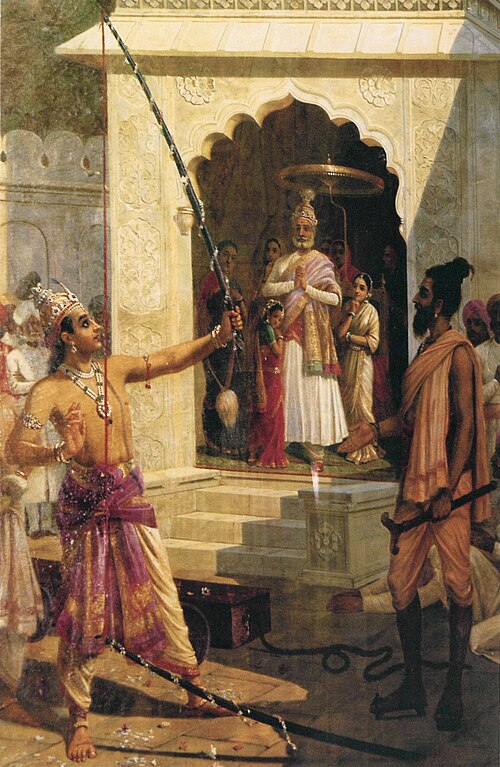
In the Valmiki Ramayana's Aranya Kanda, Rama, Sita and Lakshmana visit Agastya's hermitage during their exile. The sage gives Rama divine weapons, including a bow made by Vishwakarma, and advises him to live at Panchavati. Later, in the Yuddha Kanda, as Rama stands weary before the final battle with Ravana, Agastya appears and teaches him the Aditya Hridayam, a hymn to the Sun; Rama recites it and goes on to victory.
Agattiyar of the Tamils
Tamil tradition honours Agastya as Agattiyar, sent south by Shiva to balance the earth. He is said to have composed the first Tamil grammar, the Agattiyam, now lost except for quotations, and to have taught Tolkappiyar, author of the oldest surviving Tamil grammar. He is also revered as the first of the eighteen Siddhars and a founder of Siddha medicine. The Pothigai hills of the Western Ghats are held to be his abode, and many Tamil works bearing his name come from much later times.
Beyond India
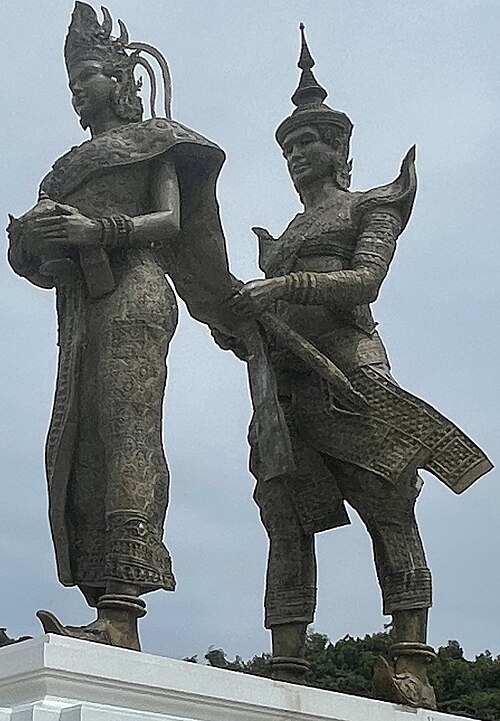
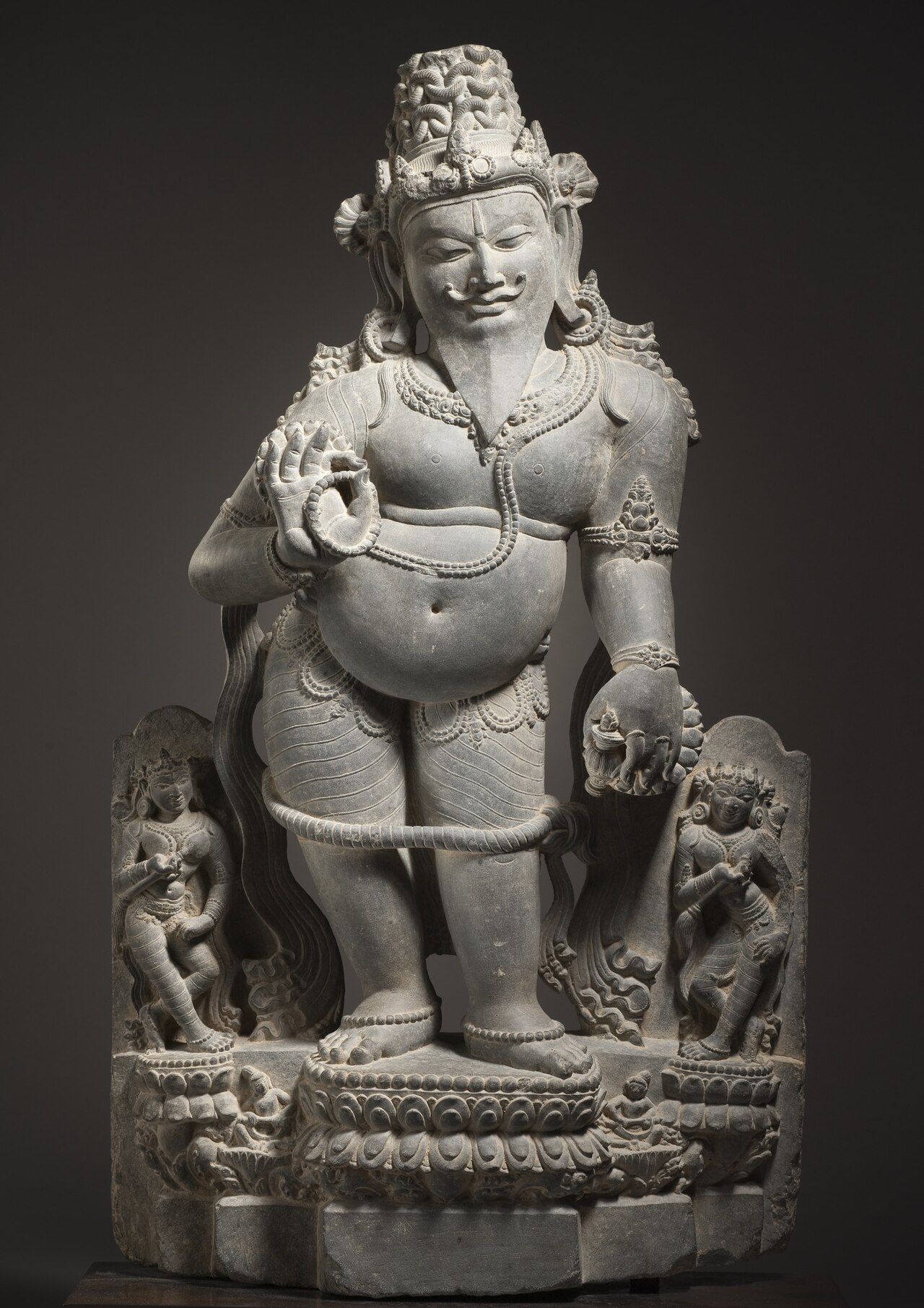
Agastya's fame travelled with Indian culture across the sea. In Java, Shiva temples often include an image of Agastya as a bearded, pot-bellied sage, and an 8th-century inscription from Dinoyo in East Java records the installation of an Agastya image. He was also honoured in Cambodia and Champa.
How they are remembered
The bright southern star Canopus bears Agastya's name, and its rising was once marked with an offering (Agastya Arghya) at the end of the rains. Each time the Aditya Hridayam is recited, his words to Rama are repeated. To the Tamils he is the father of their learning; to all India he is the sage who joined north and south.
Ekatmata Stotra · Stanza 21
Named in Stanza 21 of the Ekatmata Stotra — early sages and empire-builders.
अगस्त्यः कम्बुरुचिरः कौण्डिन्यो राजेन्द्रचोल:।
अशोकः पुष्यमित्रश्च खारवेलः प्रकीर्तिताः॥
Sources: Wikipedia: Agastya · Wikipedia: Lopamudra · Wikipedia: Aditya Hridayam. Written afresh for The Hindu Book; corrections welcome at [email protected].