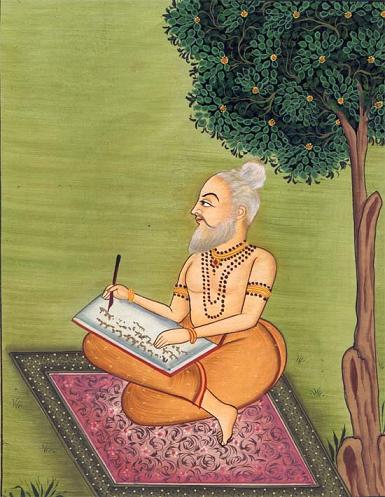
According to the Ramayana of the sage Valmiki, Rama was born in Ayodhya, capital of Kosala, to King Dasharatha and Queen Kausalya, on the ninth day of the bright half of Chaitra. Hindus worship him as the seventh avatar of Vishnu, who came to destroy the demon king Ravana. His brothers Lakshmana, Bharata and Shatrughna were born to Dasharatha's other queens.
रामो विग्रहवान् धर्मः“Rama is the embodiment of dharma.”Valmiki Ramayana, Aranya Kanda 37.13
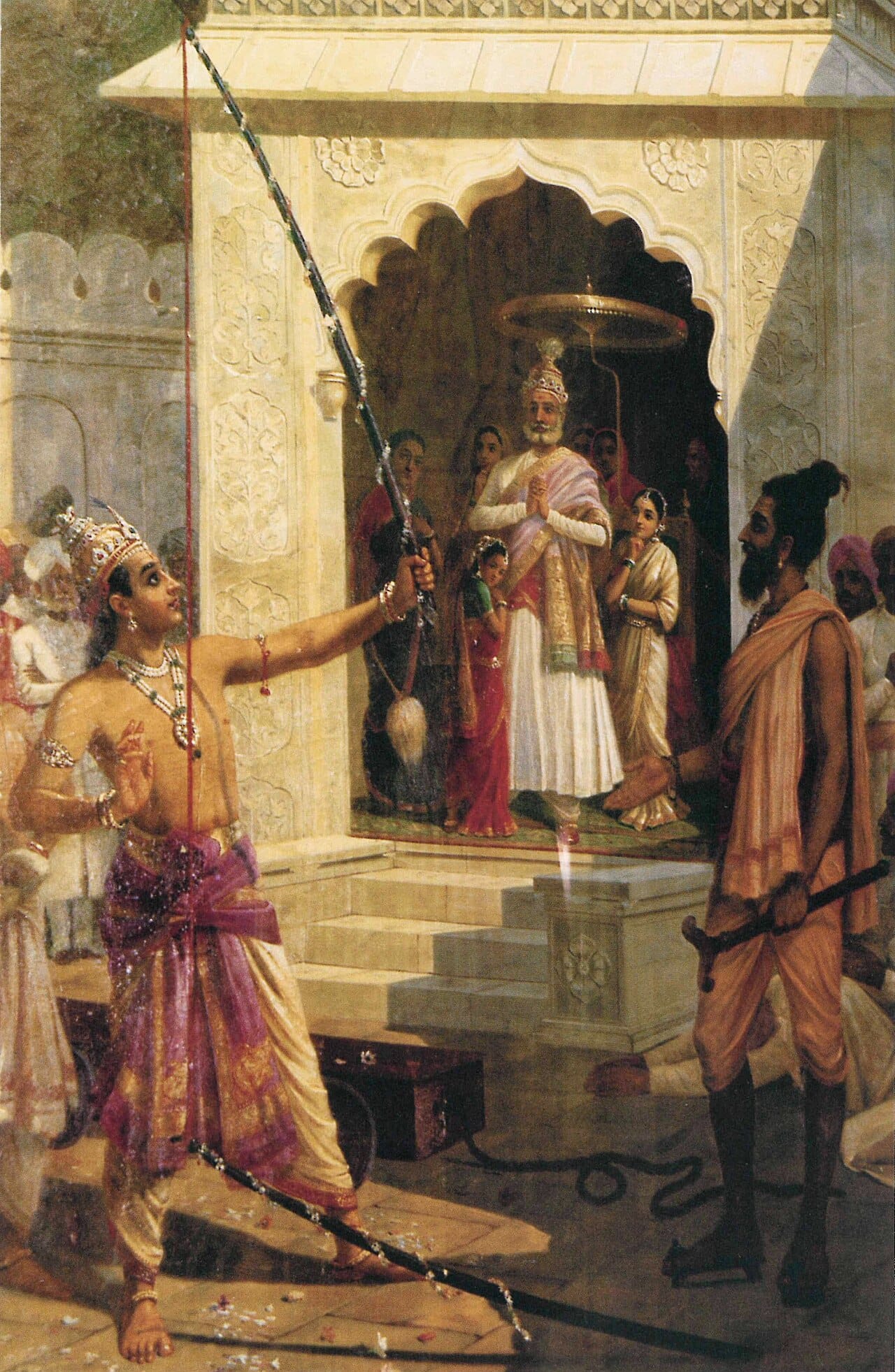
As a youth Rama went with the sage Vishvamitra to protect his sacrifices, slaying the demoness Tataka. At Mithila he lifted and broke the great bow of Shiva, which no other prince could even raise, and won the hand of Sita, daughter of King Janaka.
Exile
On the eve of Rama's coronation, Queen Kaikeyi claimed two boons Dasharatha had once promised her: that her son Bharata be crowned and Rama be sent to the forest for fourteen years. Rama accepted without a word of complaint, and went with Sita and Lakshmana; Dasharatha died of grief. Bharata refused the throne, placed Rama's sandals on it and ruled only as his regent.
Sita's abduction and the war
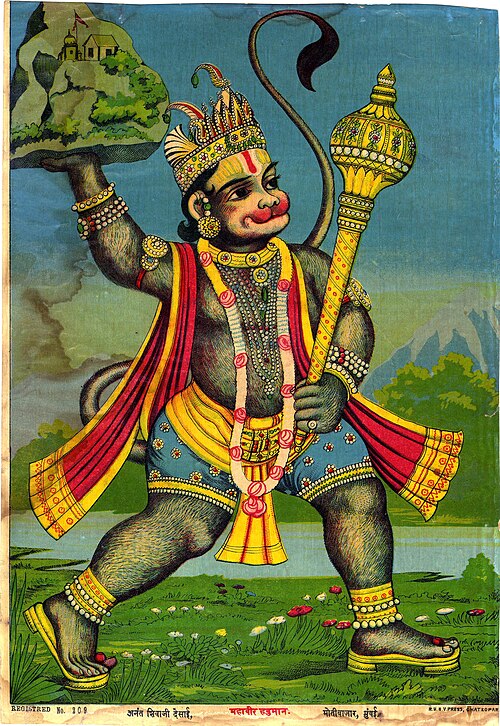
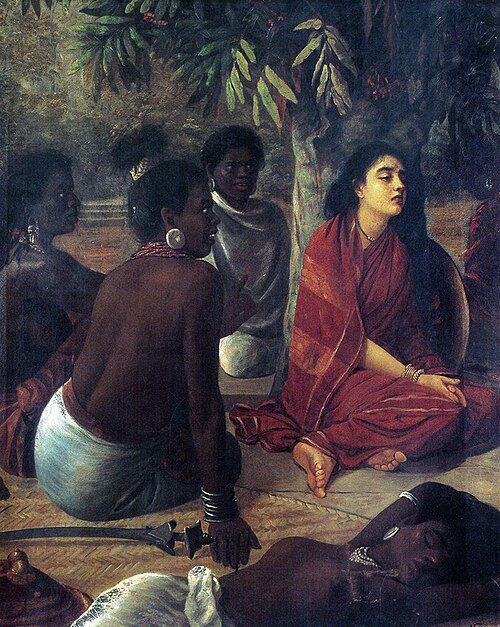
In the Dandaka forest, Ravana, king of Lanka, carried Sita away by trickery. Searching for her, Rama and Lakshmana met Hanuman and the vanara king Sugriva. Hanuman leapt across the sea and found Sita in the Ashoka grove; the vanaras built a bridge — the Rama Setu — to Lanka; and in the great battle Rama killed Ravana. Vibhishana, Ravana's righteous brother who had sought refuge with Rama, was crowned king of Lanka.
Ram Rajya
Returning to Ayodhya after fourteen years — a homecoming many remember at Diwali — Rama was crowned and ruled so justly that "Ram Rajya" became the Indian ideal of good government, where, the Ramayana says, no one suffered want, disease or fear. The later Uttara Kanda tells of Sita's exile and the birth of their sons Lava and Kusha in Valmiki's ashram, a part of the story much debated by readers through the ages.
How they are remembered
Ram Navami celebrates his birth and Dussehra his victory. The Ramayana has been retold in every Indian language — by Kamban in Tamil, Tulsidas in Awadhi, Krittivas in Bengali — and across Southeast Asia. The Shri Ram Janmabhoomi temple in Ayodhya was consecrated in January 2024.
Ekatmata Stotra · Stanza 12
Named in Stanza 12 of the Ekatmata Stotra — ten figures from the great epics.
रामो भरतश्च कृष्णो भीष्मो धर्मपुत्र: तथा।
अर्जुनो मार्कण्डेय: हरिश्चन्द्र: प्रह्लादो नारदस्तथा॥
Sources: Wikipedia: Rama · Wikipedia: Ramayana. Written afresh for The Hindu Book; corrections welcome at [email protected].