According to the Ramayana and the Puranas, Hanuman was born to the vanara Anjana and her husband Kesari, by the blessing of Vayu, the wind god — hence his names Pavanaputra and Maruti. As a child, tradition says, he leapt at the rising sun thinking it a fruit, and Indra's thunderbolt struck his jaw (hanu), giving him his name. To make amends the gods blessed him with great strength, speed and long life.
देहबुद्ध्या तु दासोऽहं जीवबुद्ध्या त्वदंशकः। आत्मबुद्ध्या त्वमेवाहम्…“In body I am your servant; as a soul I am part of you; in truth, you and I are one.”A verse traditionally ascribed to Hanuman
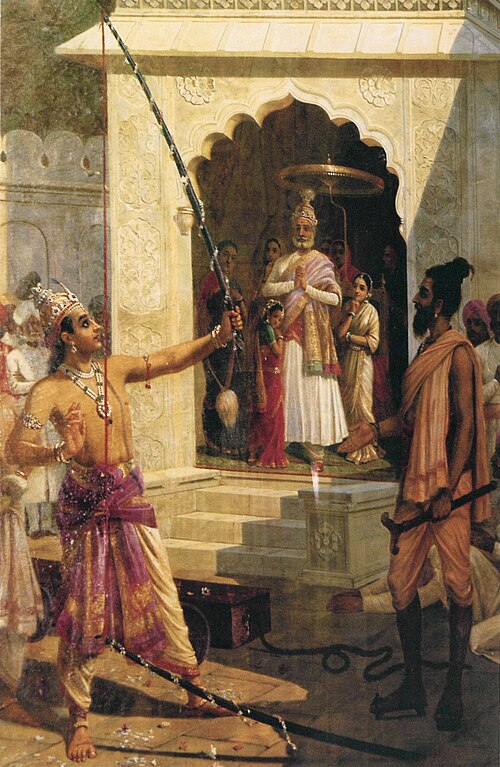
He became the minister of the vanara king Sugriva in Kishkindha. When Rama and Lakshmana came searching for Sita, Hanuman met them, recognised Rama at once as his lord, and joined Rama to Sugriva in friendship.
The leap to Lanka
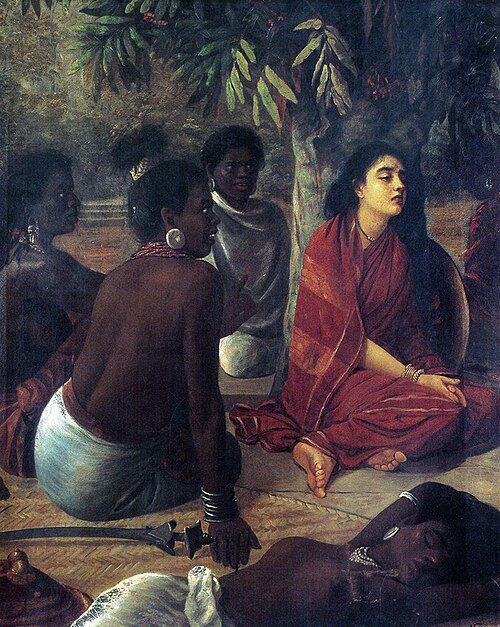
When the search parties reached the southern sea, it was Hanuman, reminded of his forgotten powers by Jambavan, who leapt across it to Lanka. The Sundara Kanda of the Ramayana tells how he searched the city by night, found Sita grieving in the Ashoka grove, gave her Rama's ring and comforted her. Captured, he let them set his tail alight — and leapt from roof to roof setting Lanka on fire before returning with Sita's jewel to Rama.
The mountain of herbs
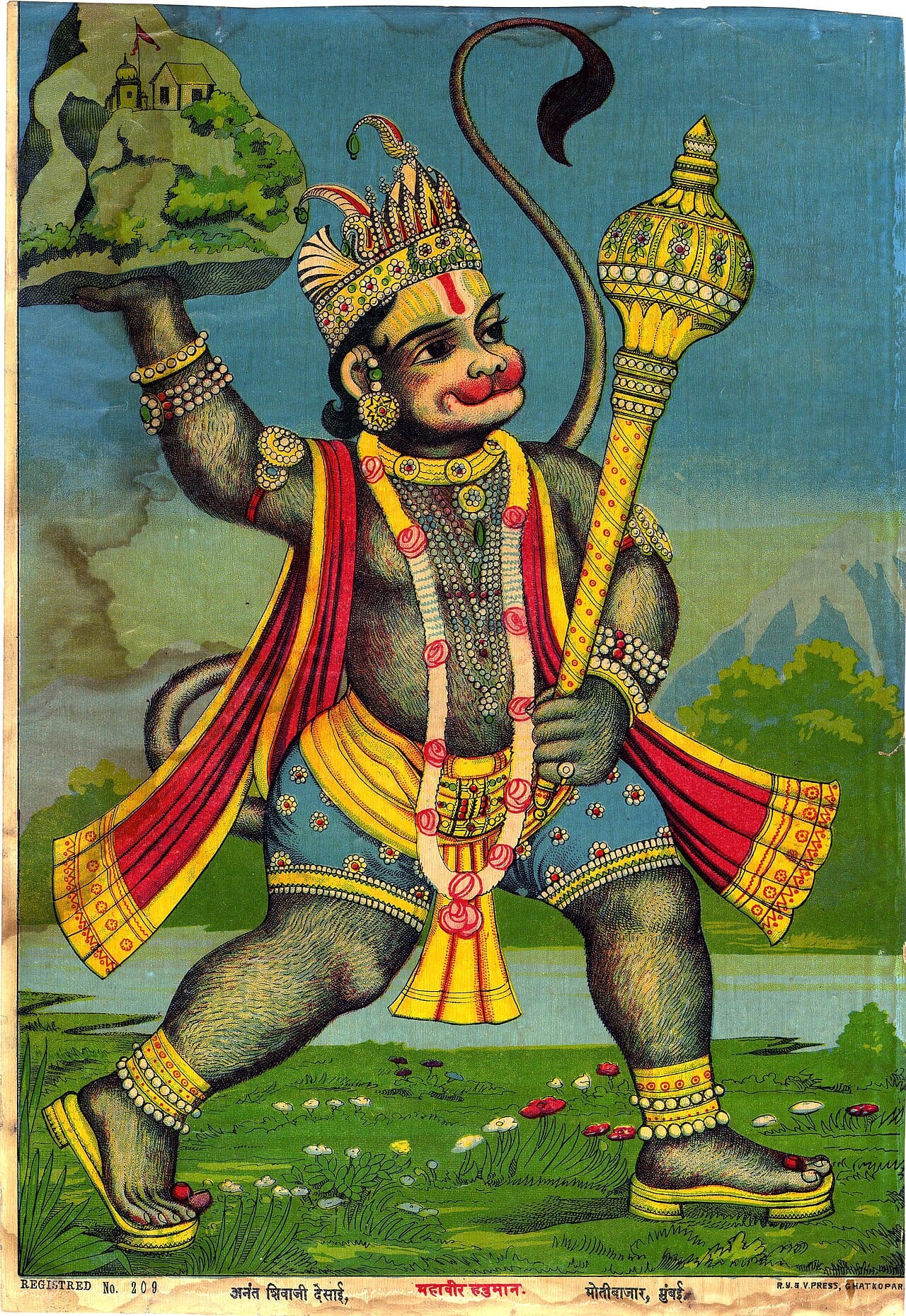
In the war, when Lakshmana lay mortally wounded, Hanuman flew to the Himalayas to fetch the Sanjivani herb. Unable to tell which plant it was, he lifted the whole mountain and carried it back to Lanka. After the victory, when Sita gave him a pearl necklace, he broke the pearls looking for Rama inside them, and, tradition says, tore open his chest to show Rama and Sita seated in his heart.
The ever-living devotee
Hanuman asked only to live as long as Rama's story is told. He is counted among the seven chiranjivis, the immortals, and devotees believe he is present wherever the Ramayana is recited. He is the ideal of selfless service, humility, celibacy, courage and strength — and the remover of fear and danger, Sankat Mochan.
How they are remembered
Hanuman Jayanti is celebrated on Chaitra Purnima in the north and on different dates in the south. Tuesdays and Saturdays are his days; the Hanuman Chalisa is one of the most recited prayers in India, and Hanuman temples stand in nearly every town and village.
Ekatmata Stotra · Stanza 13
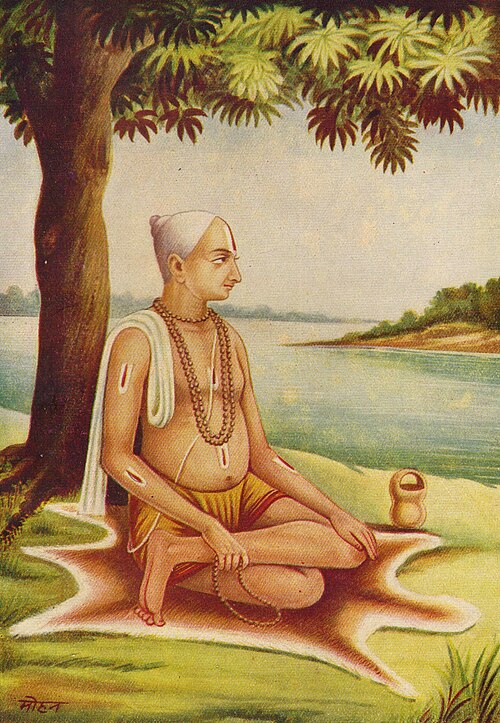
Named in Stanza 13 of the Ekatmata Stotra — eleven devotees, sages and seers.
हनुमान् जनको व्यासो वसिष्ठः शुको बलि: तथा।
दधीचिर्विश्वकर्मा च पृथु: वाल्मीकिरेव च॥
Sources: Wikipedia: Hanuman · Wikipedia: Sundara Kanda. Written afresh for The Hindu Book; corrections welcome at [email protected].