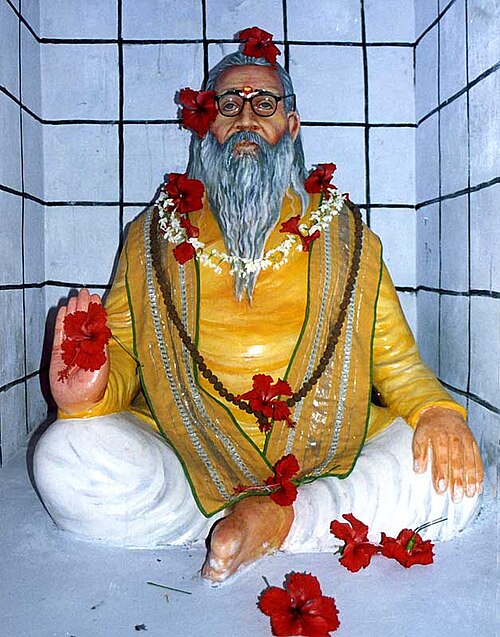
According to the Mahabharata and the Puranas, Shuka was the son of the sage Vyasa. One story in the Shanti Parva tells that Vyasa performed long tapas to Shiva for a son as pure as the elements, and that Shuka was born from the fire-sticks Vyasa was churning. His name means "parrot", and later tellings link it to a parrot form of the nymph Ghritachi who appeared before Vyasa.
निगमकल्पतरोर्गलितं फलं शुकमुखादमृतद्रवसंयुतम्। पिबत भागवतं रसमालयं मुहुरहो रसिका भुवि भावुकाः॥“The Bhagavata is the ripe fruit of the wish-fulfilling tree of the Vedas, sweetened with nectar from the mouth of Shuka. Drink it again and again, you who love its taste.”Bhagavata Purana 1.1.3
From the beginning, tradition says, Shuka was free of worldly desire. He learned the Vedas and his father's teachings, but cared nothing for home, possessions or reputation. He is the model of the avadhuta, the renunciant who moves through the world untouched by it.
The son who would not turn back
The Bhagavata Purana tells a well-loved scene. When the young Shuka left home to wander as a renunciant, Vyasa followed him calling, "My son!" Shuka did not answer, but the trees answered for him, echoing the call — for Shuka had become one with all beings. The same text says that as Shuka passed some nymphs bathing in a pond, they did not cover themselves, yet when the aged Vyasa came after him they did; Shuka saw no difference between man and woman, while Vyasa still did.
In this telling the boy is wiser than his father, and the tradition loves him for it: Shuka is the one who has already arrived where others are still travelling.
Taught by a king
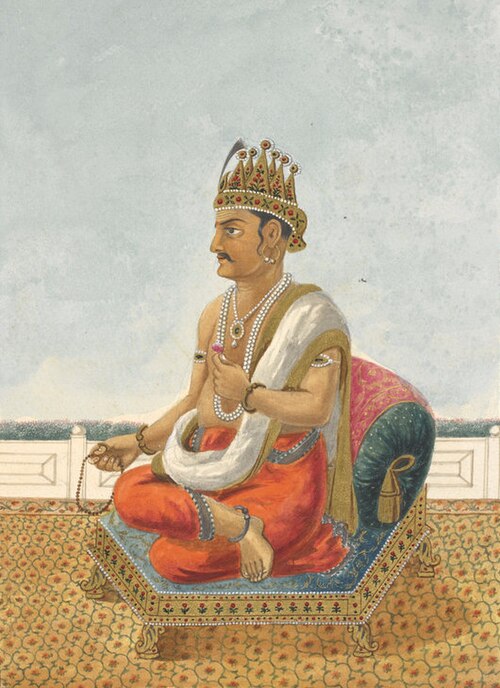
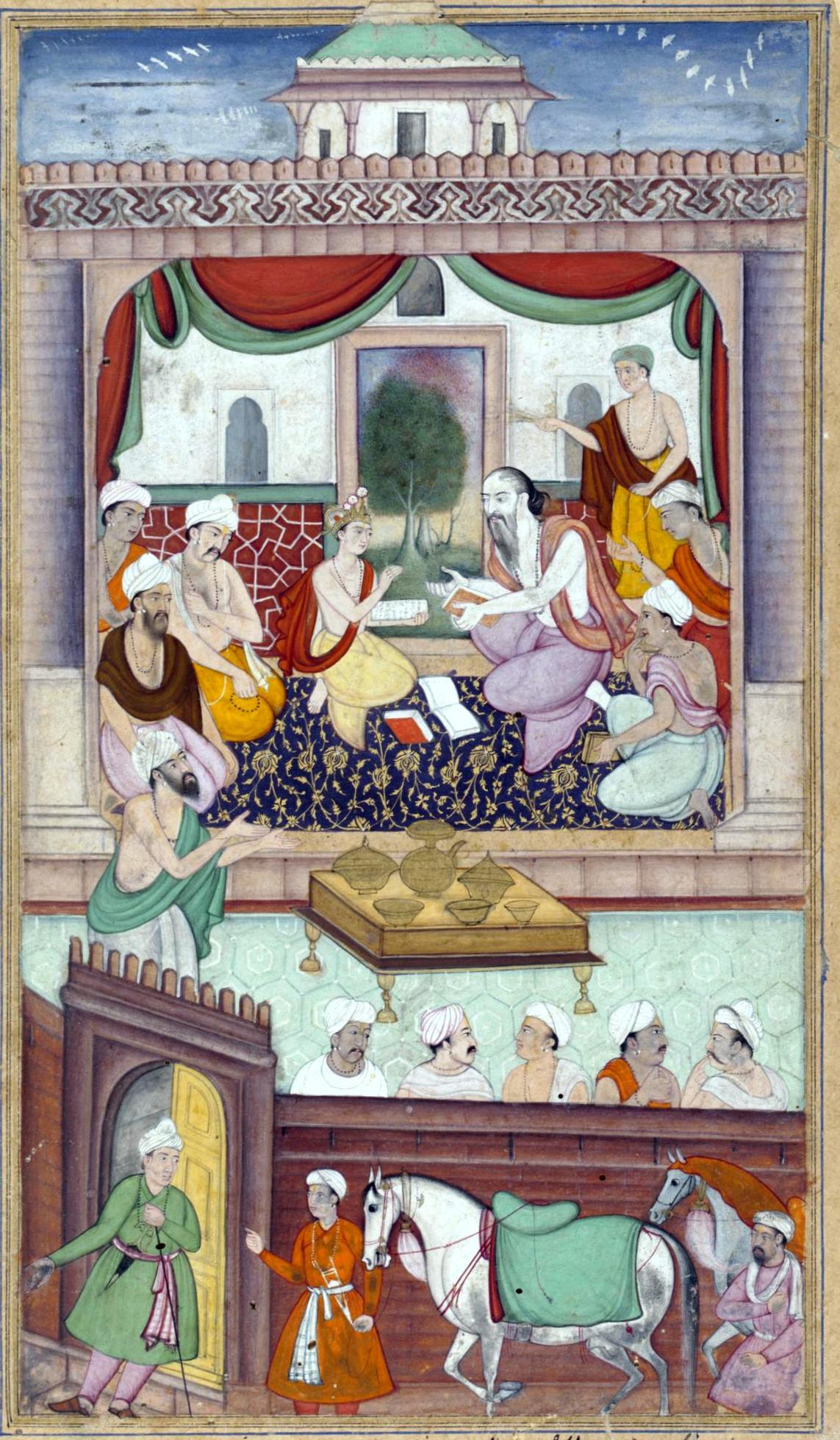
The Mahabharata's Shanti Parva says that Vyasa sent Shuka to King Janaka of Mithila to complete his learning. The gatekeepers kept him waiting for days, then he was led into a palace of pleasures; through it all Shuka remained unmoved, and Janaka, satisfied, taught him the path to liberation. The epic closes his story with Shuka rising beyond the world into the highest state, leaving only his father's grief behind.
Seven days on the Ganga
The Bhagavata Purana frames itself around Shuka. King Parikshit, grandson of Arjuna, was cursed to die of snakebite within seven days. He gave up his throne and sat fasting on the bank of the Ganga, surrounded by sages, asking what a person should do who is about to die. Then Shuka arrived, a youth of sixteen, wandering and unconcerned, and the assembled sages rose to honour him.
Over the next seven days Shuka recited the whole Bhagavata: the creation of the world, the avatars of Vishnu, the stories of devotees like Prahlada and Dhruva, and, in the tenth book, the life of Krishna. When it was over, the Purana says, Parikshit was free of fear, and met his death with his mind fixed on the Lord.
The Purana describes Shuka as unclad, carefree and so absorbed in the Self that he seemed to others like a madman. Yet when he arrived, the whole assembly of sages rose and fell silent. Parikshit's question — what should a person do, knowing that death is near — gives the Bhagavata its urgency, and Shuka's answer, to hear and remember the Lord, is its central message.
How they are remembered
Shuka's seven-day telling is the model for the Bhagavata Saptaha, the week-long recitation still held in homes, temples and towns across India, where the reciter takes Shuka's place and the listeners Parikshit's. Shukratal near Muzaffarnagar in Uttar Pradesh is revered as the spot where he spoke. He remains the ideal of the teacher whose own freedom makes the story come alive.
Ekatmata Stotra · Stanza 13
Named in Stanza 13 of the Ekatmata Stotra — eleven devotees, sages and seers.
हनुमान् जनको व्यासो वसिष्ठः शुको बलि: तथा।
दधीचिर्विश्वकर्मा च पृथु: वाल्मीकिरेव च॥
Sources: Wikipedia: Shuka · Wikipedia: Bhagavata Purana · vedabase.io/en/library/sb/1/1/3. Written afresh for The Hindu Book; corrections welcome at [email protected].