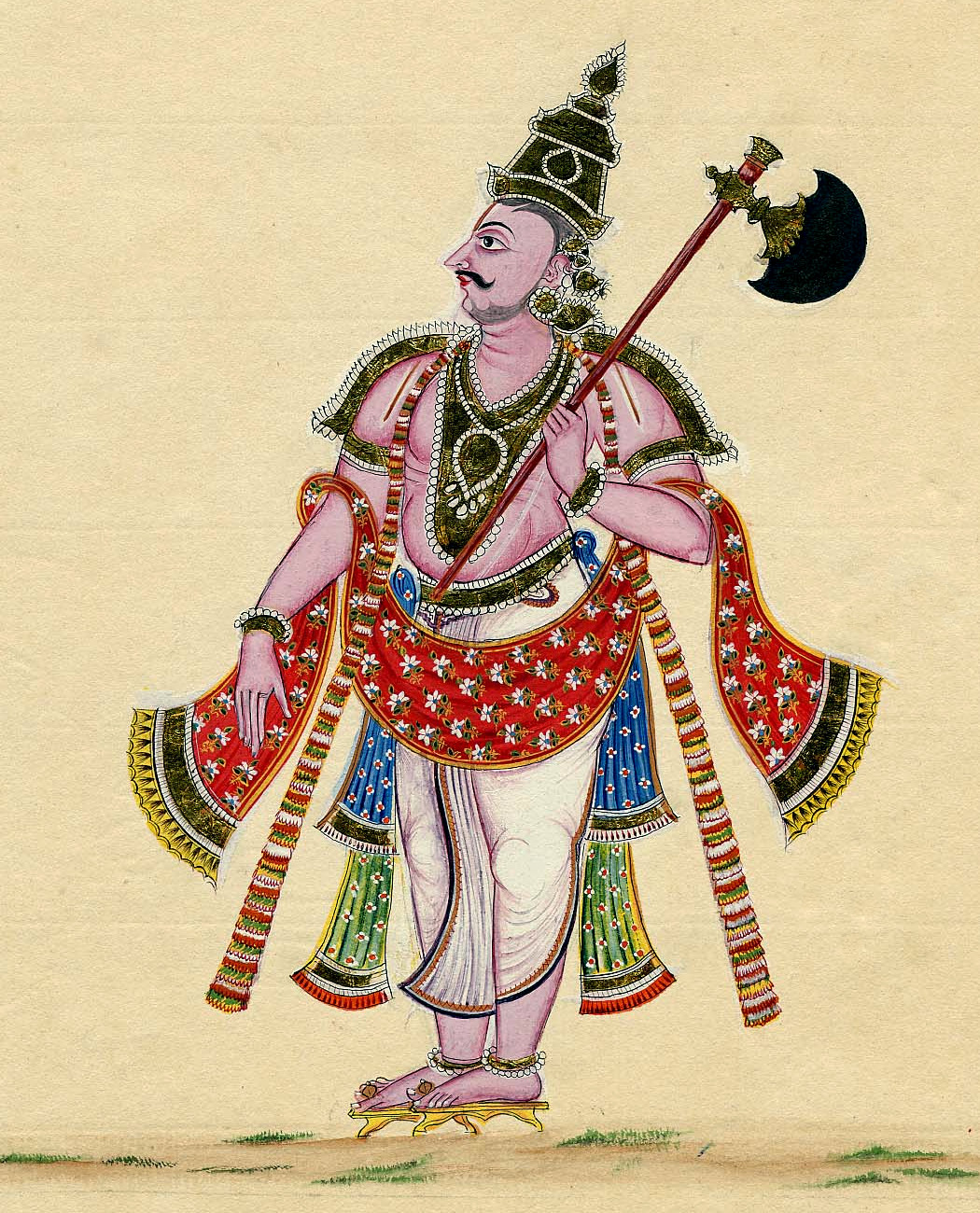
Parashurama was born, according to the Mahabharata and the Puranas, to the sage Jamadagni of the Bhrigu clan and his wife Renuka. Though born a Brahmin, he was a mighty warrior by nature. He performed tapas to Shiva, who gave him the divine axe, parashu, from which he takes his name: "Rama of the axe".
क्षत्रियरुधिरमये जगदपगतपापं स्नपयसि पयसि शमितभवतापम्। केशव धृतभृगुपतिरूप जय जगदीश हरे॥“You bathe the world in a flood of the blood of kshatriyas, washing away its sin and easing its suffering. O Keshava, who took the form of the lord of the Bhrigus — victory to you, Hari, lord of the world.”Jayadeva, Gita Govinda 1 (Dashavatara stotra), verse on Parashurama
He is counted as the sixth of Vishnu's ten avatars. Unusually, he lives on after his avatar's work is done: he meets Rama of Ayodhya in the Ramayana, teaches warriors in the Mahabharata, and is one of the seven chiranjivis, believed to be meditating still on the Mahendra mountain.
Obedience and its reward
A hard story in the Mahabharata's Vana Parva tells how Jamadagni, angered by a lapse in Renuka's mind, ordered his sons to kill her. The elder sons refused; Parashurama obeyed. Pleased, Jamadagni offered him a boon, and Parashurama asked that his mother be restored to life with no memory of what had happened, and his brothers released from their father's curse. The tradition reads the episode as a test, and his first wish as one of compassion.
War against tyrant kings
The Mahabharata and Puranas tell that the thousand-armed king Kartavirya Arjuna of the Haihayas visited Jamadagni's hermitage and carried off the sage's sacred cow. Parashurama pursued and killed him. In revenge, the king's sons killed Jamadagni. Grief-stricken, Parashurama vowed to rid the earth of the arrogant warrior class, and the texts say he went round the world twenty-one times defeating them, filling five lakes at Samantapanchaka, later Kurukshetra, with their blood.
Interpreters have long read this as a story about unchecked royal power and its limits, not about a whole people; the epics themselves say new kshatriya lines soon arose. Having won the earth, Parashurama gave it all to the sage Kashyapa and withdrew to the Mahendra mountain.
The Mahabharata adds that his ancestors, the Bhrigu elders, at last appeared and urged him to give up his anger and return to tapas. In this way his story moves from fury to renunciation, and the warrior-sage ends as a hermit.
Teacher of warriors
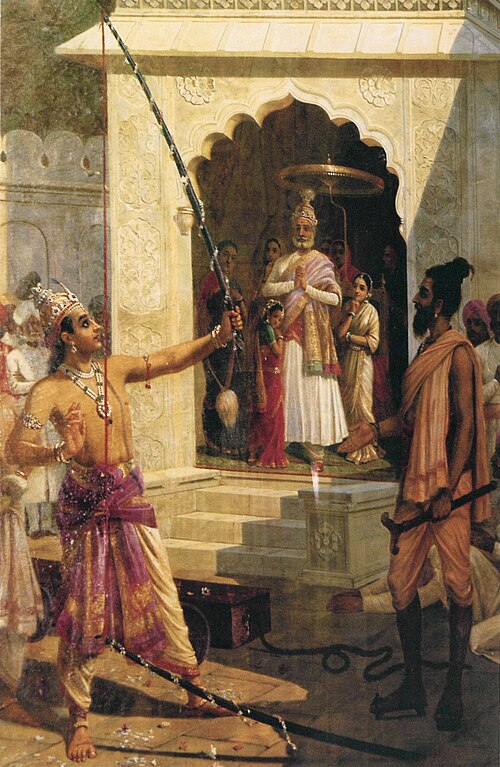
In the Ramayana, Parashurama confronts Rama after Rama breaks Shiva's bow, and challenges him to string Vishnu's bow. When Rama does so easily, Parashurama recognises the greater avatar and withdraws. In the Mahabharata he teaches the arts of war to Bhishma, Drona and Karna. He fights Bhishma for days over Amba without either winning, and he curses Karna to forget his knowledge at the crucial moment when he discovers that Karna had hidden his birth.
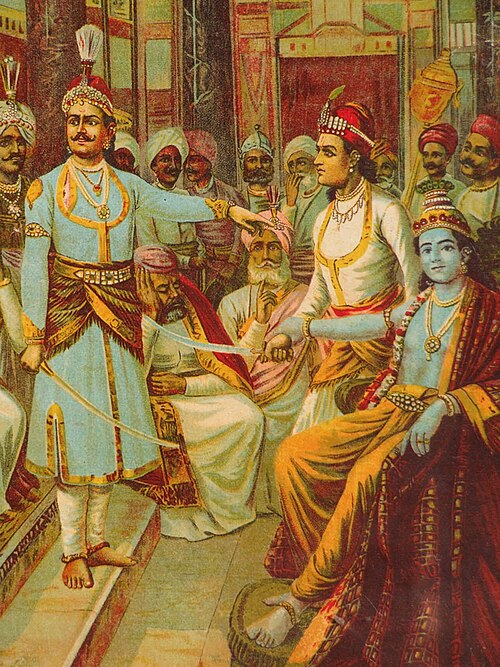
In the Udyoga Parva he also appears at the Kuru court, urging Duryodhana to make peace with the Pandavas — advice that goes unheeded.
Kerala and Konkan
Regional traditions credit Parashurama with creating the western coast. The Keralolpatti and the Konkan traditions tell how he threw his axe into the sea, and the waters withdrew to reveal the land from Gokarna to Kanyakumari, which he settled with Brahmin families. Kerala is still called Parashurama Kshetra.
How they are remembered
Parashurama Jayanti falls on Akshaya Tritiya. Temples to him stand at Chiplun in Konkan, Parshuram Kund in Arunachal Pradesh and in Kerala. He stands for righteous anger against tyranny — and for the wisdom of laying the weapon down once its work is done.
Ekatmata Stotra · Stanza 13
Named in Stanza 13 of the Ekatmata Stotra — eleven devotees, sages and seers.
हनुमान् जनको व्यासो वसिष्ठः शुको बलि: तथा।
दधीचिर्विश्वकर्मा च पृथु: वाल्मीकिरेव च॥
Sources: Wikipedia: Parashurama · Wikipedia: Kartavirya Arjuna · Wikipedia: Gita Govinda. Written afresh for The Hindu Book; corrections welcome at [email protected].