According to the Mahabharata, Vyasa was born on an island in the Yamuna to the sage Parashara and Satyavati, the daughter of a fisherman chief. Because he was dark and island-born he was called Krishna Dvaipayana. He grew up at once, the epic says, and went away to perform tapas, promising his mother he would come whenever she called him.
मुनीनामप्यहं व्यासः कवीनामुशना कविः॥“Among sages I am Vyasa; among seers, Ushana the seer.”Bhagavad Gita 10.37 — Krishna naming his glories
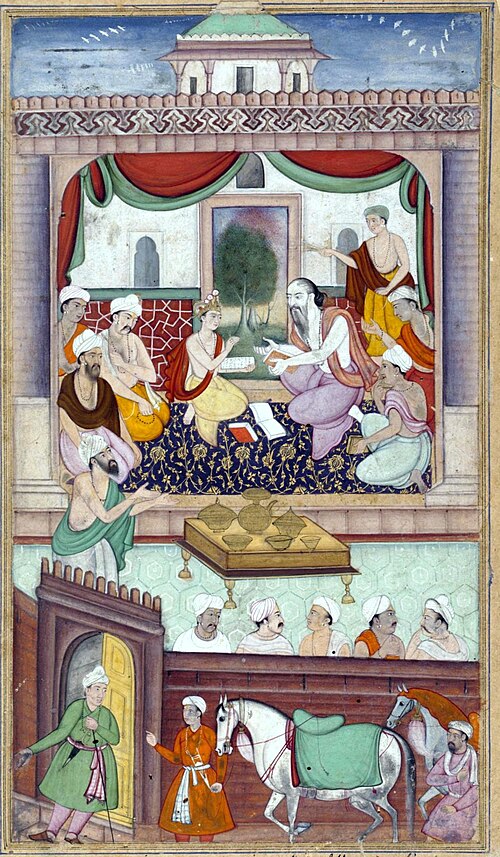
His title Vyasa means "arranger" or "compiler". Tradition holds that, seeing the people of the coming age grow weaker in memory and strength, he divided the one Veda into four — Rig, Yajur, Sama and Atharva — and taught them to four disciples: Paila, Vaishampayana, Jaimini and Sumantu. He is counted among the chiranjivis, the deathless ones.
Inside his own story
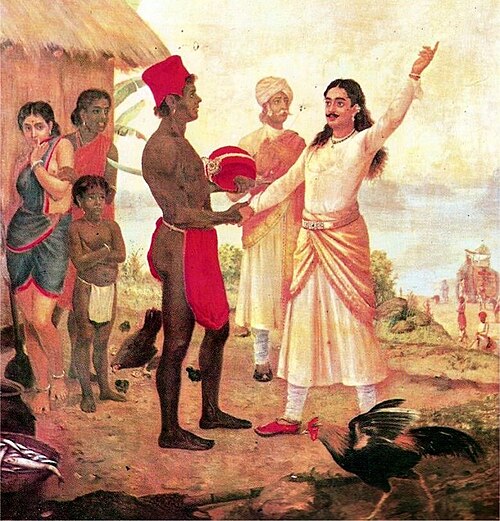
Vyasa is unusual among authors: he is also a character in the epic he tells. When Satyavati's son Vichitravirya died without heirs, she called Vyasa to father children by the widowed queens. The Mahabharata says Ambika closed her eyes at the sight of the ascetic, and her son Dhritarashtra was born blind; Ambalika turned pale, and Pandu was born pale; a maidservant received him calmly and bore the wise Vidura.
Through the epic he appears at moments of crisis, advising the Pandavas, consoling the grieving and granting Sanjaya the divine sight to describe the war at Kurukshetra to the blind king — so that the Bhagavad Gita itself reaches us through a vision given by Vyasa.
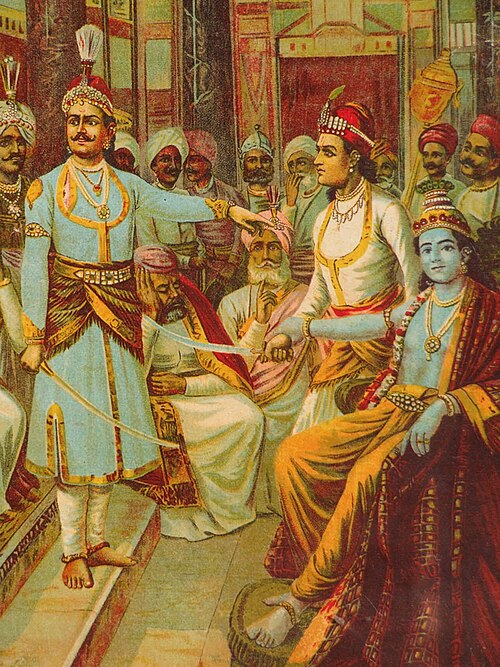
The epic also makes Vyasa the grandfather of both warring sides, so that he watches his own descendants destroy one another. In the Ashramavasika Parva he even calls up the dead warriors from the Ganga for one night, so that the widows and grieving mothers may see their sons and husbands once more. Through such scenes the poet-sage becomes the epic's conscience, warning, consoling and recording.
The Mahabharata and its scribe
A well-known story, found in some versions of the Adi Parva but absent from the critical edition, tells how Vyasa asked Ganesha to write the poem down. Ganesha agreed on condition that the dictation never pause; Vyasa replied that Ganesha must understand each verse before writing it, and composed difficult knots of verse whenever he needed time to think.
The epic says Vyasa taught it to his son Shuka and to Vaishampayana, who first recited it at King Janamejaya's snake sacrifice. It calls itself the fifth Veda and claims that whatever is found in it may be found elsewhere, but what is not in it is found nowhere.
Puranas, Brahma Sutras and the Bhagavata
Tradition also credits Vyasa with the eighteen Puranas. The Bhagavata Purana tells that even after all this work he felt dissatisfied, until Narada advised him to sing directly of Vishnu's glories; the result was the Bhagavata, which he taught to Shuka. The Brahma Sutras are ascribed to Badarayana, whom Vedantic tradition identifies with Vyasa, though modern scholars treat the attributions to one author as the tradition's way of honouring a vast, collective body of work composed over centuries.
How they are remembered
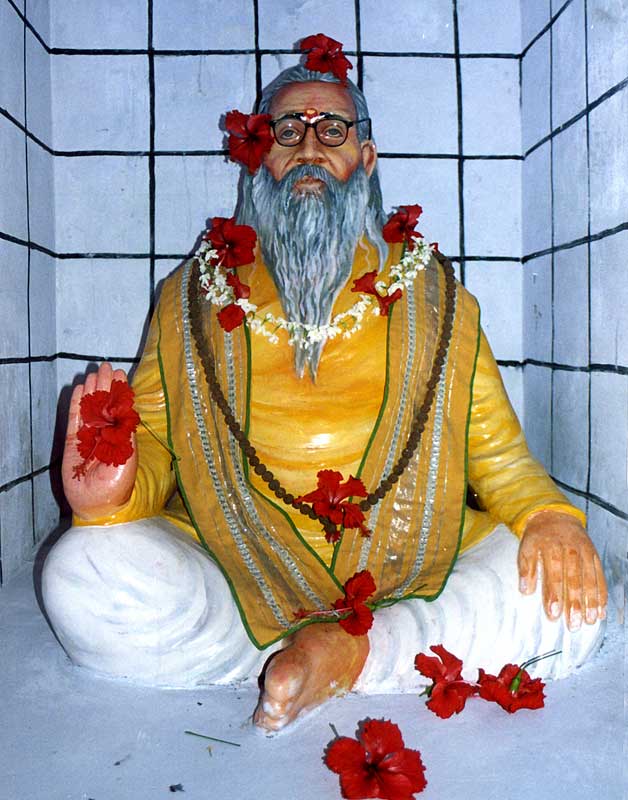
The full moon of Ashadha is Guru Purnima, also called Vyasa Purnima, when disciples honour their teachers in his name; a teacher who expounds scripture still sits on the vyasa-pitha, "Vyasa's seat". A cave near Mana village above Badrinath is revered as the place where he composed the epic. For Hindus he remains the great organiser of sacred knowledge.
Ekatmata Stotra · Stanza 13
Named in Stanza 13 of the Ekatmata Stotra — eleven devotees, sages and seers.
हनुमान् जनको व्यासो वसिष्ठः शुको बलि: तथा।
दधीचिर्विश्वकर्मा च पृथु: वाल्मीकिरेव च॥
Sources: Wikipedia: Vyasa · Wikipedia: Mahabharata · Wikipedia: Guru Purnima. Written afresh for The Hindu Book; corrections welcome at [email protected].