Bali, also called Mahabali, "the mighty", was the son of Virochana and the grandson of the great devotee Prahlada. The Bhagavata Purana and other Puranas describe him as an asura king of extraordinary virtue: generous, truthful and devoted to sacrifice. Guided by his teacher Shukracharya, he grew so powerful that he drove Indra and the devas from heaven and ruled over all three worlds.
येन बद्धो बली राजा दानवेन्द्रो महाबलः। तेन त्वामनुबध्नामि रक्षे मा चल मा चल॥“With the thread by which the mighty Bali, king of the danavas, was bound, I bind you. O protector, do not waver, do not waver.”Traditional raksha-sutra mantra, recited when tying the rakhi
This Bali should not be confused with Vali, the monkey king of Kishkindha in the Ramayana, whose name is sometimes also written Bali. The Bali of the Ekatmata Stotra is the asura emperor, remembered not for his conquests but for what he gave away.
The dwarf who asked for three steps
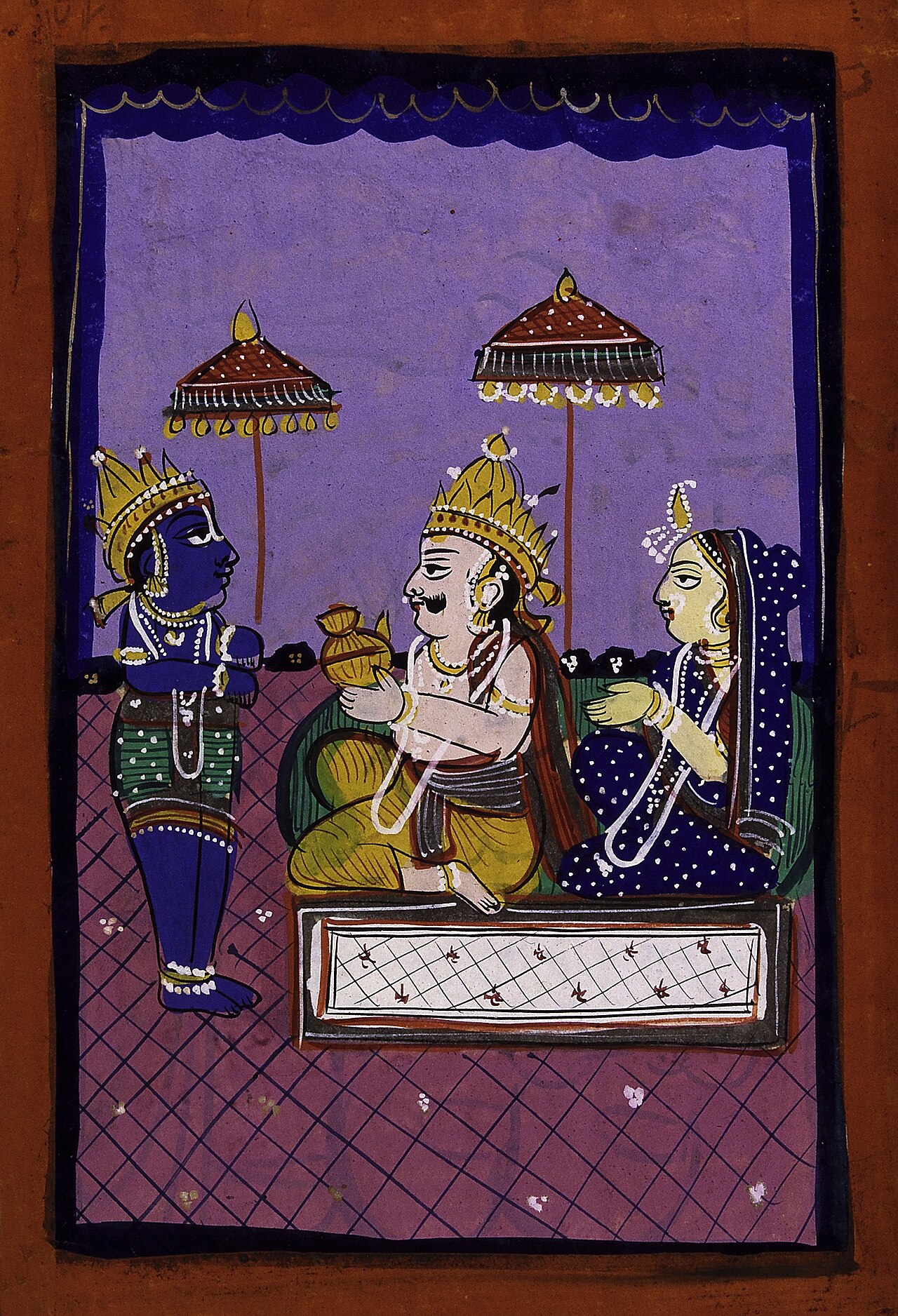
The Bhagavata Purana (Book 8) tells how Aditi, mother of the devas, prayed for her sons' return to heaven. Vishnu was born to her as Vamana, a dwarf Brahmin boy. Vamana came to the great sacrifice Bali was holding on the bank of the Narmada, where the king was giving gifts to all who asked. Charmed by the boy, Bali offered him anything he wished. Vamana asked only for as much land as he could cover in three steps.
Shukracharya saw through the disguise and warned Bali that this was Vishnu himself, come to take everything. Bali replied that he had given his word and would not break it, whoever the asker might be; a gift withheld out of fear, he said, was worse than losing a kingdom. He poured the water of the gift.
The third step
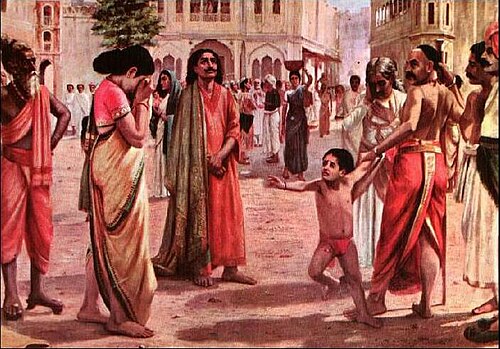
Then Vamana grew. With one step he covered the earth, with the second the heavens, and there was no place left for the third. The Bhagavata tells that Bali, bound for failing to keep his promise, bowed his head and offered it for the third step. Prahlada arrived and praised the Lord for taking away his grandson's pride along with his wealth.
Pleased by Bali's steadfastness, Vishnu gave him the realm of Sutala, a world more splendid than heaven, and promised that Bali would be Indra in a future age. The Lord himself, the Purana says, agreed to stand guard at Bali's door. Versions in other Puranas and the Vamana Purana differ in detail, but all honour Bali's truthfulness.
The Bhagavata places a moving speech in Bali's mouth at this moment. He tells Vamana that he fears neither hell, nor loss of his kingdom, nor bondage, as much as he fears the disgrace of breaking his word. His wife Vindhyavali, too, bows to the Lord and offers everything. The Purana uses the scene to teach that the surrender of pride is the truest gift.
The king who comes home
In Kerala the story took a beloved local form. Mahabali is remembered as a king under whom all people were equal and happy, with no lies, theft or want. Granted permission to visit his people once a year, he returns at Onam, and homes welcome him with flower carpets, feasts and songs. Some modern readings in Kerala see Vamana's role critically; the festival itself is celebrated by people of all communities.
Elsewhere, Bali is honoured on Bali Pratipada, the day after Diwali's new moon, especially in Maharashtra and Karnataka, where people wish that the kingdom of Bali may return.
How they are remembered
Bali shows that the tradition does not simply divide gods and asuras into good and bad. An asura king is held up as the model of dana, giving, and of keeping one's word at any cost. The rakhi mantra recalls him each year, and he is counted among the seven chiranjivis.
Ekatmata Stotra · Stanza 13
Named in Stanza 13 of the Ekatmata Stotra — eleven devotees, sages and seers.
हनुमान् जनको व्यासो वसिष्ठः शुको बलि: तथा।
दधीचिर्विश्वकर्मा च पृथु: वाल्मीकिरेव च॥
Sources: Wikipedia: Mahabali · Wikipedia: Vamana · Wikipedia: Onam. Written afresh for The Hindu Book; corrections welcome at [email protected].