Harishchandra was a king of the Ikshvaku line of Ayodhya — the solar dynasty into which Rama would later be born. The Puranas make him the son of Trishanku (Satyavrata), the king whom Vishvamitra once tried to send bodily to heaven.
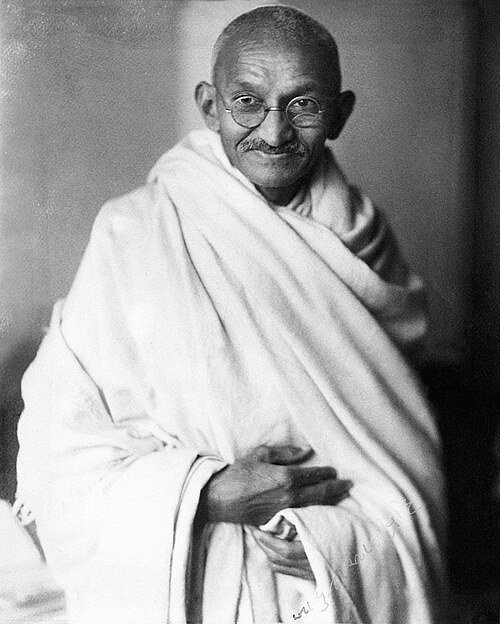
“Why should not all be truthful like Harishchandra?” was the question I asked myself day and night.M. K. Gandhi, An Autobiography, Part I, ch. 2 — on seeing the play Harishchandra as a boy
Two quite different stories are told of him. The older, in the Aitareya Brahmana, is the tale of Shunahshepa. The more famous, told in the Markandeya Purana and retold in the Devi Bhagavata and countless later works, is the story of a king who lost everything for the sake of truth.
The gift of a kingdom
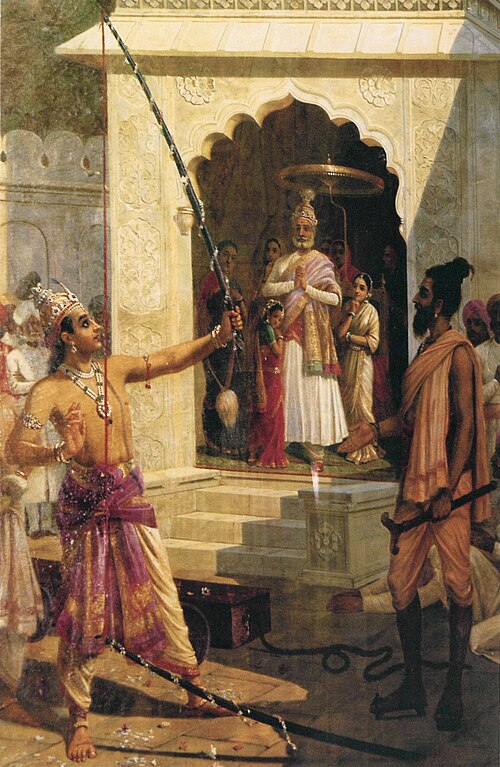
According to the Markandeya Purana, the sage Vishvamitra came to Harishchandra and, by a turn of events, secured from him a promise of whatever he asked. He asked for the whole kingdom. Harishchandra gave it without hesitation. Then Vishvamitra demanded the dakshina, the gift that must accompany a gift, and gave the king a month to pay it.
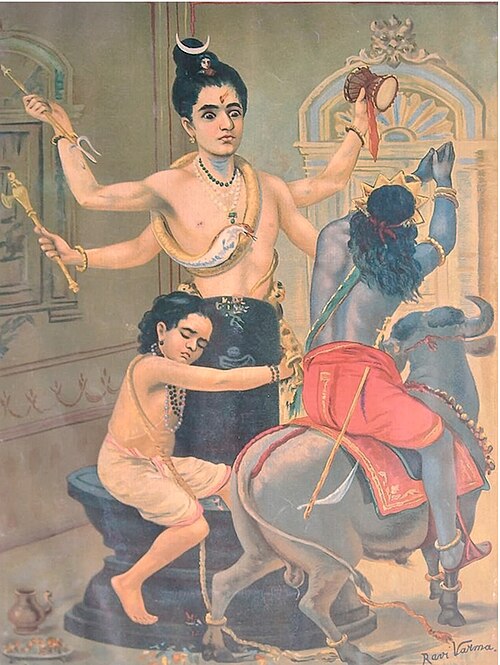
With nothing left, Harishchandra walked out of Ayodhya with his queen Shaibya and their young son Rohita, and went to Kashi, a city said to belong to Shiva alone.
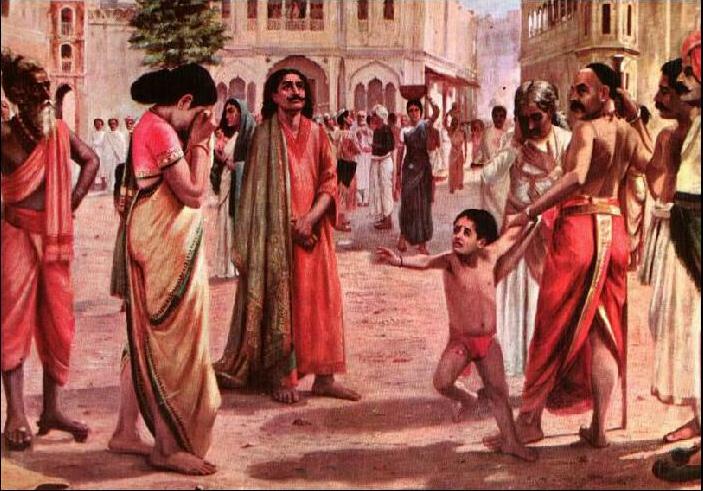
The Markandeya Purana says the queen and child left on foot while the people of Ayodhya wept, and that Vishvamitra harried them as they went. Harishchandra did not complain; what mattered to him was the debt he had promised to pay.
Sold in Kashi
When the month ran out, the queen urged him to sell her to pay the debt. With great grief he sold her and the child to a brahmin as servants. The money was not enough, so he sold himself to a chandala, a keeper of the cremation ground, and was set to work collecting the fee for each body burned there.
Years passed. One day the boy Rohita was bitten by a snake and died, and his mother, alone and destitute, brought the body to the cremation ground. Harishchandra recognised them — and still asked for the fee owed to his master, for he would not betray the duty he had accepted. She had nothing but the cloth she wore, and offered half of it. At that moment the gods appeared. Dharma himself, who had taken the form of the chandala, and Vishvamitra revealed that it had all been a test. The boy was restored to life and the kingdom returned.
The Devi Bhagavata and later regional versions add many episodes and give the queen other names — Taramati in the north, Chandramati in the south. The core of the story stays the same in all of them: a king who will not lie, or go back on his word, even to save his own family.
The older story
The Aitareya Brahmana tells a very different tale. Childless, Harishchandra prayed to Varuna and vowed to sacrifice his son to him. When Rohita was born the king kept putting off the sacrifice, until Varuna afflicted him with disease. Rohita, wandering in the forest, bought the brahmin boy Shunahshepa as a substitute; bound at the stake, Shunahshepa prayed to the Vedic gods and was freed, and Vishvamitra adopted him. The two traditions agree only in linking Harishchandra, Rohita and Vishvamitra.
How they are remembered
"Satyavadi Harishchandra" became a proverb. The young Mohandas Gandhi wrote that a play about him left a lasting mark on him, and Dadasaheb Phalke's Raja Harishchandra (1913) was India's first full-length feature film. Harishchandra Ghat at Varanasi, one of the city's two great cremation ghats, carries his name.
Ekatmata Stotra · Stanza 12
Named in Stanza 12 of the Ekatmata Stotra — ten figures from the great epics.
रामो भरतश्च कृष्णो भीष्मो धर्मपुत्र: तथा।
अर्जुनो मार्कण्डेय: हरिश्चन्द्र: प्रह्लादो नारदस्तथा॥
Sources: Wikipedia: Harishchandra · Wikipedia: Shunahshepa · Wikipedia: Raja Harishchandra. Written afresh for The Hindu Book; corrections welcome at [email protected].