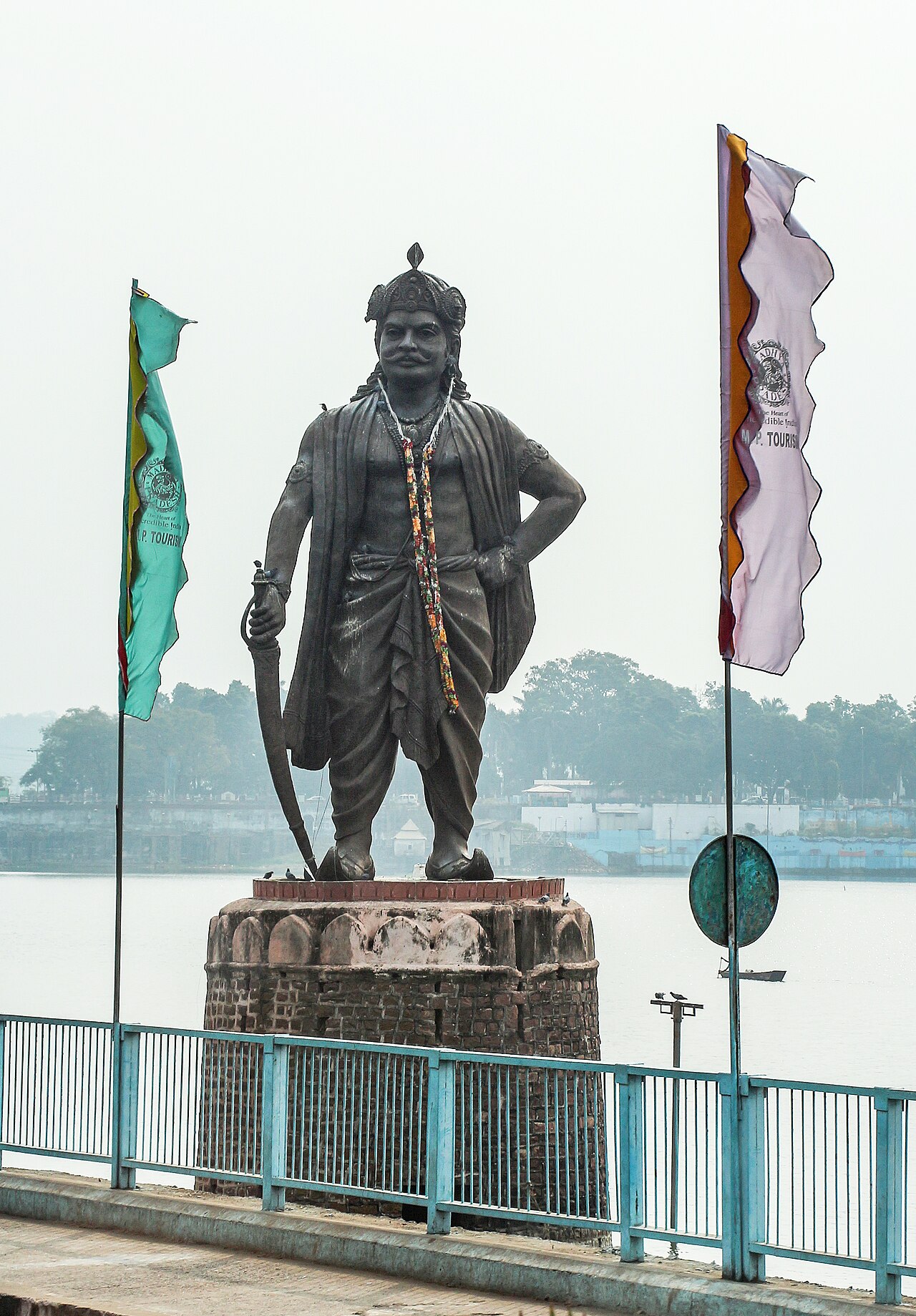
Bhoja belonged to the Paramara dynasty, which ruled Malwa in central India from its capital at Dhara (today's Dhar, in Madhya Pradesh). He was the son of King Sindhuraja and nephew of the poet-king Vakpati Munja, and came to the throne around 1010. For some forty-five years he made Dhara one of the great cultural capitals of India.
कहाँ राजा भोज, कहाँ गंगू तेली“Where is Raja Bhoja, and where is Gangu the oil-man?”Hindi proverb, used for a comparison between the great and the humble — a measure of Bhoja's fame
He was a soldier as well as a scholar. Inscriptions and chronicles record campaigns against the Chalukyas of Kalyani and Gujarat, the Kalachuris and other neighbours, with mixed results; the claims of total victory in his court poetry are not to be taken literally. But it is his learning and patronage that made his name live on.
The scholar-king
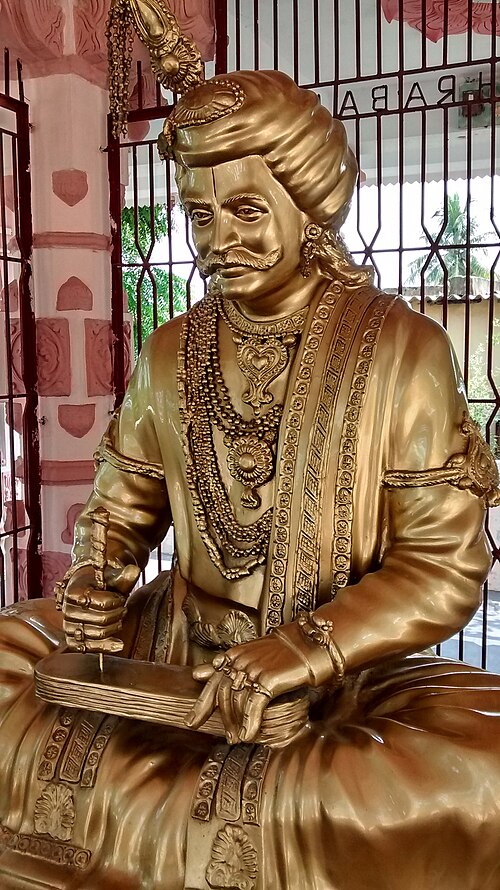
More than twenty works are attributed to Bhoja, on a remarkable range of subjects. The Samarangana Sutradhara is a large treatise on architecture and town planning, which also describes mechanical devices (yantras). The Sarasvati Kanthabharana and the vast Shringara Prakasha deal with grammar and poetics, the latter developing a theory of rasa centred on love. The Rajamartanda is a commentary on Patanjali's Yoga Sutras, and the Tattva Prakasha sets out Shaiva philosophy. Other works cover medicine, astronomy and statecraft.
As with many royal authors, scholars believe that court pandits had a large hand in some of these books. Even so, they reflect the learning Bhoja gathered and encouraged at Dhara.
Temples, lakes and schools
At Bhojpur near Bhopal stands the Bhojeshwar temple, an unfinished Shiva shrine whose single linga is among the largest in India; the plans for its completion are carved into the surrounding rock. Bhoja is also credited with a vast reservoir nearby. Bhopal's name is often derived from “Bhojpal”, Bhoja's dam, though this is folk tradition.
At Dhara, the Bhoj Shala is remembered as a centre of learning dedicated to Sarasvati. Its history and present status are the subject of a long-running dispute, and the site is protected by the Archaeological Survey of India.
His court drew poets and scholars from across India, and the Paramara inscriptions praise him with the title Kaviraja, “king of poets”.
Wars and death
Bhoja's long reign ended in difficulty. Around 1055, according to the usual account, Dhara was attacked by an alliance of Bhima I of the Chalukyas of Gujarat and the Kalachuri king Lakshmikarna, and Bhoja died during or soon after the conflict. His successors restored Paramara rule, but the dynasty never again reached the same height.
Bhoja of legend
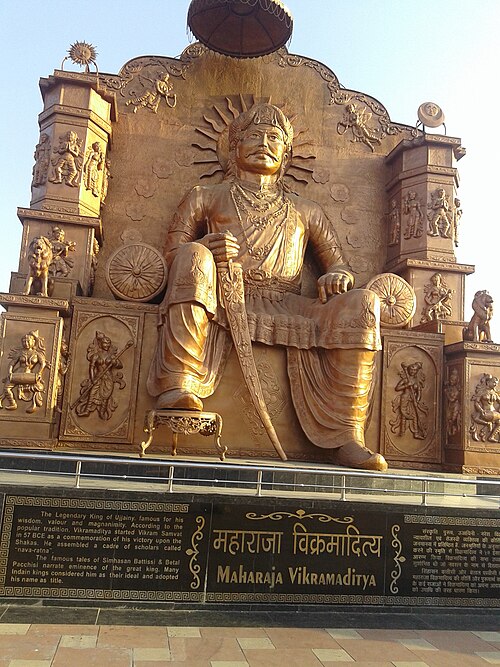
Later centuries turned Bhoja into a figure of story. The Bhoja Prabandha of Ballala, written some five hundred years after him, imagines his court filled with poets — including Kalidasa, who in fact lived centuries earlier. In the Simhasana Dvatrimshika, the “Thirty-two Tales of the Throne”, Bhoja discovers the buried throne of King Vikramaditya, and each of its thirty-two statues tells him a story of Vikramaditya's virtue before allowing him to sit on it.
How they are remembered
In Indian memory Raja Bhoja is the model of a king who honoured learning, and the proverb that sets him against Gangu the oil-man is still on everyone's lips. His treatise on architecture remains a key source for the history of Indian building, the Bhojeshwar temple draws pilgrims and scholars alike, and Madhya Pradesh honours him as one of its greatest rulers.
Ekatmata Stotra · Stanza 19
Named in Stanza 19 of the Ekatmata Stotra — from Kālidāsa to Tyāgarāja.
भरतो मुनिरीशानः कालिदासो महाकविः।
भोजो जक्कणसूरदासस्त्यागराजो रसखानकः॥
Sources: Wikipedia: Bhoja · Wikipedia: Bhojeshwar Temple · Wikipedia: Samarangana Sutradhara. Written afresh for The Hindu Book; corrections welcome at [email protected].