Kannagi's story is told in the Silappatikaram, "the tale of the anklet", one of the five great epics of Tamil literature. It is ascribed to Ilango Adigal, said by tradition to be a Chera prince who became a renunciant. Scholars date the poem variously between the 2nd and 6th centuries CE; most place it around the 5th or 6th century.
அரைசியல் பிழைத்தோர்க்கு அறங்கூற் றாவதூஉம் உரைசால் பத்தினிக்கு உயர்ந்தோர் ஏத்தலும் ஊழ்வினை உருத்துவந் தூட்டும் என்பதூஉம்“Dharma itself becomes death to kings who err in their rule; the great praise a woman of renowned chastity; and the deeds of a past life will surely come to bear fruit.”Silappatikaram, Patikam (prologue) — the three truths the epic sets out to show
Kannagi was the daughter of a wealthy merchant of Puhar (Kaveripattinam), the Chola port at the mouth of the Kaveri, and was married young to Kovalan, son of another great merchant family. The epic opens with their wedding and happy early life.
Loss and return
Kovalan fell in love with Madhavi, a gifted dancer of the court, and lived with her for years, spending away his fortune. Kannagi waited, patient and alone. When at last Kovalan quarrelled with Madhavi and came home ruined, Kannagi did not reproach him; she offered him her one remaining treasure — her pair of anklets — so that he could start again.
The two set out for Madurai, the Pandya capital, accompanied part of the way by the Jain nun Kavunti. The journey through forest and countryside is one of the great descriptive passages of Tamil poetry.
The anklet
In Madurai, Kovalan went to sell one anklet. A goldsmith who had stolen an anklet belonging to the queen accused Kovalan of the theft. The Pandya king Nedunjeliyan, without inquiry, ordered him executed.
When Kannagi heard, she went to the palace holding the other anklet. Before the king she declared that her anklet was filled with rubies, while the queen's held pearls. She broke it open, and rubies scattered across the floor. Seeing that he had killed an innocent man, the king cried that he, not the goldsmith, was the thief, and fell dead on his throne; the queen died with him. The Silappatikaram is clear: the fault lay with a ruler who failed in justice.
Madurai burns
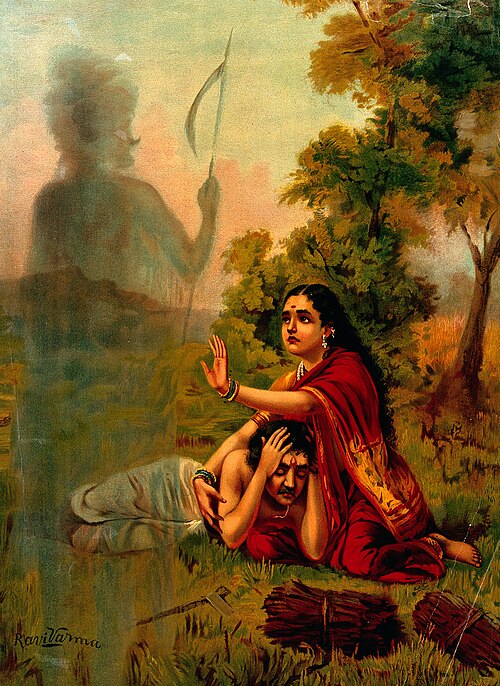
Still raging with grief, Kannagi tore off her breast and flung it at the city, and Madurai caught fire. The epic says she asked that brahmins, the good, cows, chaste women, the old and children be spared. The goddess of the city appeared and told her that Kovalan's death was the fruit of a deed in a past life. Kannagi went west into the Chera hills, and after fourteen days was taken up to heaven, where Kovalan met her.
The temple of the Chera king
The final book tells how the Chera king Senguttuvan, hearing her story, brought a stone from the Himalayas, bathed it in the Ganga and made her image for a temple. The poem says that kings from other lands attended, among them Gajabahu of Lanka — a detail historians have used, with caution, in dating the epic.
Ilango's epic is unusual in Tamil literature for taking a merchant couple, not kings or gods, as its hero and heroine, and for moving through all three Tamil kingdoms — Chola, Pandya and Chera — in a single story.
How they are remembered
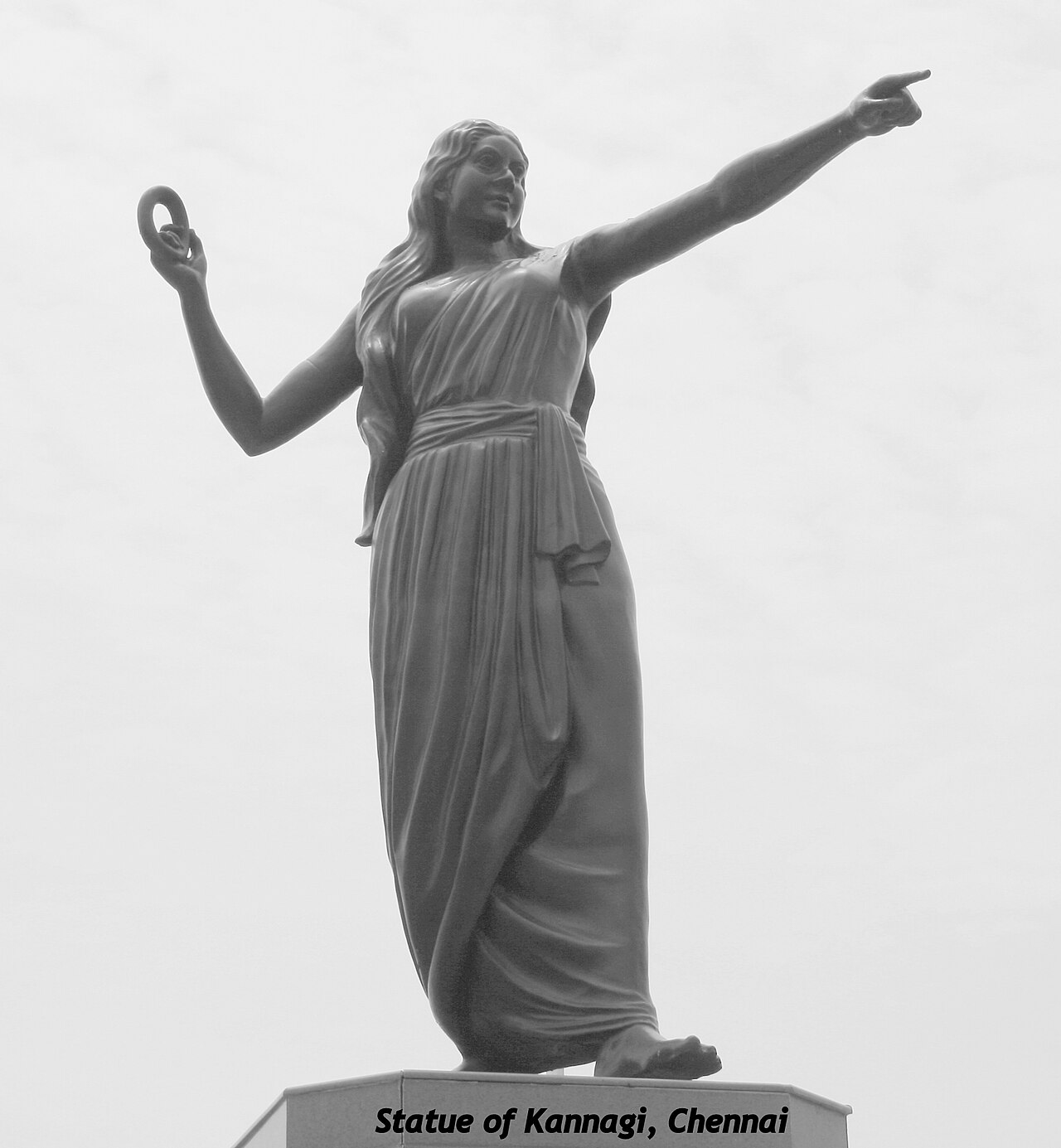
Kannagi is worshipped as Kannagi Amman in Tamil Nadu and Kerala and as Pattini, goddess of chastity and healing, by both Sinhala Buddhists and Tamil Hindus in Sri Lanka. Her statue stands on the Marina beach in Chennai. For Tamil culture she is the citizen who held a king to account — a voice of justice as much as of devotion.
Ekatmata Stotra · Stanza 10
Named in Stanza 10 of the Ekatmata Stotra — ten women of itihāsa and purāṇa.
अरुन्धती अनसूया च सावित्री जानकी सती।
द्रौपदी कण्णगी गार्गी मीरा दुर्गाश्च वन्दिताः॥
Sources: Wikipedia: Kannagi · Wikipedia: Cilappatikaram · Wikipedia: Pattini. Written afresh for The Hindu Book; corrections welcome at [email protected].