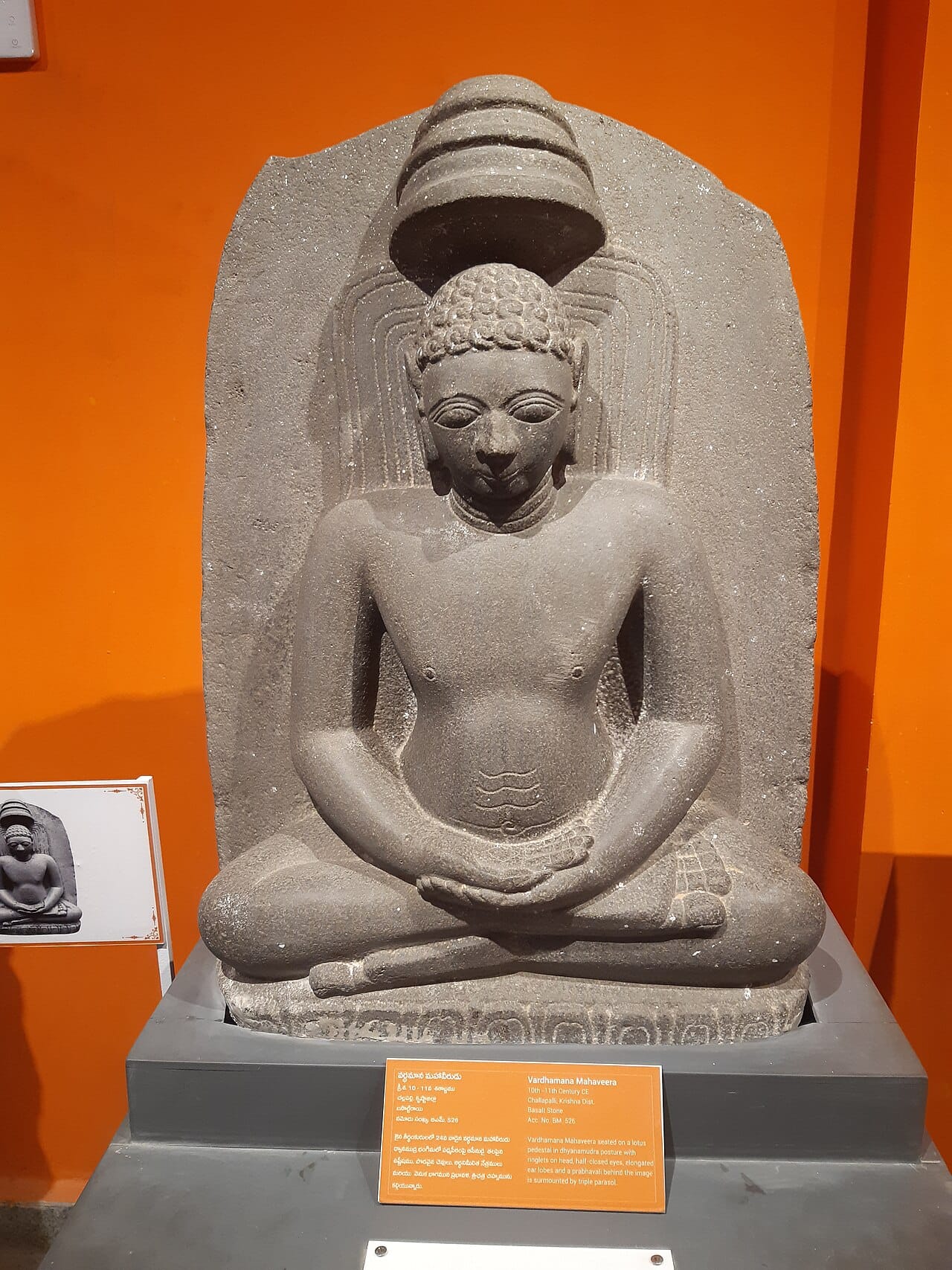
Vardhamana was born at Kundagrama near Vaishali in Bihar, the son of Siddhartha, a chief of the Jnatrika clan, and Queen Trishala. Jain tradition dates his life 599–527 BCE; many historians place him somewhat later, as an elder contemporary of the Buddha. Tradition says his mother saw auspicious dreams before his birth, and that the kingdom prospered — hence the name Vardhamana, "the one who increases".
परस्परोपग्रहो जीवानाम्“Souls render service to one another.”Tattvartha Sutra 5.21, the motto of Jainism
He lived as a prince until the age of thirty. Then, after his parents' death, he gave away his possessions, pulled out his hair in five handfuls, and took up the life of a homeless ascetic.
Twelve years of austerity
For twelve and a half years he wandered, fasting, meditating and enduring heat, cold, insects and the abuse of villagers in silence, taking care never to harm any creature. In the thirteenth year, meditating under a sal tree on the bank of the Rijupalika river, he attained kevala jnana, omniscience. He was now a Jina, a "conqueror" of the inner enemies, and was called Mahavira, "the great hero".
The teaching
For thirty years he taught in the language of the people, Ardhamagadhi. He gave five great vows: ahimsa (non-violence), satya (truth), asteya (not stealing), brahmacharya (chastity) and aparigraha (non-possession). His doctrine of anekantavada holds that reality has many sides and no single view captures all of it — a teaching of intellectual humility. He welcomed women and men of every caste into a fourfold community of monks, nuns, laymen and laywomen.
Nirvana at Pavapuri
He attained nirvana at Pavapuri on the night of Kartik Amavasya. Jains say the lamps lit that night to replace the light of his wisdom began the Jain Diwali. His disciple Gautama Indrabhuti attained omniscience the next morning, and his teachings were later compiled in the Jain Agamas.
How they are remembered
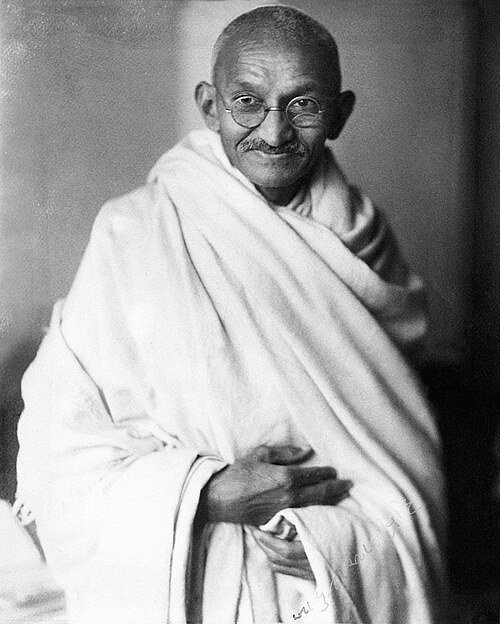
Mahavir Jayanti on Chaitra Shukla Trayodashi is celebrated with processions, temple worship and charity. The Jal Mandir at Pavapuri, standing in a lotus pond, marks his nirvana, and his ideal of ahimsa deeply influenced Gandhi.
Ekatmata Stotra · Stanza 15
Named in Stanza 15 of the Ekatmata Stotra — from Buddha and Mahāvīra to Basaveśvara.
बुद्धो जिनश्च गोरक्षो वल्लुवस्तिरुनामकः।
नायन्माराश्च आळ्वाराः कम्बन्बसवेश्वरौ तथा॥
Sources: Wikipedia: Mahavira · Wikipedia: Anekantavada. Written afresh for The Hindu Book; corrections welcome at [email protected].