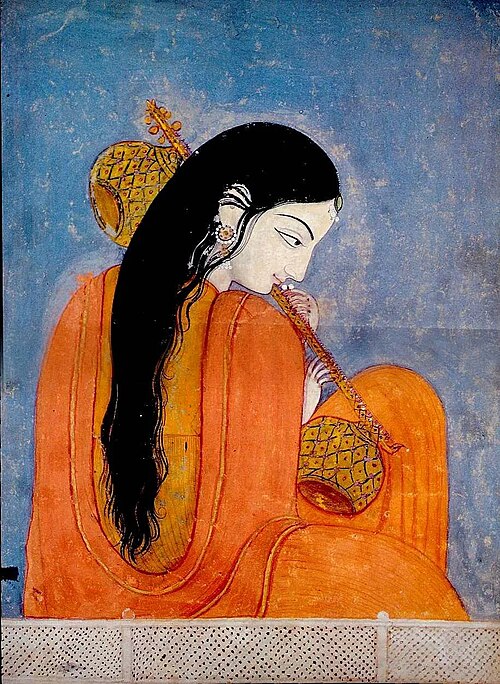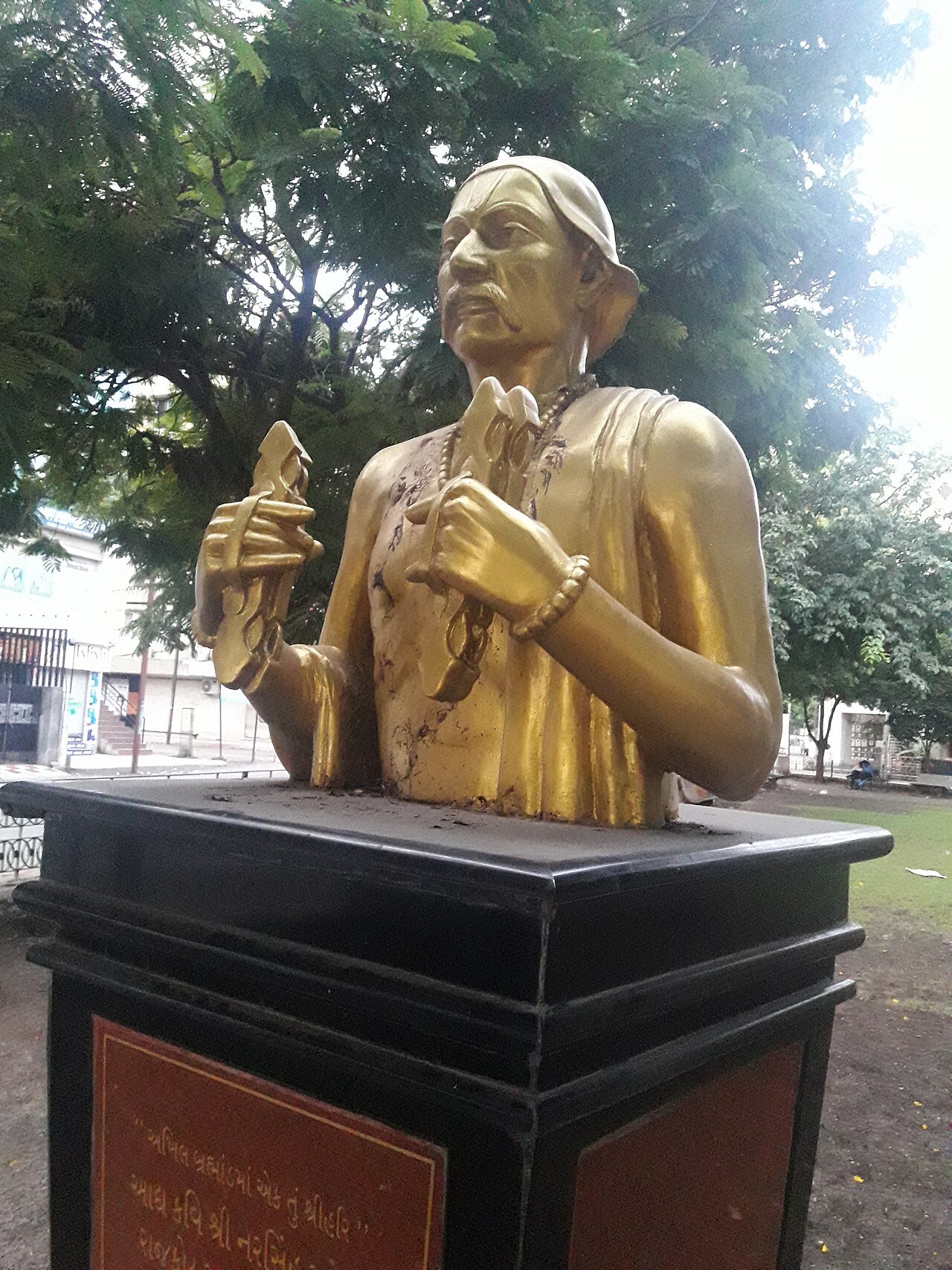
Narsinh Mehta lived in the fifteenth century; tradition gives about 1414–1481. Born at Talaja in Saurashtra to a Nagar Brahmin family, he lost his parents young and was raised by his brother in Junagadh. Unworldly and given to singing with holy men, he was mocked by his sister-in-law as good for nothing.
વૈષ્ણવ જન તો તેને કહીએ, જે પીડ પરાઈ જાણે રે“Call him a true Vaishnava who feels the pain of others.”Opening of "Vaishnav Jan To"
Stung, he went into the forest and fasted before a Shiva linga. Tradition says Shiva, pleased, took him to see Krishna's raas dance with the gopis — and from that day he lived only to sing of Krishna.
The adi-kavi
Narsinh Mehta is honoured as the adi-kavi, the first poet, of Gujarati literature. His padas include prabhatiyas, morning songs, still sung at dawn across Gujarat, such as "Jaago re Jashodana kunvar"; songs of Krishna's play with the gopis; and philosophical songs on the oneness of all things, such as "Akhil brahmandma ek tu Shri Hari".
Faith tested
He lived in poverty, and his songs tell how Krishna came to his rescue: when he could not afford the gifts for his daughter's pregnancy ceremony, the mameru, Krishna sent them; when pilgrims gave him money for a hundi (bill of exchange) on a merchant in Dwaraka, Krishna himself honoured it as "Shamalsha Sheth". He sang kirtan in the quarters of the outcastes, defying the anger of his caste.
Vaishnav Jan To
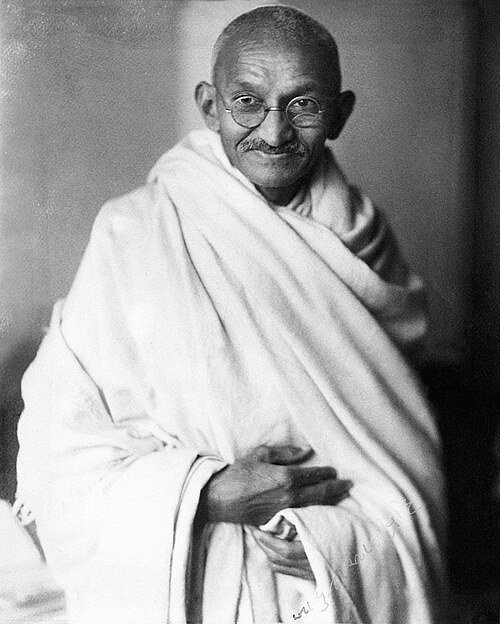
His hymn Vaishnav Jan To describes a true devotee: one who feels others' pain, helps without pride, speaks no ill, sees all as equal, and is free of greed and deceit. Gandhi made it part of daily prayer at his ashram, and it became the hymn of the freedom movement.
How they are remembered
The Narsinh Mehta Award, given each year at Junagadh, is among the most prestigious honours in Gujarati poetry, and the first Gujarati talking film, in 1932, told his life. His "Narsinh Mehta no Choro" in Junagadh is a place of pilgrimage.
Ekatmata Stotra · Stanza 16
Named in Stanza 16 of the Ekatmata Stotra — the bhakti revolution — Ravidas to Guru Gobind Singh.
देवलो रविदासश्च कबीरश्च गुरुर्नानकः।
नरसी-तुलसीदासौ गुरुगोविन्दसिंहकः॥
Sources: Wikipedia: Narsinh Mehta · Wikipedia: Vaishnava Jana To. Written afresh for The Hindu Book; corrections welcome at [email protected].