The Nayanmars (or Nayanars, “leaders”) are the sixty-three saints of Tamil Shaivism. Between roughly the 6th and 9th centuries, when the Pallava and Pandya kings ruled the Tamil country, they travelled from temple to temple singing of Shiva in Tamil, and their hymns turned the shrines they visited into places of pilgrimage. Alongside their Vaishnava counterparts, the Alvars, they made devotion in the people's language the heart of Hindu worship in the south.
நாமார்க்கும் குடியல்லோம் நமனை அஞ்சோம்“We are subjects to no one; we do not fear death.”Appar (Tirunavukkarasar), Tevaram, Sixth Tirumurai — sung, by tradition, in defiance of a royal summons
The list of sixty-three goes back to Sundarar's hymn Tiruttondattokai, “the list of the holy servants”. In the 12th century Sekkizhar, a minister of the Chola king Kulottunga II, told their lives in the Periya Puranam, which remains the main source for their stories.
The three singers
Three Nayanmars, together called the Muvar, composed the hymns known as the Tevaram. Appar (Tirunavukkarasar), according to the Periya Puranam, was raised a Shaiva, spent years as a Jain monk, and returned to Shiva after a grave illness; the Pallava king Mahendravarman is said to have persecuted him before turning Shaiva himself. Tirujnana Sambandar, a child prodigy, is said to have sung his first hymn at the age of three after Parvati fed him milk at Sirkazhi, and to have won the Pandya king back to Shaivism at Madurai. Sundarar, a generation or two later, addressed Shiva as a friend and companion.
The Tiruvachakam of Manikkavachakar is honoured alongside the Tevaram, though he is not counted among the sixty-three.
Their hymns are not abstract theology. They name particular towns, rivers, fields and festivals, so that the Tevaram reads almost like a sacred map of the Tamil country, and they speak to Shiva with the full range of human feeling — longing, love, fear, complaint and joy.
Saints from every walk of life
The Periya Puranam stresses that devotion, not birth, made a saint. Karaikkal Ammaiyar, one of the earliest, was a merchant's wife who gave up beauty and household to sing of Shiva's dance at Tiruvalangadu. Kannappa was a hunter who, the story goes, offered his own eyes to a bleeding linga. Nandanar, from a community kept outside the temple walls, longed to see Nataraja at Chidambaram. The list also includes kings, a Pandya queen named Mangayarkkarasi, a potter, a washerman and a fisherman.
The Tirumurai
Tradition says that in the time of the Chola king Rajaraja I, the scholar Nambiyandar Nambi recovered the forgotten Tevaram manuscripts, half eaten by ants, from a sealed room at the Chidambaram temple. The hymns were arranged into seven books, and in time the canon grew to twelve, the Tirumurai, with the Periya Puranam as the twelfth. These books are the scripture of the Tamil Shaiva Siddhanta tradition.
Living worship
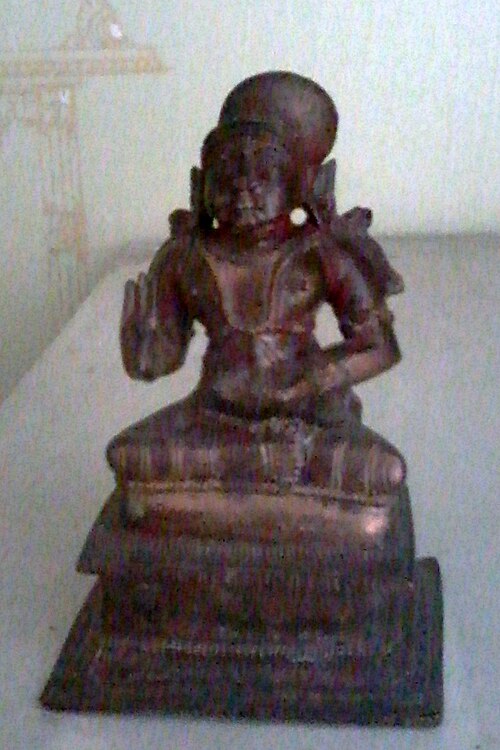
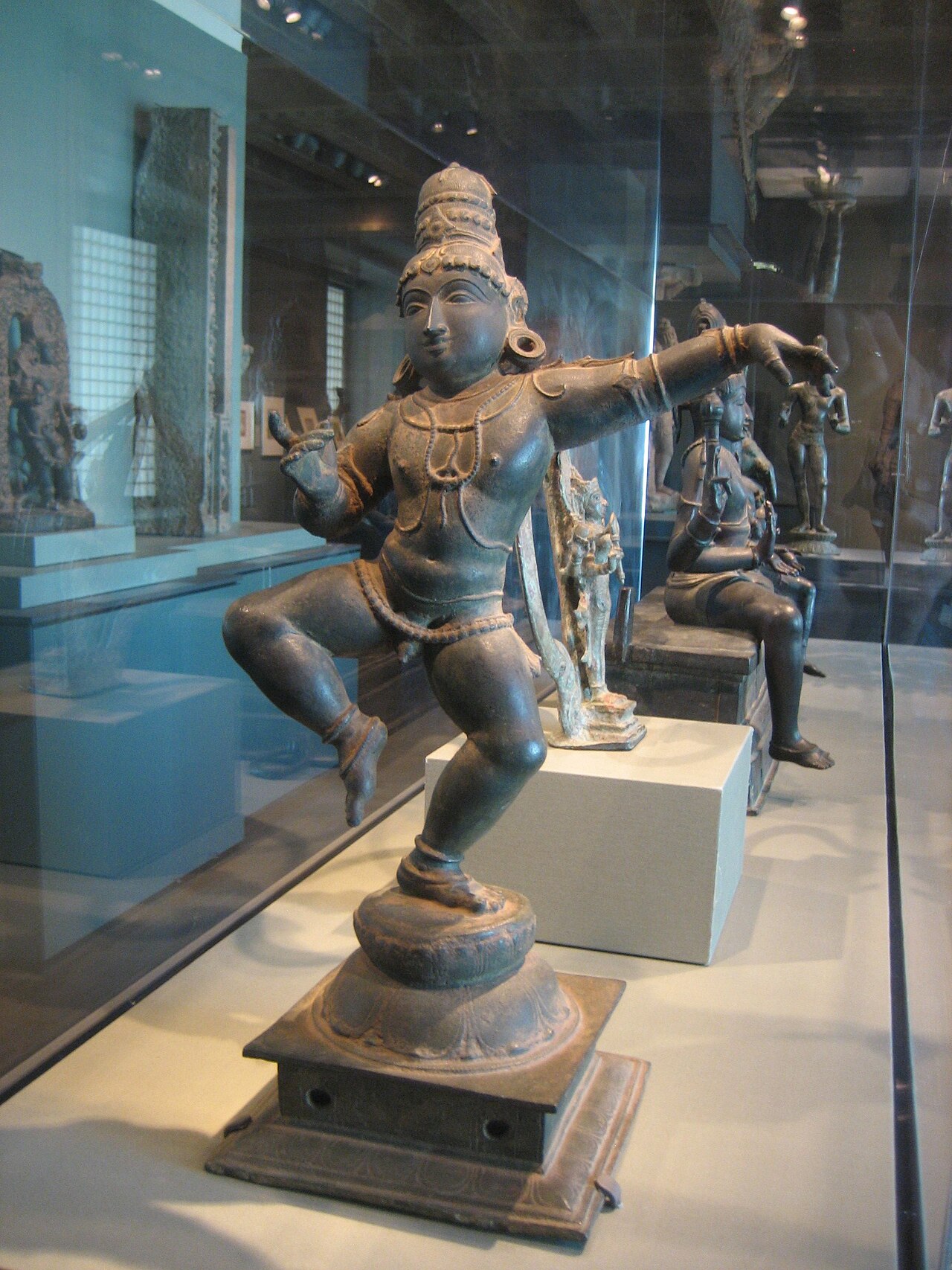
The 275 temples praised in the Tevaram, the Paadal Petra Sthalams, are among the most visited in the south. Hereditary singers called Oduvars still sing the hymns at daily worship in their traditional melodies (pann). Bronze images of the sixty-three stand in rows in many Shiva temples, and each saint's memorial day (guru puja) is kept in the Tamil calendar.
How they are remembered
The Nayanmars gave Shaivism its Tamil voice and its most loved stories. At the Kapaleeshwarar temple in Mylapore, Chennai, the Arupathu Moovar festival, when the images of all sixty-three are carried through the streets, draws huge crowds each year. Their hymns, sung unbroken for over a thousand years, stand among the oldest continuous traditions of sacred music in the world.
Ekatmata Stotra · Stanza 15
Named in Stanza 15 of the Ekatmata Stotra — from Buddha and Mahāvīra to Basaveśvara.
बुद्धो जिनश्च गोरक्षो वल्लुवस्तिरुनामकः।
नायन्माराश्च आळ्वाराः कम्बन्बसवेश्वरौ तथा॥
Sources: Wikipedia: Nayanars · Wikipedia: Tevaram · Wikipedia: Periya Puranam · britannica.com/topic/Nayanar. Written afresh for The Hindu Book; corrections welcome at [email protected].