The story of Savitri is told in the Vana Parva of the Mahabharata, in the section called the Pativrata-mahatmya. The sage Markandeya tells it to Yudhishthira during the Pandavas' exile, when Yudhishthira asks whether there has ever been a woman as devoted as Draupadi.
“The wise say that by walking just seven steps with another, one becomes that person's friend.”Mahabharata, Vana Parva — Savitri to Yama
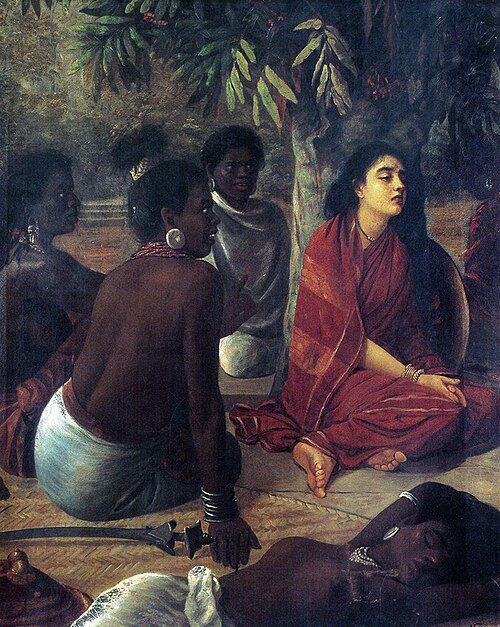
Savitri was the daughter of Ashvapati, king of Madra, born after he had worshipped the goddess Savitri for eighteen years — hence her name. She grew so radiant that no prince dared ask for her hand, so her father told her to travel and choose a husband herself.
The choice
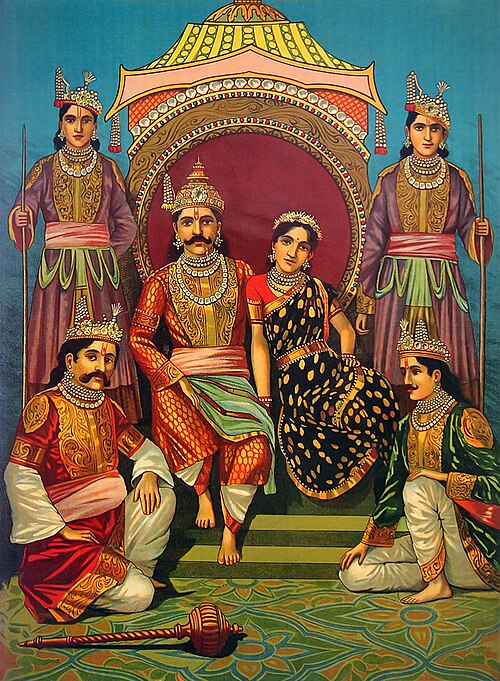
Savitri returned having chosen Satyavan, son of Dyumatsena, the blind king of Shalva who had lost his kingdom and lived in the forest. The sage Narada, present at court, praised Satyavan's virtues but revealed one fault: he was destined to die in exactly one year. Ashvapati begged his daughter to choose again. Savitri answered that a choice once made with the heart is made only once, and she would not change it. The marriage took place, and she went to live in the forest hermitage, serving her husband's parents.
Following Death
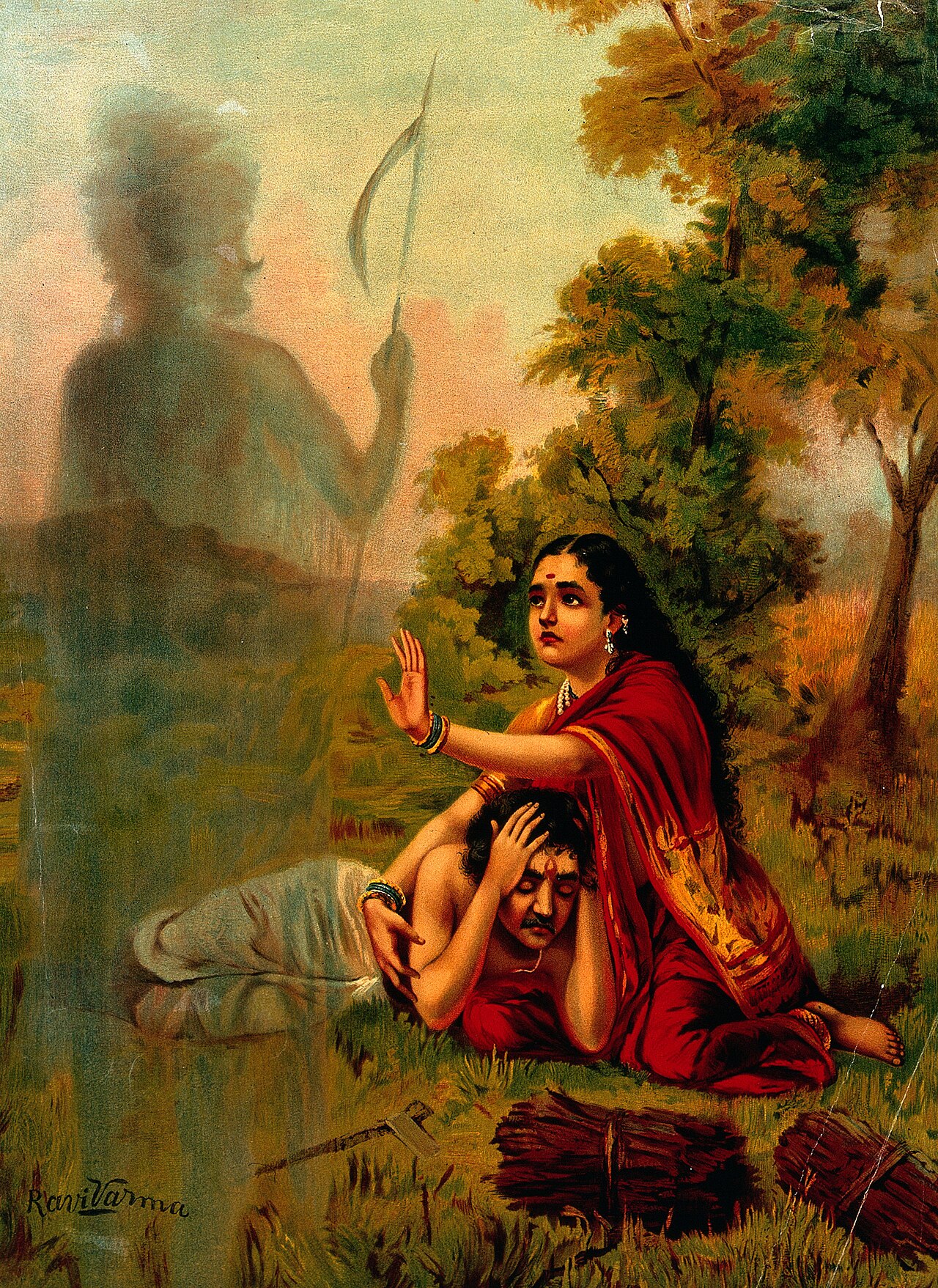
As the fatal day drew near, Savitri kept a fast of three days and nights. On the last day she went with Satyavan into the forest to gather wood. He felt a sudden pain and lay down with his head in her lap. Then Yama, lord of death, appeared and drew out his life with his noose, and set off southward.
Savitri followed. When Yama told her to turn back, she spoke to him with such wisdom about dharma, friendship and the ways of the good that he offered her a boon — anything but her husband's life. She asked for her father-in-law's sight; then, as she kept following, for his lost kingdom; then for a hundred sons for her own father. At last Yama, delighted, granted her a hundred sons by Satyavan — and so had to release Satyavan himself. Satyavan woke as if from sleep, and when they returned, Dyumatsena could see and his kingdom was restored.
The epic lingers on these speeches: Savitri praises the good, who protect all creatures and are kind even to enemies, and Yama, pleased with each answer, offers a new boon. Her last request — sons by Satyavan — could not be fulfilled without Satyavan himself, so Yama untied the noose and blessed him with four hundred years of life.
What the story teaches
The Mahabharata presents Savitri as the model of a devoted wife, but her strength in the story is as much her mind as her loyalty: she chooses for herself, keeps her own counsel, and defeats Death not by force but by argument, patience and grace. Modern readers have drawn out both sides, and Sri Aurobindo made her the heroine of his long philosophical poem Savitri, where her victory over death becomes a symbol of the soul's victory over ignorance.
How they are remembered
Millions of married women keep the Vat Savitri vrat in the month of Jyeshtha — on the Amavasya in much of North India, and on the Purnima in Maharashtra, Gujarat and parts of the south — fasting, tying threads around a banyan tree and hearing the story of Savitri and Satyavan. Her name has become a blessing: "may you be like Savitri" is still said to brides.
Ekatmata Stotra · Stanza 10
Named in Stanza 10 of the Ekatmata Stotra — ten women of itihāsa and purāṇa.
अरुन्धती अनसूया च सावित्री जानकी सती।
द्रौपदी कण्णगी गार्गी मीरा दुर्गाश्च वन्दिताः॥
Sources: Wikipedia: Savitri and Satyavan · ibiblio.org/sripedia/ebooks/mb/m03/m03295.htm · ibiblio.org/sripedia/ebooks/mb/m03/m03296.htm. Written afresh for The Hindu Book; corrections welcome at [email protected].