Siddhartha Gautama was born in the Lumbini grove, in present-day Nepal, to Shuddhodana, chief of the Shakya clan of Kapilavastu, and Queen Maya, who died soon after. Scholars place his life in the fifth century BCE; older reckonings give c. 563–483 BCE. Raised in comfort, he married Yashodhara and had a son, Rahula.
न हि वेरेन वेरानि सम्मन्तीध कुदाचनं। अवेरेन च सम्मन्ति एस धम्मो सनन्तनो॥“Hatred is never ended by hatred in this world; it is ended by non-hatred. This is an eternal law.”Dhammapada, verse 5 (Pali)
Tradition tells that on outings from the palace he saw an old man, a sick man, a corpse and a calm wandering ascetic. Shaken by the fact of suffering, at twenty-nine he left home at night — the "great renunciation" — to seek its end.
Awakening at Bodh Gaya
For six years he studied with teachers of meditation and then practised severe austerities, until he was little more than skin and bone. Realising that self-torture led no further than self-indulgence, he accepted a bowl of rice and milk from a village woman, Sujata, and sat beneath a pipal tree at Uruvela — now Bodh Gaya — resolved not to rise until he understood. On a full-moon night he attained bodhi, awakening, and became the Buddha, "the awakened one".
The first sermon
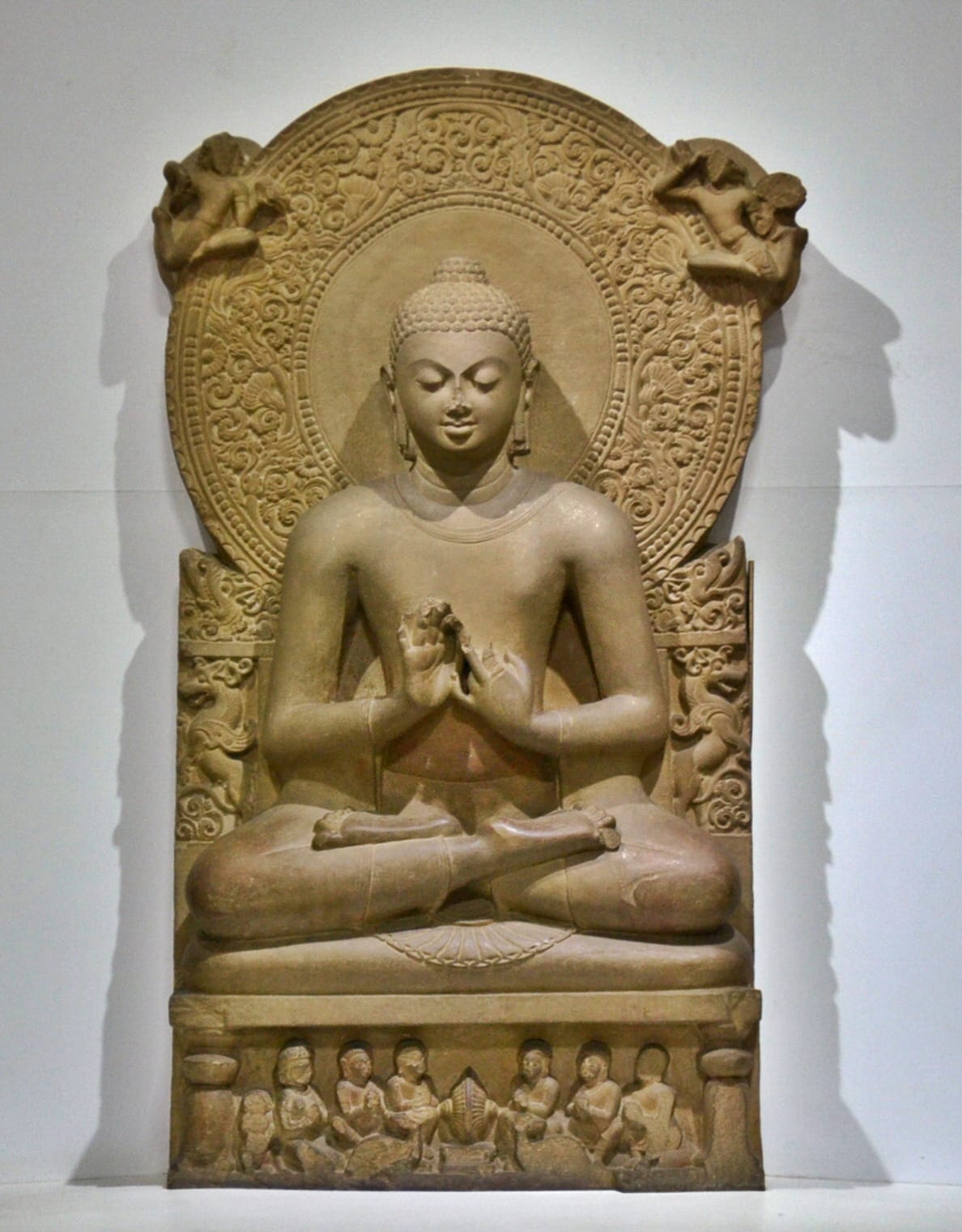
At the deer park of Sarnath near Varanasi he taught five former companions the Middle Way between indulgence and austerity, and the Four Noble Truths: there is suffering; it arises from craving; it can end; and the way to its end is the Noble Eightfold Path of right view, intention, speech, action, livelihood, effort, mindfulness and concentration. This sermon "set in motion the wheel of dharma".
Forty-five years of teaching
For the rest of his life he walked the plains of Magadha and Kosala, teaching kings, merchants, courtesans and outcastes alike, and founded the sangha of monks and, later, nuns. He taught in the spoken language of the people rather than Sanskrit. At eighty, at Kushinagar, he passed into parinirvana, telling his followers: "All conditioned things pass away. Strive on with diligence."
Many Hindu Puranas and Jayadeva's Dashavatara count him as the ninth avatar of Vishnu.
How they are remembered
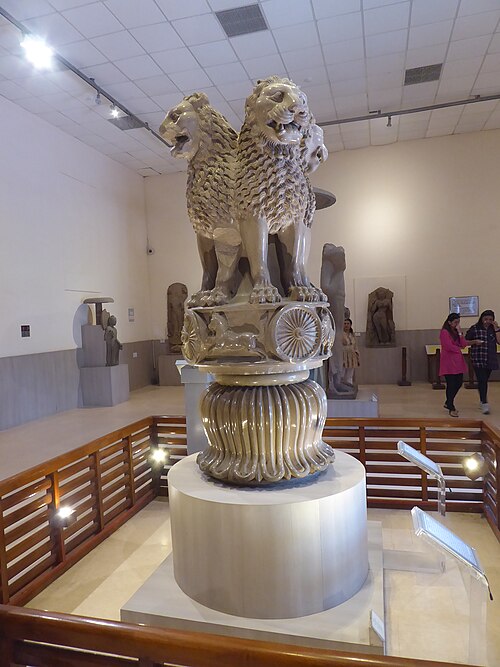
Buddha Purnima marks his birth, awakening and passing. The Mahabodhi Temple at Bodh Gaya is a UNESCO World Heritage Site, and the dharma-chakra of Sarnath — on Ashoka's lion capital — is at the centre of India's flag. From India his teaching spread across Asia.
Ekatmata Stotra · Stanza 15
Named in Stanza 15 of the Ekatmata Stotra — from Buddha and Mahāvīra to Basaveśvara.
बुद्धो जिनश्च गोरक्षो वल्लुवस्तिरुनामकः।
नायन्माराश्च आळ्वाराः कम्बन्बसवेश्वरौ तथा॥
Sources: Wikipedia: The Buddha · Wikipedia: Mahabodhi Temple. Written afresh for The Hindu Book; corrections welcome at [email protected].