Several great figures in Indian history bore the name Nagarjuna, and tradition often blends them. The one named in the Ekatmata Stotra among the scientists is Nagarjuna the rasa-siddha, master of Rasa Shastra — the Indian science of metals, minerals and especially mercury, used to make medicines and, it was hoped, to give long life.
Rasa Shastra held that mercury, properly purified and "tamed", could cure disease, strengthen the body and transform base metals.The central idea of Rasa Shastra
He should not be confused with Nagarjuna the Buddhist philosopher of the Madhyamaka school (c. 2nd century CE), though medieval legend sometimes makes them one person. Scholars place the alchemist much later, perhaps between the seventh and tenth centuries, but his dates remain uncertain.
The science of rasa
Rasa Shastra developed elaborate methods to purify and process mercury, sulphur, mica, gold, copper and other substances — distillation, sublimation, calcination and the preparation of fine ash-like powders called bhasma. The Rasaratnakara attributed to Nagarjuna describes extracting metals such as zinc and copper from ores, and many kinds of apparatus. These techniques gave India a rich early chemistry.
Medicine and long life
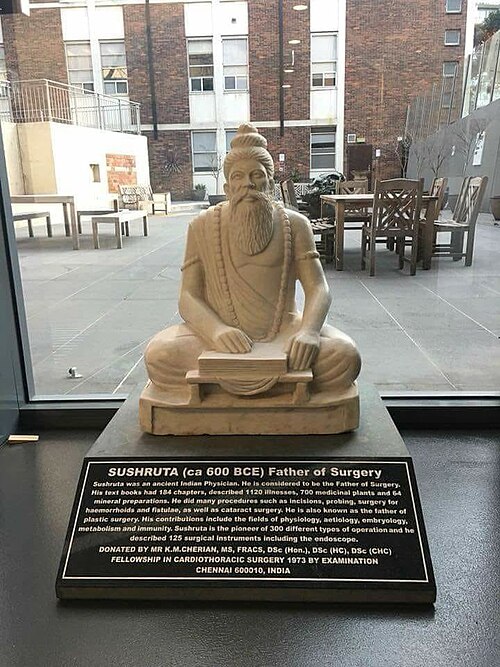
Alchemists sought two goals: lohavedha, turning base metals into gold, and dehavedha, making the body strong and long-lived. In practice their greatest legacy was medical — mineral preparations that entered Ayurveda and are still made today. Tradition also credits a Nagarjuna with revising the Sushruta Samhita and adding its later section, the Uttaratantra.
Legend and history
Legends tell of Nagarjuna working in the hills of Srisailam on the Krishna river, and of patrons who sought his elixirs. Because so many texts were attributed to famous names, historians treat these stories with caution; what is certain is that a living tradition of Indian chemistry grew around his name.
How they are remembered
The chemist P. C. Ray, in his History of Hindu Chemistry (1902), brought Rasa Shastra and Nagarjuna to modern attention. Mineral-based medicines from this tradition are still part of Ayurvedic practice, now studied for both their benefits and their safety.
Ekatmata Stotra · Stanza 26
Named in Stanza 26 of the Ekatmata Stotra — bridging the ancient and the modern.
नागार्जुनो भरद्वाजः आर्यभट्टो वसुस्तथा।
रमणो रामानुजश्च नवदीप्त्या विराजिताः॥
Sources: Wikipedia: Nagarjuna (metallurgist) · Wikipedia: Rasashastra. Written afresh for The Hindu Book; corrections welcome at [email protected].