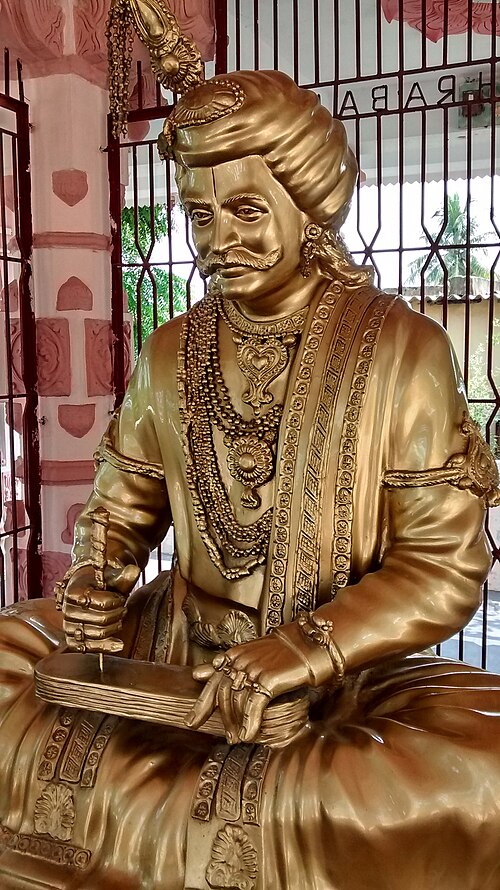
Madhava, later known by his monastic name Vidyaranya, was born in the early 14th century, by tradition around 1296, into the same learned family as Sayana, the great Vedic commentator — the two are usually described as brothers. He grew up as the Delhi Sultanate's armies were sweeping into the Deccan, overthrowing the Yadavas of Devagiri, the Kakatiyas of Warangal and the Hoysalas.
नमः श्रीशंकरानन्दगुरुपादाम्बुजन्मने। सविलासमहामोहग्राहग्रासैककर्मणे॥“Salutation to the lotus feet of my guru, Shri Shankarananda, whose one work is to devour the crocodile of great delusion along with all its play.”Panchadashi 1.1, attributed to Vidyaranya
In that crisis, tradition holds, the scholar became a kingmaker. Sringeri records and later Vijayanagara inscriptions honour Vidyaranya as the spiritual guide behind the new kingdom founded in 1336 at Hampi on the Tungabhadra. He later headed the Sringeri Sharada Peetham, the monastery traditionally founded by Adi Shankaracharya, and died around 1386.
The founding of Vijayanagara
The brothers Harihara and Bukka, of the Sangama family, founded the Vijayanagara kingdom around 1336. Tradition says they did so with Vidyaranya's blessing and guidance, and that the city was first called Vidyanagara in his honour. Later inscriptions of the dynasty describe him as the source of their royal fortune.
A popular account adds that the brothers had been captured by the Delhi Sultan, forced to convert, and sent back south as governors, and that Vidyaranya welcomed them back into Hindu dharma before they threw off Delhi's rule. Historians are divided on this story: some accept it, others note that it appears only in later sources. Many also suspect that the scale of Vidyaranya's role was enlarged by later writers. What is clear is the close bond between the Sringeri monastery and the Vijayanagara kings.
Minister and monk
Inscriptions mention a Madhava who served as minister and scholar to the early Vijayanagara rulers. Tradition holds that this Madhava took sannyasa and became Vidyaranya; some modern scholars think two or more men have been merged into one figure. In Sringeri's tradition he is counted among its jagadgurus, succeeding his guru Bharati Tirtha. In 1338 the beautiful Vidyashankara temple at Sringeri was begun in memory of their teacher Vidyatirtha.
Writings
The Panchadashi, fifteen chapters on Advaita Vedanta, is the work most closely tied to his name, and it is still studied as a clear introduction to non-dual philosophy; part of it is often credited to Bharati Tirtha. The Jivanmukti Viveka describes the life of one liberated while living. Works on Mimamsa and law, including the Parashara Madhaviya, a commentary on the Parashara Smriti, are credited to Madhava.
Two famous works carry the name Madhava but are disputed: the Sarvadarshana Sangraha, a survey of sixteen Indian philosophical systems, and the Shankara Digvijaya, a life of Adi Shankaracharya. Many scholars think these were written by others, the latter much later.
Across all these works runs one concern: to set out the inherited learning of India — Vedanta, Mimamsa, law and ritual — clearly and completely, so that it could be preserved and taught in a time of political upheaval. In this he and his brother Sayana worked toward the same goal.
How they are remembered
Vijayanagara went on to shelter temple, music, literature and learning for over two centuries, and its ruined capital at Hampi is now a UNESCO World Heritage Site. The Sringeri monastery still honours Vidyaranya as one of its greatest heads. He is remembered as the ascetic who, in a dark hour, turned learning into the foundation of a kingdom.
Ekatmata Stotra · Stanza 17
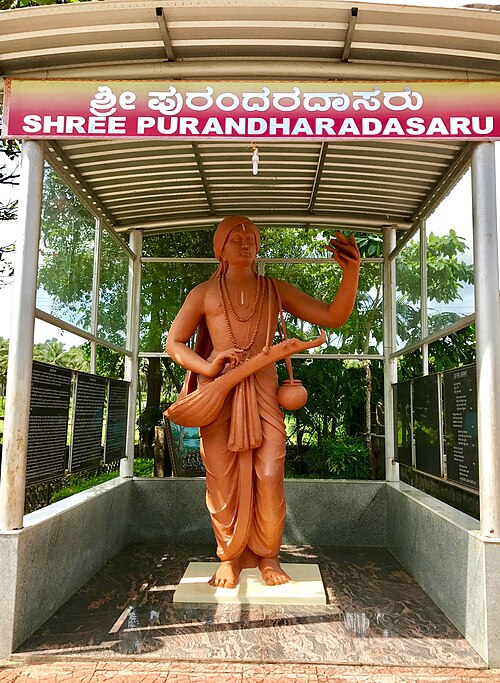
Named in Stanza 17 of the Ekatmata Stotra — saints who gave their regional language a bhakti canon.
शङ्करदेव: सायण-माधवौ ज्ञानदेवस्तुकारामो।
रामदासश्च पुरन्दरदासश्च सम्भाव्या सदा हृदि॥
Sources: Wikipedia: Vidyaranya · Wikipedia: Vijayanagara Empire · Wikipedia: Sringeri Sharada Peetham. Written afresh for The Hindu Book; corrections welcome at [email protected].