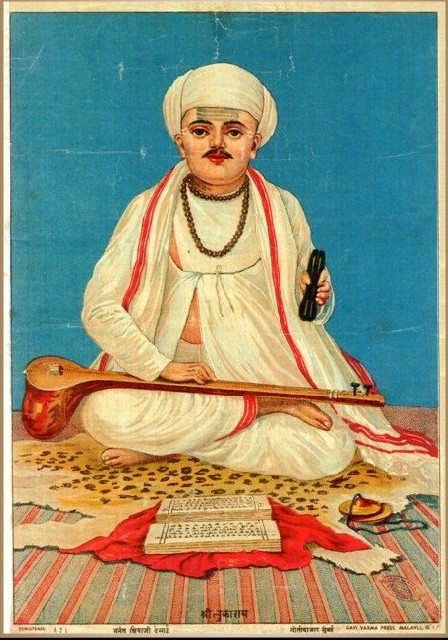
Tukaram was born at Dehu on the Indrayani river near Pune, in a family of Kunbi farmers who kept a small shop; their family deity was Vitthala of Pandharpur. His dates are usually given as about 1608–1650. He lost his parents young, and in the terrible famine of the early 1630s he lost his first wife, a son and his livelihood.
वृक्षवल्ली आम्हां सोयरी वनचरें“Trees and creepers are our kin, and so are the creatures of the forest.”An abhanga of Tukaram
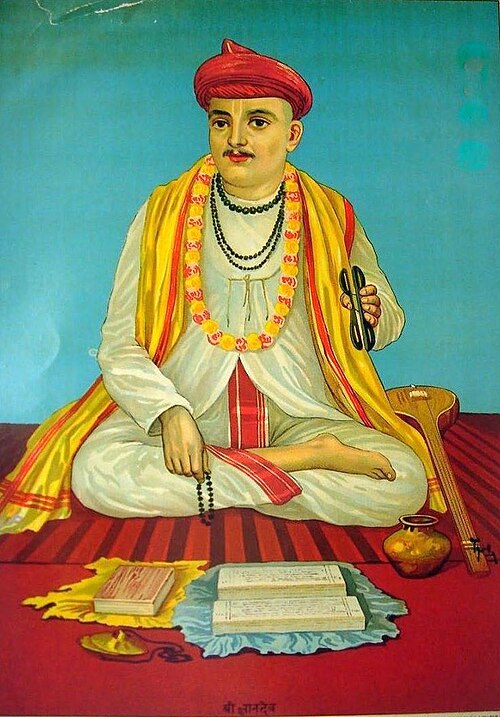
Broken by suffering, he withdrew to the hill of Bhamchandra near Dehu, meditated, read the works of earlier saints, and turned wholly to Vitthala. Tradition says the saint Namdev appeared to him in a dream and told him to compose songs.
Abhangas
Tukaram's songs, abhangas, are in plain, earthy Marathi: about four and a half thousand are collected in the Gatha. They speak of his love for Vitthala, his struggles, his doubts and his joy; they mock hypocrites, fake holy men and caste pride; and they teach that God is found by those who sing his name with a pure heart, whatever their birth.
The notebooks in the river
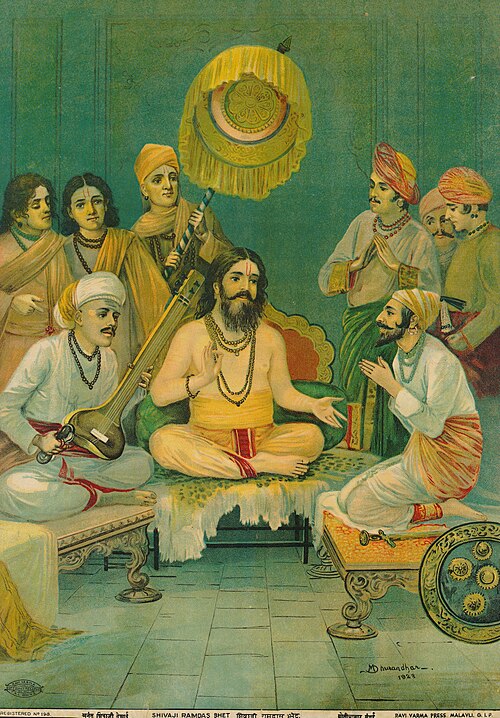
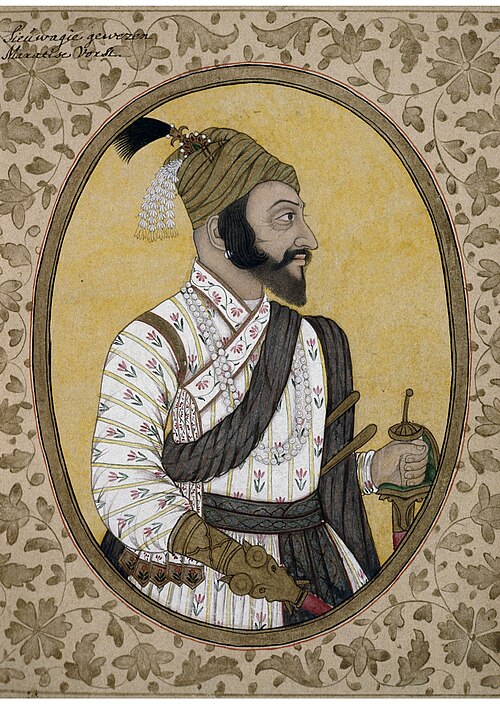
A brahmin scholar, Rameshwar Bhatt, objected that a low-born man had no right to write on religion, and Tukaram was made to sink his notebooks in the Indrayani. He sat by the river fasting; after thirteen days, the story goes, the notebooks rose to the surface undamaged — and Rameshwar Bhatt became his disciple. Tradition also says that Shivaji came to hear his kirtans.
Departure
In 1650 Tukaram disappeared. His devotees believe he was taken bodily to Vaikuntha, and the day is observed as Tukaram Beej. His abhangas have shaped Marathi language and thought ever since.
How they are remembered
Every year Tukaram's Palkhi leaves Dehu with Jnaneshwar's from Alandi, and lakhs of warkaris walk with them to Pandharpur for Ashadhi Ekadashi. His abhangas are sung at kirtans across Maharashtra and quoted in daily speech.
Ekatmata Stotra · Stanza 17
Named in Stanza 17 of the Ekatmata Stotra — saints who gave their regional language a bhakti canon.
शङ्करदेव: सायण-माधवौ ज्ञानदेवस्तुकारामो।
रामदासश्च पुरन्दरदासश्च सम्भाव्या सदा हृदि॥
Sources: Wikipedia: Tukaram · Wikipedia: Pandharpur Wari. Written afresh for The Hindu Book; corrections welcome at [email protected].