Narayan Suryajipant Thosar was born at Jamb, near Jalna, on Ram Navami in 1608. At twelve, the story goes, he was being married; when the priests chanted "Savadhan!" — "be alert!" — he took it as a warning and ran from the wedding.
मना सज्जना भक्तिपंथेंचि जावें। तरी श्रीहरी पाविजेतो स्वभावें॥“O good mind, walk the path of devotion; then Shri Hari is reached naturally.”Manache Shlok, verse 1
He went to Takali near Nashik, at the meeting of the Godavari and Nandini, and spent twelve years in austerity and the chanting of Rama's name — standing, tradition says, in the river each morning. Then he travelled for twelve years across India, seeing for himself the poverty and suffering of the people under foreign rule.
Devotion and strength
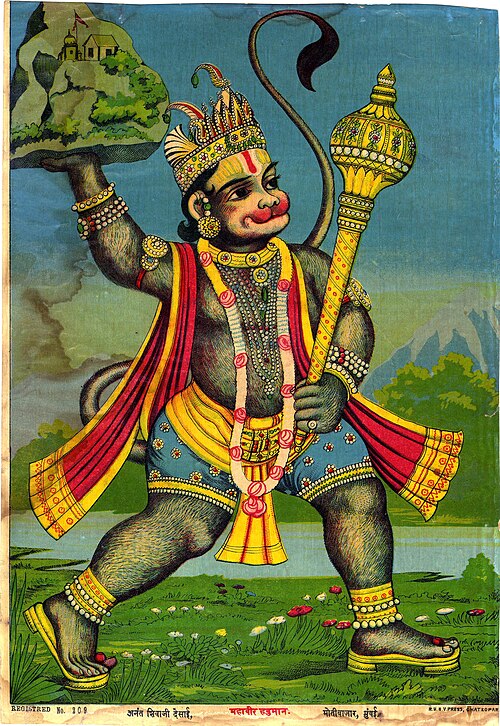
Returning to Maharashtra, Ramdas settled near Chaphal on the Krishna and began to build a movement. He set up maths across the region and installed images of Hanuman — the famous eleven Marutis — encouraging young men to build strong bodies as well as faith. His greeting, "Jai Jai Raghuveer Samarth", became the call of the Ramdasi sampradaya.
The Dasbodh
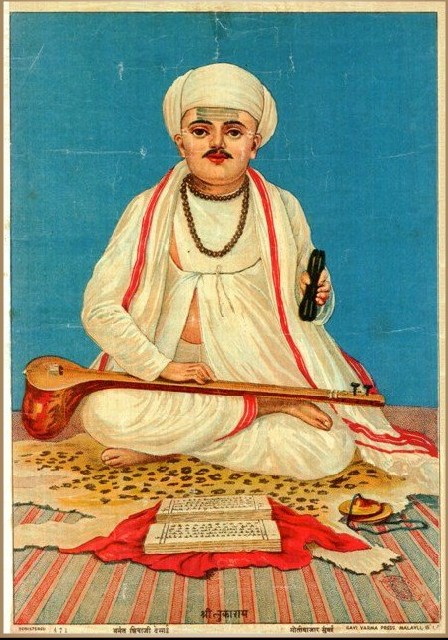
His great work, the Dasbodh, written as a dialogue with his disciple Kalyan Swami, is a practical guide covering devotion and self-knowledge alongside everyday wisdom: how to speak, how to organise, how to lead, how to recognise a fool and a wise person. His Manache Shlok, 205 verses addressed to the mind, are recited daily in many Marathi homes, and his aartis, such as "Sukhkarta Dukhharta", are sung across Maharashtra.
Ramdas and Shivaji
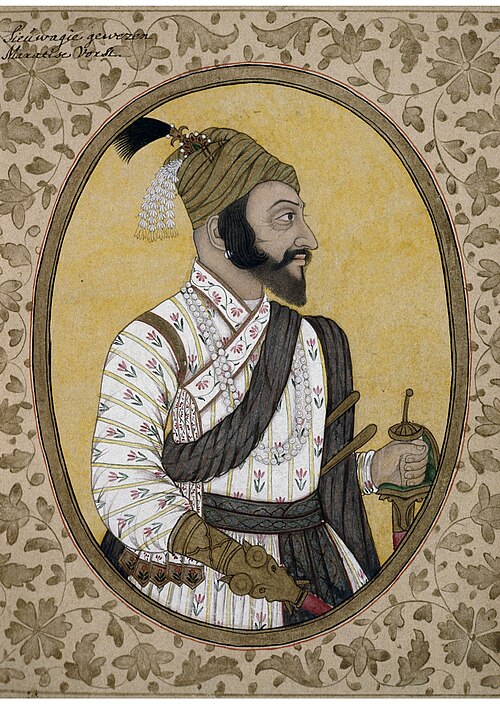
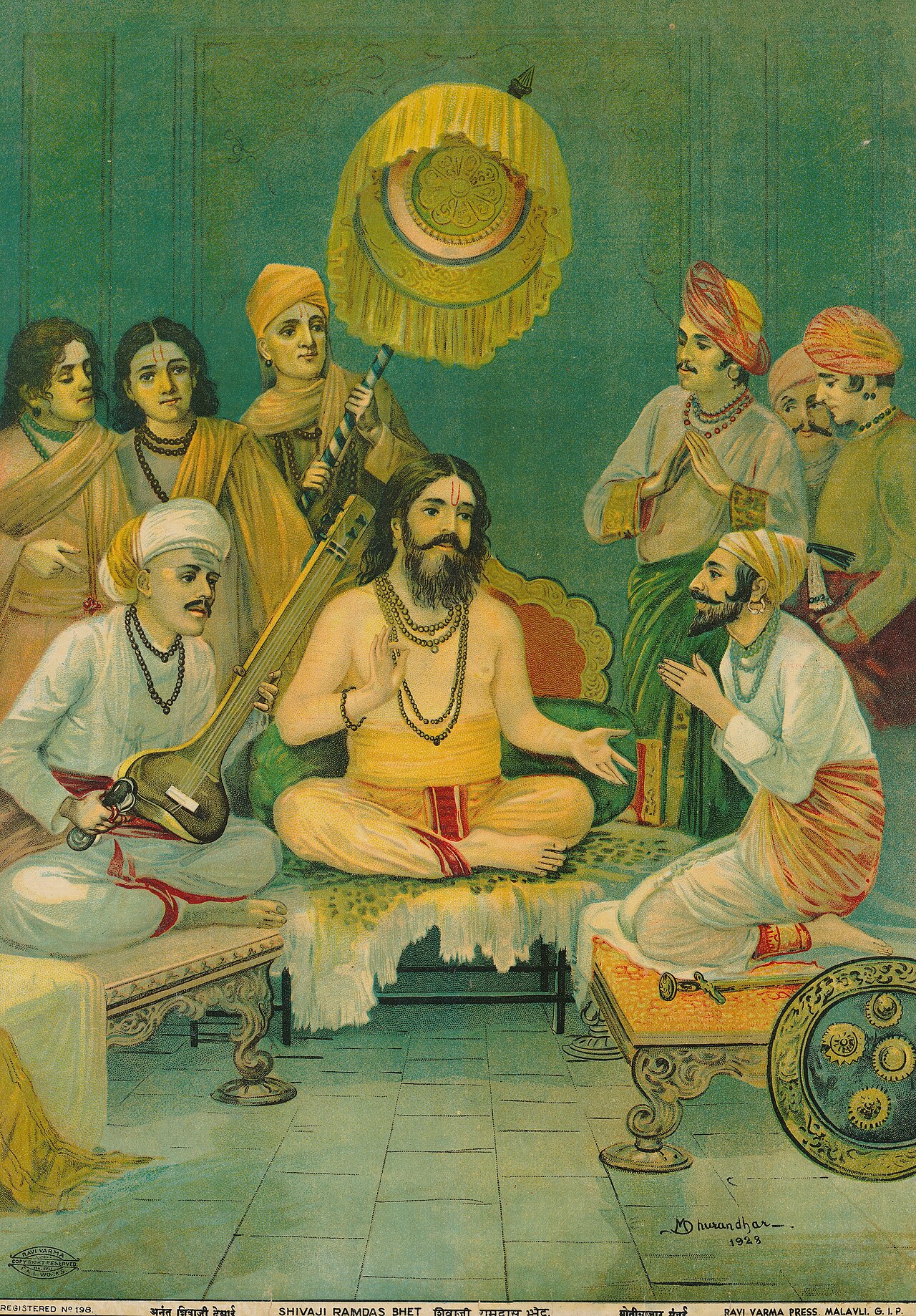
Tradition remembers Ramdas as a guide and blessing to Chhatrapati Shivaji, and their meeting is a famous subject of painting. Historians debate how close the relationship was and when it began, but Ramdas's letters praise Shivaji, and his ideas of courage and organisation suited the age of Swarajya. He spent his last years at Sajjangad fort near Satara, where he died in 1681.
How they are remembered
The Sajjangad samadhi is a major pilgrimage, and Dasa Navami, the anniversary of his passing, is observed there with great devotion. "Sukhkarta Dukhharta", his aarti to Ganesha, is sung in every Maharashtrian home at Ganeshotsav.
Ekatmata Stotra · Stanza 17
Named in Stanza 17 of the Ekatmata Stotra — saints who gave their regional language a bhakti canon.
शङ्करदेव: सायण-माधवौ ज्ञानदेवस्तुकारामो।
रामदासश्च पुरन्दरदासश्च सम्भाव्या सदा हृदि॥
Sources: Wikipedia: Samarth Ramdas · Wikipedia: Dasbodh. Written afresh for The Hindu Book; corrections welcome at [email protected].