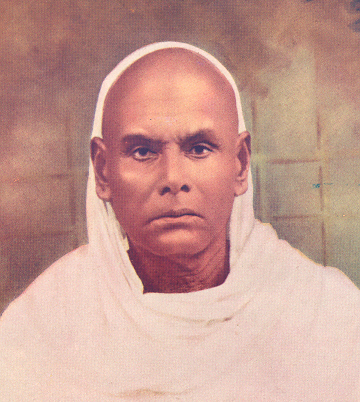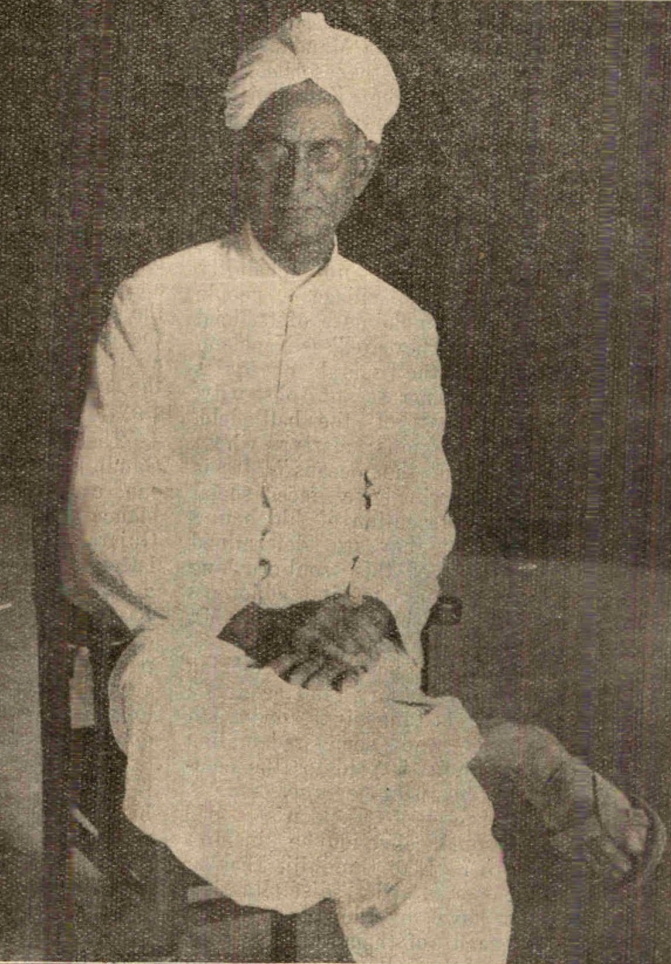
Amritlal Vithaldas Thakkar was born on 29 November 1869 in Bhavnagar, in Saurashtra, into a Lohana family of modest means. He matriculated from Bhavnagar High School in 1886 with a scholarship and qualified as a civil engineer from the Poona Engineering College in 1890.
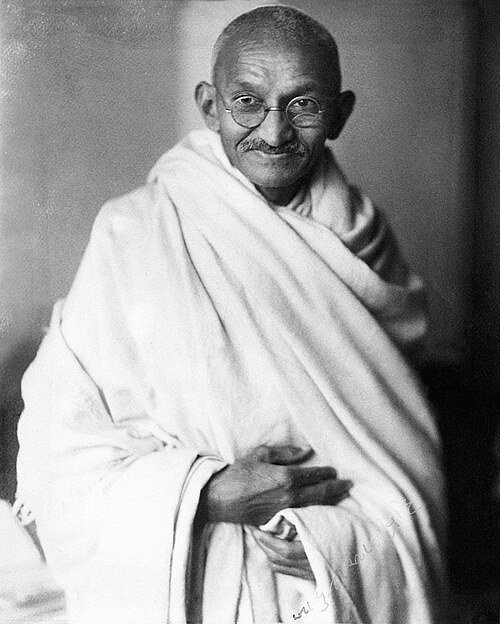
Gandhi called him the "father of the Harijans"; to the tribal communities he served he was simply <em>Bapa</em>, "father".From Gandhi's 1939 appeal on Thakkar Bapa's seventieth birthday
For the next quarter-century he worked as an engineer: in Porbandar state, on the railway in Uganda in East Africa, as chief engineer of Sangli state, and finally with the Bombay Municipality. It was there, supervising the city's drainage and sanitation, that he saw how the municipal sweepers lived — in conditions that troubled him for the rest of his life.
A new life at forty-five
Influenced by the social reformers of Bombay and by Gopal Krishna Gokhale, Thakkar resigned his post in 1914 and joined Gokhale's Servants of India Society, whose members pledged themselves to lifelong public service on a small allowance. He began with the sweepers of Bombay, opening schools and cooperative societies for them, and then went wherever famine or flood called — in Gujarat, Odisha and elsewhere — organising relief.
The Society, founded by Gokhale in Poona in 1905, asked its members to give their whole lives to the nation and to be content with the modest allowance it could provide. Thakkar kept that pledge for the remaining thirty-seven years of his life, working among the poorest communities of India until his death.
Among the Bhils
During famine relief in the Panchmahals district of Gujarat around 1919–1920, he came to know the Bhil tribal communities of the region, impoverished by debt, forced labour and loss of their forests. In 1922 he founded the Bhil Seva Mandal at Dohad. It ran ashram schools and hostels for Bhil children, dispensaries, and campaigns against moneylenders and liquor, and trained young workers to live in tribal villages. The Mandal became a model for tribal welfare work across India.
Over the next three decades Thakkar travelled ceaselessly through the forest regions of central and eastern India and the North-East, helping to start similar bodies, such as the Gond Seva Mandal, and drawing national attention to tribal conditions.
Harijan Sevak Sangh
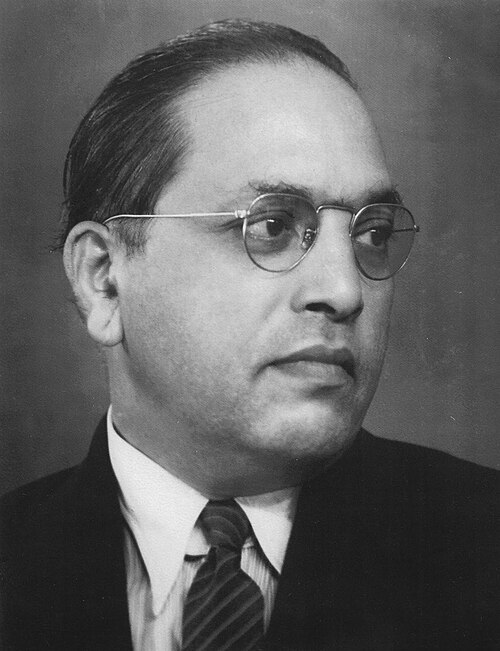
When Gandhi founded the Harijan Sevak Sangh in 1932, after the Poona Pact, Thakkar became its general secretary and its tireless organiser. He toured the country with Gandhi during the anti-untouchability campaign of 1933–34, raising funds and setting up schools, hostels, wells and scholarships for Dalit communities. Critics, notably B. R. Ambedkar, argued that the Sangh was run by caste Hindus and treated untouchability as a matter of charity rather than of rights.
In the Constituent Assembly
As a member of the Constituent Assembly, Thakkar chaired the subcommittee on the Excluded and Partially Excluded Areas (other than Assam). Its recommendations — tribes advisory councils in states with scheduled areas, and powers for governors to restrict the transfer of tribal land to outsiders and to regulate moneylending — shaped the Fifth Schedule of the Constitution, which still governs the scheduled areas of central and western India. In 1948 he founded the Bharatiya Adimjati Sevak Sangh to coordinate tribal welfare work nationally.
How they are remembered
Thakkar Bapa died on 20 January 1951, at eighty-one, still at work. Ashram schools, hostels and welfare schemes named after him are found in Gujarat, Maharashtra and other states, and his centenary in 1969 was marked with a postage stamp. He is remembered as one of the pioneers who made the welfare of tribal and Dalit communities a national responsibility.
Ekatmata Stotra · Stanza 29
Named in Stanza 29 of the Ekatmata Stotra — the fierce voices — Netaji to Ambedkar.
सुभाषश्च प्रणवानन्दः सावरकरस्ठक्करबापा।
अम्बेडकरो नारायण-गुरुर्वन्द्या जयन्ति धर्मिणः॥
Sources: Wikipedia: Thakkar Bapa · Wikipedia: Harijan Sevak Sangh. Written afresh for The Hindu Book; corrections welcome at [email protected].