Swami Pranavananda was born on 29 January 1896, on the full moon of the month of Magh, in the village of Bajitpur in the Faridpur district of Bengal (now Madaripur, Bangladesh). His parents, Vishnucharan Bhuiya and Saradadevi, named him Jaynath; he was known as Binode. Accounts of his childhood describe a quiet, inward boy given to long hours of meditation and to helping anyone in need.
"Man possesses unlimited strength, infinite capacity for work and boundless perseverance."Saying of Swami Pranavananda, as published by the Bharat Sevashram Sangha
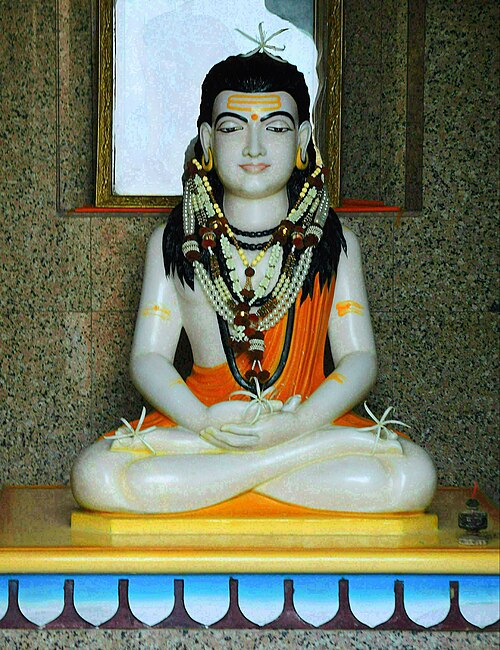
At seventeen, in 1913, he travelled to Gorakhpur and received initiation from Yogiraj Baba Gambhirnath, a renowned saint of the Nath tradition of Gorakhnath. Returning to Bajitpur, he gave himself to intense yogic practice, and his followers hold that he reached spiritual realisation by about the age of twenty.
Founding the Sangha
On Maghi Purnima in 1917, at Bajitpur, the young yogi founded the organisation that would become the Bharat Sevashram Sangha. Its aim, as the Sangha describes it, was to unite spiritual discipline with humanitarian service: to serve the poor and the suffering, to spread the teachings of Hindu dharma, and to promote the unity of society. Its monks took vows of renunciation, self-control, truthfulness and celibacy and were trained for hard physical work. The name Bharat Sevashram Sangha was adopted in the 1920s.
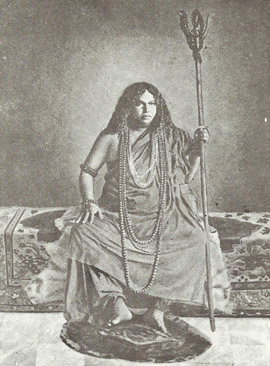
In January 1924, at the Kumbh Mela at Prayag, Binode took formal sannyasa from Swami Govindananda Giri and became Swami Pranavananda. He then began to initiate disciples of his own, and the Sangha spread quickly across Bengal and beyond.
Relief and pilgrim service
From its early years the Sangha sent its monks into areas struck by flood, famine, cyclone and epidemic, where they lived among the affected people and ran kitchens, camps and medical aid — work it has continued for a century, from the Bengal famine of 1943 to recent cyclones and earthquakes.
Pranavananda also turned to the condition of Hindu pilgrimage centres, where pilgrims were often exploited. The Sangha set up ashrams and volunteer corps at places such as Gaya, Puri and Prayag, and at great gatherings like the Kumbh Mela and the Gangasagar Mela, to give pilgrims shelter, guidance and protection.
The best known of these works today are the camps at the Gangasagar Mela, where hundreds of thousands of pilgrims gather at the mouth of the Hooghly for Makar Sankranti, and at every Kumbh Mela, where the Sangha's volunteers run kitchens, shelters, first aid and lost-and-found services. Monks trained in these camps form the core of its disaster teams.
Uniting Hindu society
In the communally tense Bengal of the 1930s, Pranavananda launched the Hindu Milan Mandir movement — local centres where Hindus of all castes could meet, worship together and organise. The Sangha's accounts stress that these centres worked against untouchability and caste division. Sangha literature also describes volunteer defence groups (Rakshi Dal) trained to protect villages. Critics have seen this side of his work as part of the hardening of communal lines in late-colonial Bengal; the Sangha and its admirers present it as self-defence and social reform.
How they are remembered
Swami Pranavananda died in Calcutta on 8 January 1941, aged forty-four. The Bharat Sevashram Sangha he founded now has branches across India and in several other countries, running schools, hospitals, hostels and tribal welfare projects alongside disaster relief, and its monks remain a familiar sight at every major pilgrimage and calamity. A commemorative postage stamp honours him, and the Ekatmata Stotra names him among the servants of the nation.
Ekatmata Stotra · Stanza 29
Named in Stanza 29 of the Ekatmata Stotra — the fierce voices — Netaji to Ambedkar.
सुभाषश्च प्रणवानन्दः सावरकरस्ठक्करबापा।
अम्बेडकरो नारायण-गुरुर्वन्द्या जयन्ति धर्मिणः॥
Sources: Wikipedia: Swami Pranavananda · bharatsevashramsangha.org/?p=13024 · esamskriti.com/e/History/Great-Indian-Leaders/What-was-the-contribution-of-Swami-Pranavananda,-Founder-of-the-Bharat-Sevashram-Sangha-1.aspx. Written afresh for The Hindu Book; corrections welcome at [email protected].