
About Rama
Born in Ayodhya to King Dasharatha and Kaushalya, Rama gave up his throne to honour his father's word and spent fourteen years in exile with Sita and Lakshmana. When Ravana carried Sita away to Lanka, Rama, with Hanuman and the vanara army, crossed the sea and defeated him.
Dussehra celebrates that victory and Diwali his return to Ayodhya. Ram Rajya — the rule of Rama — remains the Indian ideal of just and caring government, and his name, 'Ram', is itself chanted as a mantra.
Rama mantra
Shri Ram Taraka mantra
श्री राम जय राम जय जय राम
śrī rāma jaya rāma jaya jaya rāma
Glory to Shri Rama, victory to Rama, victory, victory to Rama.
Prayers to Rama 6
Chalisas, aartis, stotras and mantras for Rama, each with the full text, transliteration and meaning.


Festivals of Rama
- राRam Navamiराम नवमीShukla Navami, Chaitra month
- विDussehra (Vijayadashami)विजयादशमीShukla Dashami, Ashwin month
- दीDiwali (Lakshmi Puja)दीपावलीAmavasya of Kartik
- दुChaitra Navratri (Gudi Padwa · Ugadi)चैत्र नवरात्रिShukla Pratipada to Navami, Chaitra month
- विVivah Panchamiविवाह पंचमीShukla Panchami, Margashirsha month
- सीSita Navami (Janaki Jayanti)सीता नवमीShukla Navami, Vaishakha month
Temples of Rama
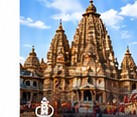
Shri Ram Janmabhoomi Mandir श्री राम जन्मभूमि मंदिर
Ayodhya, Uttar Pradesh · Rama
Grand temple at Lord Ram's birthplace, consecrated on 22 January 2024. Built in the Nagara style from pink sandstone, it draws well over a lakh devotees on busy days. One of the largest temples of the modern era.

Raghunath Temple रघुनाथ मंदिर
Jammu, Jammu and Kashmir · Rama (Raghunath)
Large 19th-century temple complex of Lord Rama in the heart of Jammu, built by the Dogra Maharajas, with seven shrines and a vast collection of lingas and saligrams.

Bhadrachalam Sita Ramachandraswamy Temple भद्राचलम सीता रामचंद्र स्वामी मंदिर
Bhadrachalam, Telangana · Rama (with Sita and Lakshmana)
The most famous Rama temple of South India, on the banks of the Godavari, built in the 17th century by the poet-saint Bhakta Ramadasu. Its Sri Rama Navami Kalyanam, the celestial wedding of Sita and Rama, is a major event in the Telugu states.

Masrur Rock-cut Temples मसरूर शैलकृत मंदिर
Masrur (Kangra), Himachal Pradesh · Shiva (original); Rama, Sita and Lakshmana in the main shrine today
A rare monolithic temple complex carved from a single sandstone ridge in the Kangra valley, facing the Dhauladhar range. It is the finest rock-cut temple group of the Himalayan region, often compared with Ellora.

Kodandarama Temple, Vontimitta कोदण्डराम मंदिर, वोंटिमिट्टा
Vontimitta (Kadapa), Andhra Pradesh · Rama with Sita and Lakshmana
A grand Vijayanagara-era temple of Rama near Kadapa, linked with the Telugu poet Bammera Potana. It is now the venue of Andhra Pradesh's official Sri Rama Navami celebrations, with the divine wedding held on a full-moon night.

Rama Lakshmana Temples, Baradia राम लक्ष्मण मंदिर, बरडिया
Baradia, near Dwarka, Gujarat · Vishnu (historic Vaishnava shrines)
A pair of late 12th-century Solanki-style temples near Dwarka, considered among the earliest surviving Vaishnava temples in Gujarat and protected as a monument of national importance.
Frequently asked questions
Why is Rama called Maryada Purushottam?
Maryada means the bounds of right conduct and Purushottam the best of men. Rama is so called because he never stepped outside dharma, even when it cost him his throne and his personal happiness.
When is Ram Navami?
Ram Navami falls on Chaitra Shukla Navami, the ninth day of the bright fortnight of Chaitra, the last day of Chaitra Navratri. Rama is said to have been born at midday.
Which text should I read for Rama?
Valmiki's Sanskrit Ramayana is the original epic. Tulsidas's Ramcharitmanas in Awadhi is the most read for daily devotion — its Sundar Kand in particular. The Ram Raksha Stotram is a short protective hymn.