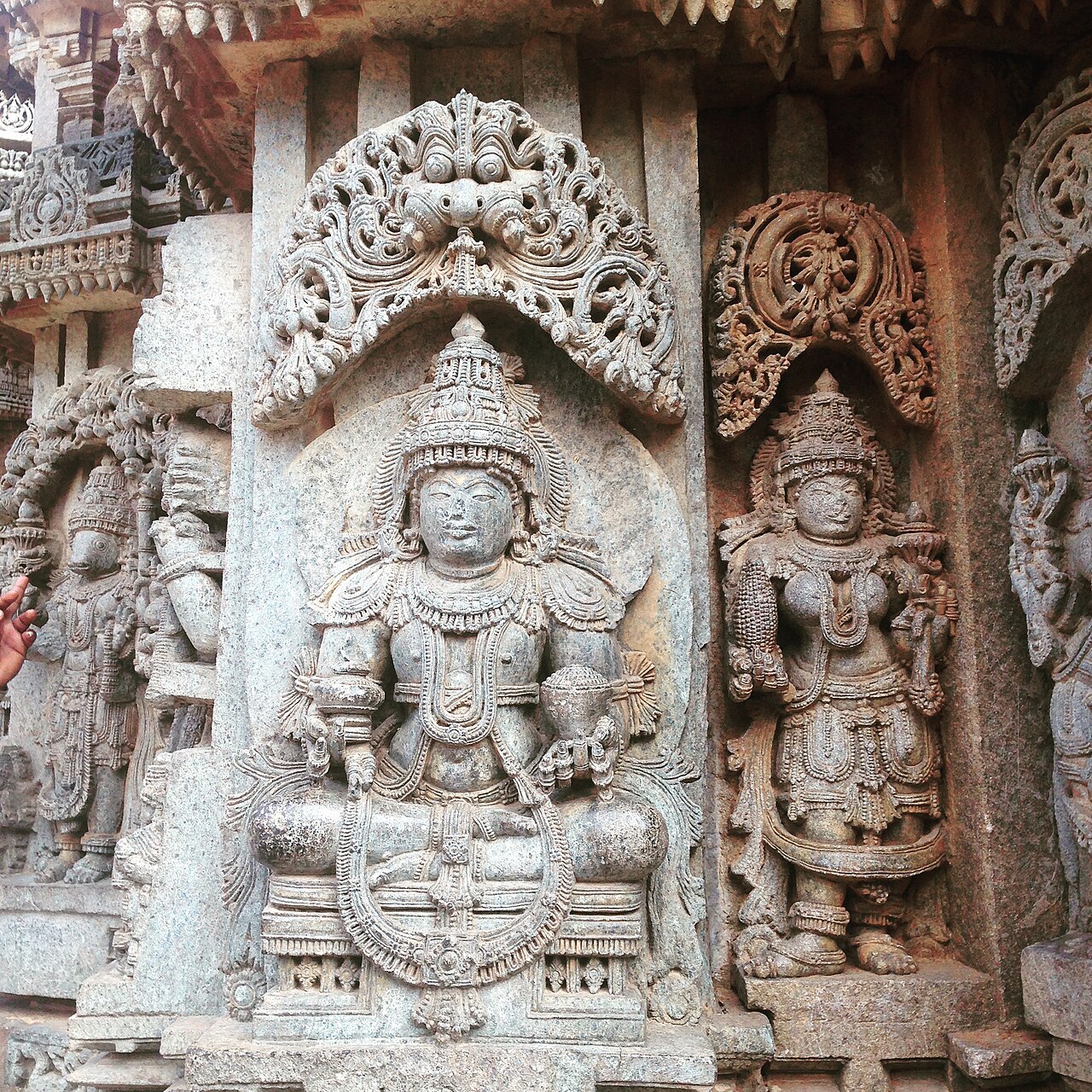
Dhanvantari is the divine physician of Hindu tradition. The Puranas and the Mahabharata tell that he emerged from the samudra manthana, the churning of the ocean of milk by the gods and asuras, holding in his hands the pot of amrita, the nectar of immortality. The Bhagavata Purana counts him among the avatars of Vishnu, and images show him four-armed, holding a conch, a discus, a leech and the pot of nectar.
ॐ नमो भगवते वासुदेवाय धन्वन्तरये अमृतकलशहस्ताय सर्वामयविनाशाय त्रैलोक्यनाथाय श्रीमहाविष्णवे नमः॥“Om, salutations to Lord Vasudeva, Dhanvantari, who holds the pot of nectar, destroyer of all disease, lord of the three worlds — to Shri Mahavishnu, salutations.”Traditional Dhanvantari mantra
He is worshipped as the source of Ayurveda, the science of life. Doctors and vaidyas pray to him before treatment, and he is invoked for health and long life.
Out of the ocean
The Bhagavata Purana (Book 8) and the Vishnu Purana tell how the gods, weakened by a curse, joined with the asuras to churn the ocean of milk, using Mount Mandara as the churning rod and the serpent Vasuki as the rope. Many treasures arose — the poison Halahala, the wish-granting cow, Lakshmi herself — and last of all Dhanvantari, dark and radiant, carrying the pot of amrita.
The asuras snatched the pot, and Vishnu, taking the enchanting form of Mohini, won it back and gave the nectar to the gods. Dhanvantari's appearance thus marks the moment when the long labour of the churning bore its final fruit: health and deathlessness.
The churning is told in many texts with differences: the order in which the treasures appear varies, and so do the details of the struggle that follows. But all agree that Dhanvantari is the bearer of amrita, and that is why he is called the physician of the gods.
Divodasa of Kashi and Sushruta
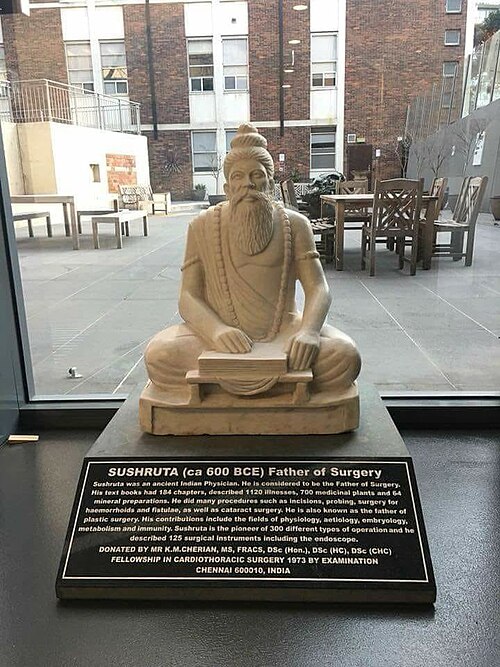
The Harivamsha and the Puranas tell that Dhanvantari was later born on earth in the royal line of Kashi, and that his descendant Divodasa, king of Kashi, was himself known as Dhanvantari. The Sushruta Samhita, the classical text of Indian surgery, opens with the sage Sushruta and his companions going to Divodasa, called Dhanvantari, in Varanasi to learn medicine. There the king declares himself the first god, Dhanvantari, come to earth to teach the science of healing, and especially of surgery.
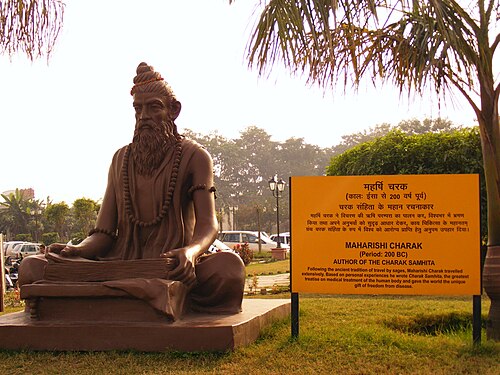
Because of this, the surgical school of Ayurveda is sometimes called the Dhanvantari sampradaya, while the school of internal medicine traces itself through Atreya and the Charaka Samhita.
The Puranas also say that Dhanvantari, asking the gods for a share of the sacrifice, was promised that he would be born on earth in a later age and would teach Ayurveda in its eight branches, from internal medicine and surgery to paediatrics and rejuvenation. Many Ayurvedic texts and practitioners begin their work with an invocation to him.
Dhanteras and Ayurveda Day
Dhanvantari's day is Dhanteras, the thirteenth day of the dark fortnight of Kartik, which opens the Diwali festival. While the day is popularly linked with buying gold and utensils, its older meaning is Dhanvantari Trayodashi, a day to pray for health. Since 2016 the Government of India has marked Dhanteras as National Ayurveda Day, and the Dhanvantari temple traditions of Kerala, such as at Thottuva, remain living centres of worship.
How they are remembered
Dhanvantari stands for the idea that health is sacred, and that healing is a gift from the divine to be learned and passed on with care. Ayurvedic colleges and hospitals across India keep his image at their entrances, and his mantra is recited for the sick in countless homes.
Ekatmata Stotra · Stanza 14
Named in Stanza 14 of the Ekatmata Stotra — six figures of sacrifice and dharma.
भगीरथश्च एकलव्यो मनुर्धन्वन्तरिस्तथा।
शिबिश्च रन्तिदेवश्च दर्शितं धर्म-लक्षणम्॥
Sources: Wikipedia: Dhanvantari · Wikipedia: Sushruta Samhita · Wikipedia: Dhanteras. Written afresh for The Hindu Book; corrections welcome at [email protected].