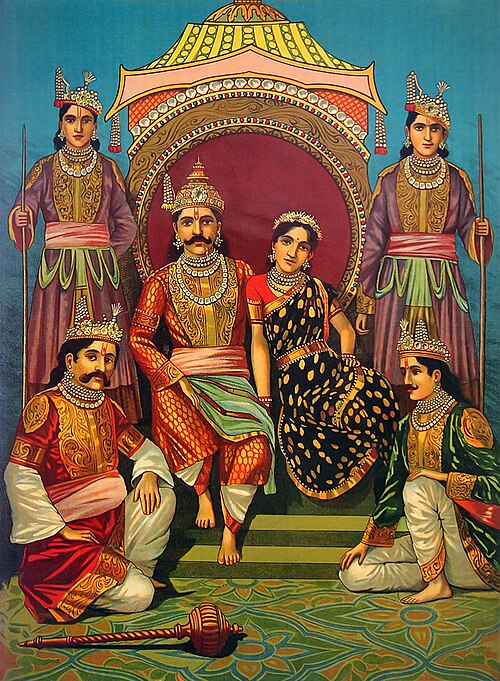
According to the Adi Parva of the Mahabharata, King Drupada of Panchala, humiliated by Drona, performed a great sacrifice to obtain a son who would kill his enemy. From the fire rose the warrior Dhrishtadyumna, and after him a dark, radiant young woman — Draupadi. A heavenly voice declared that she would be the cause of the destruction of the Kshatriyas.
In the dice hall she asked the assembled elders whether Yudhishthira, having already staked and lost himself, still had the right to stake her — a question that none of them could answer.Mahabharata, Sabha Parva
She has many names: Draupadi and Panchali after her father and his land, Yajnaseni as the one born of the sacrifice, and Krishnaa for her dark complexion. The epic praises her beauty, intelligence and learning; she argues dharma with her husbands as an equal.
The swayamvara
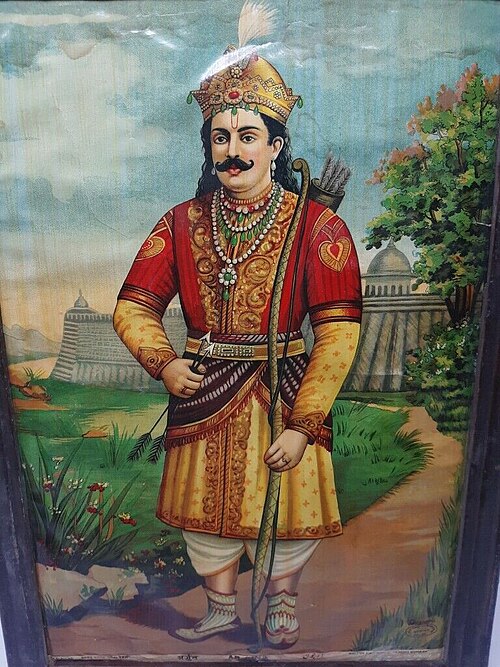
Drupada set a near-impossible test for his daughter's hand: to string a mighty bow and shoot a target through a revolving device, looking only at its reflection. The Pandavas, then hiding as brahmins, came to the assembly. When princes failed, Arjuna rose and struck the mark. The brothers brought Draupadi home and told their mother Kunti they had brought alms; not looking up, she told them to share it among themselves.
The epic gives more than one explanation for the marriage of Draupadi to all five brothers. Vyasa tells Drupada that in a former life she had asked Shiva five times for a husband with every virtue, and Shiva granted her five husbands. The Mahabharata treats the marriage as exceptional and divinely sanctioned.
The dice hall
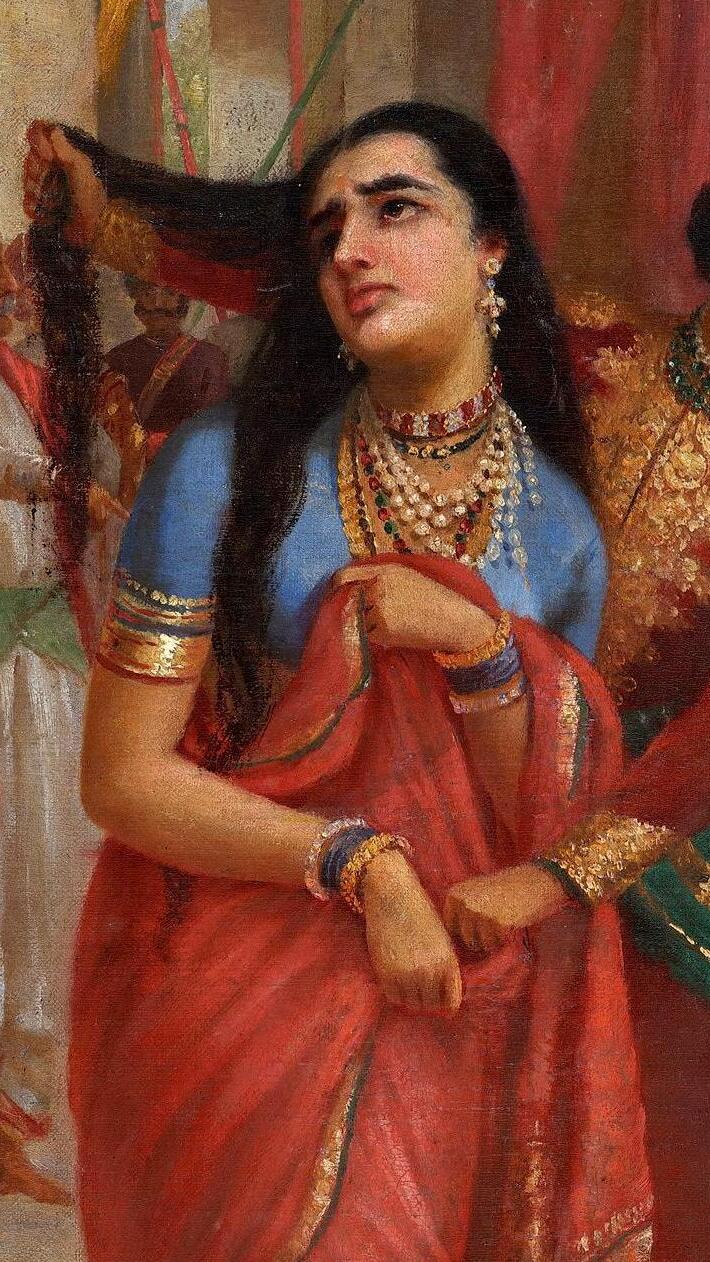
After Yudhishthira's Rajasuya at Indraprastha, Duryodhana, consumed by envy, invited him to a game of dice with Shakuni. In the Sabha Parva Yudhishthira lost his wealth, his kingdom, his brothers, himself — and then staked and lost Draupadi. Duhshasana dragged her by the hair into the assembly. She demanded an answer from the elders: could a man who had lost himself stake his wife? Bhishma said the point of dharma was subtle; Vidura and the young Vikarna spoke for her; the rest kept silent.
Duhshasana tried to strip her of her garment, but as he pulled, more cloth appeared, until he fell back exhausted. Popular tradition, and many manuscripts, credit this miracle to Krishna, whom she called upon; the critical edition is more reticent about who worked it. Bhima vowed to break Duryodhana's thigh and drink Duhshasana's blood. Frightened by ill omens, Dhritarashtra offered Draupadi boons, and she used them to free her husbands — asking nothing for herself.
Exile and war
Draupadi shared the twelve years of forest exile and the year in disguise, when she served Queen Sudeshna at the court of Virata as the maid Sairandhri. When the general Kichaka harassed her, Bhima killed him. In the Vana Parva she debates Yudhishthira on whether patience or anger is the right response to injustice, and in the Udyoga Parva, as peace talks are planned, she shows Krishna her untied hair and asks him not to forget the insult.
The Kurukshetra war cost her dearly. Her father and brothers died, and on the last night Ashvatthama killed her five sons as they slept. On the Pandavas' final journey to the Himalayas, she was the first to fall.
How they are remembered
Draupadi is worshipped as a goddess, Draupadi Amman, in hundreds of temples in Tamil Nadu and among Tamil communities abroad, where firewalking festivals honour her. In literature and theatre — from Bhasa and the regional Mahabharatas to modern Indian novels — she remains one of the most argued-over and admired figures of the epic: a woman who asked questions of power and would not be silenced.
Ekatmata Stotra · Stanza 10
Named in Stanza 10 of the Ekatmata Stotra — ten women of itihāsa and purāṇa.
अरुन्धती अनसूया च सावित्री जानकी सती।
द्रौपदी कण्णगी गार्गी मीरा दुर्गाश्च वन्दिताः॥
Sources: Wikipedia: Draupadi · Wikipedia: Draupadi Amman · sacred-texts.com/hin/maha/index.htm. Written afresh for The Hindu Book; corrections welcome at [email protected].