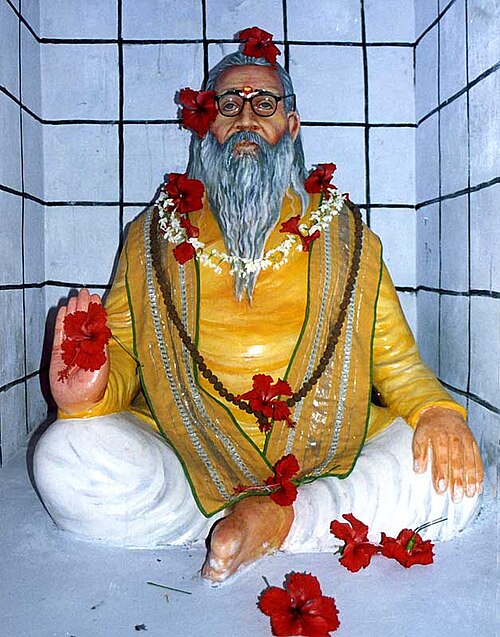
Nothing is known of Kapila as a historical person; he belongs to the remote past and to legend. The Bhagavata Purana makes him the son of the sage Kardama and Devahuti and an avatar of Vishnu, who taught Samkhya to his own mother. In the Bhagavad Gita Krishna says, "Among the perfected ones, I am the sage Kapila."
सिद्धानां कपिलो मुनिः“Among the perfected ones, I am the sage Kapila.”Bhagavad Gita 10.26
What has come down is the system of thought linked to his name — Samkhya, "enumeration" — one of the six classical darshanas of Indian philosophy, and among the oldest.
Purusha and prakriti
Samkhya explains the world through two eternal principles: purusha, pure consciousness, the silent witness; and prakriti, the primal matter from which everything else — mind, senses, elements — unfolds. Prakriti is made of three gunas: sattva (clarity), rajas (activity) and tamas (inertia), whose changing balance produces all change. In all, Samkhya counts twenty-five tattvas, principles of reality.
Freedom through discrimination
Suffering, for Samkhya, comes from confusing purusha with the workings of prakriti — taking oneself to be the body and mind. Liberation, kaivalya, comes from clear discrimination between the two. This framework underlies the Yoga Sutras of Patanjali, much of the Bhagavad Gita and Ayurveda's idea of the three doshas and gunas. The oldest surviving Samkhya text is the Samkhya Karika of Ishvarakrishna (c. 4th–5th century CE).
Kapila and the Ganga
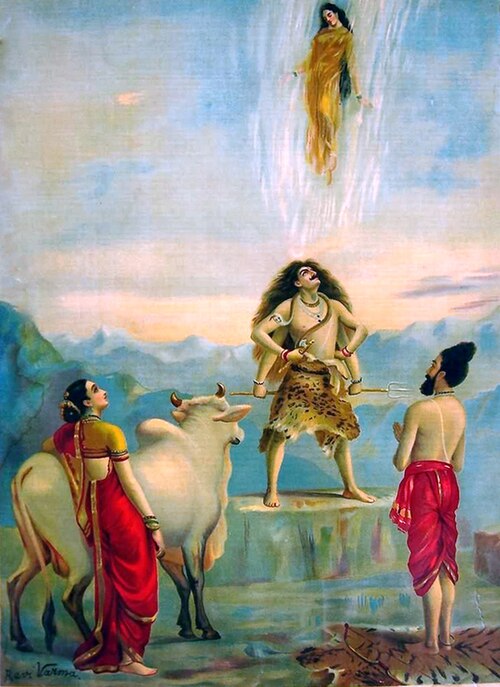
The Ramayana and the Puranas tell how the sixty thousand sons of King Sagara, searching for their father's sacrificial horse, found it near the meditating Kapila, accused him of theft, and were burnt to ashes by his gaze. Their descendant Bhagiratha later brought the Ganga down from heaven to wash over their ashes and free them — the story behind the river's name Bhagirathi.
How they are remembered
The Kapil Muni temple at Gangasagar, where the Ganga meets the sea, draws hundreds of thousands of pilgrims for the holy dip on Makar Sankranti. Samkhya's vocabulary of gunas and tattvas runs through Indian philosophy, yoga and medicine to this day.
Ekatmata Stotra · Stanza 25
Named in Stanza 25 of the Ekatmata Stotra — the six foundational minds.
कपिलः कणादश्च सुश्रुतश्चरकस्तथा।
भास्कराचार्यो वराहमिहिरस्तेजस्विनामहम्॥
Sources: Wikipedia: Kapila · Wikipedia: Samkhya. Written afresh for The Hindu Book; corrections welcome at [email protected].